Newsroom
A Detailed Discussion on Self-Aligning Ball Bearings
Bearings are indispensable and crucial components in modern mechanical equipment. In machinery, they shoulder the important mission of supporting mechanical rotating bodies, reducing the friction coefficient during their movement, and ensuring their rotational accuracy. Bearings are all standard parts, and there are more than a dozen types classified by functionality. Today, we will provide you with a detailed introduction to self-aligning ball bearings.
I. What is a Self-Aligning Ball Bearing?
A self-aligning ball bearing consists of spherical rolling elements (balls) mounted between an inner ring with two raceways and an outer ring with a spherical raceway. The outer diameter of the self-aligning bearing and the inner diameter of the bearing housing form a spherical fit, enabling automatic self-alignment between the two. This design can compensate for axis misalignment caused by installation errors and deformation of the mounting base. 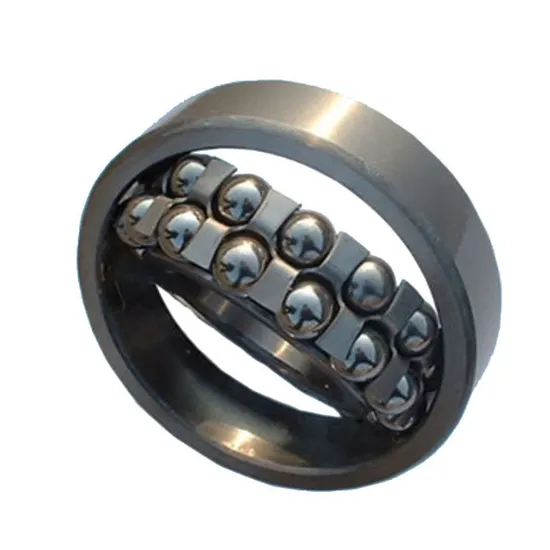
II. Two Structures of Self-Aligning Ball Bearings
1) Cylindrical Bore
① Equipped with two rows of steel balls and a spherical raceway in the outer ring, self-aligning ball bearings offer automatic self-alignment.
② Capable of accommodating angular deviations between the shaft and the bearing housing, they are suitable for working conditions prone to shaft deflection and misalignment-induced eccentricity.
③ Feature the lowest friction among all rolling bearings.
④ Maintain low temperature rise even at high rotational speeds. 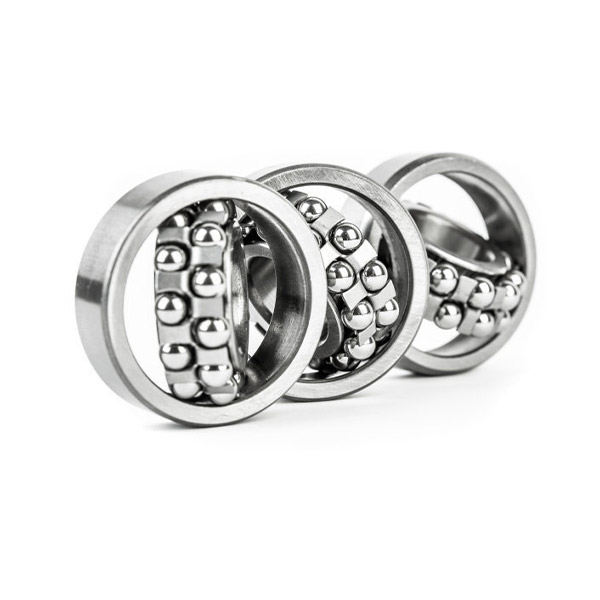
2) Tapered Bore
① Retain all the characteristics of cylindrical bore self-aligning ball bearings.
② With adjustable bearing internal clearance, this type is mostly used for double-supported shafts that experience significant deflection under load and for components where strict concentricity of the two bearing housings cannot be guaranteed.
③ Primarily designed to bear radial loads, but can also withstand small axial loads.
④ Generally unable to sustain pure axial loads. Their versatility is second only to deep groove ball bearings.
⑤ Have a lower limiting speed compared to deep groove ball bearings of the same standard, but offer higher load-carrying capacity. 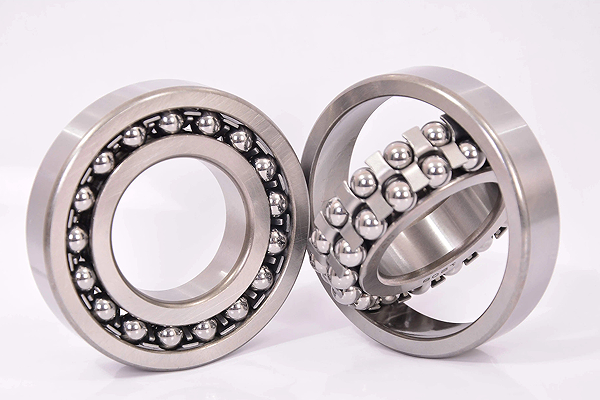
III. Characteristics of Self-Aligning Ball Bearings
The outer ring raceway is spherical, enabling automatic self-alignment.
Can withstand large radial loads as well as a certain amount of axial loads.
Long service life.
Excellent sealing performance.
Generally cannot bear pure axial loads.
They are suitable for applications where considerable shaft deflection or misalignment may occur, such as precision instruments, low-noise motors, automobiles, motorcycles, woodworking machinery, textile machinery drive shafts, mining machinery, electromechanical equipment, plastic machinery, office equipment, medical devices, fitness and sports equipment, and general machinery. 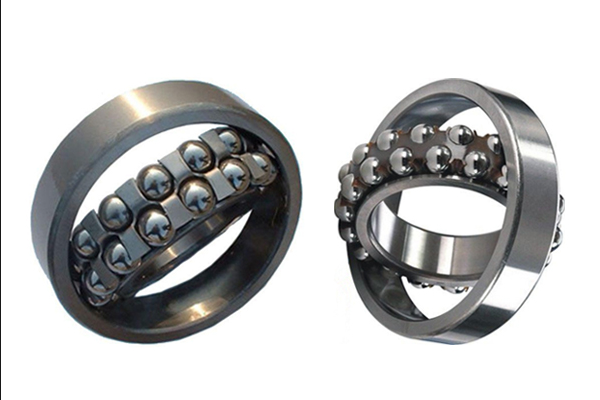
Self-aligning ball bearings are essential basic components in mechanical equipment. Thanks to their outstanding properties—including good sealing performance, long service life, and inherent self-alignment capability—they occupy an important position in the bearing field. Over the past decade or so, they have been increasingly widely used in various fields related to national economy and people's livelihood.