Newsroom
Causes of Common Burning Failures in Self-Aligning Ball Bearings
Poor lubrication of the bearing, excessive load on the bearing, and poor precision of the shaft and bearing housing are all causes of bearing burning. The detailed causes of bearing burning are introduced as follows. First, poor lubrication of the self-aligning ball bearing may be due to the use of unqualified lubricants, or an excessive or insufficient amount of lubricant, all of which are improper. Second, excessive load on the bearing, excessively high rotational speed of the bearing, excessively small bearing clearance, and intrusion of water or other foreign objects can also lead to burning. 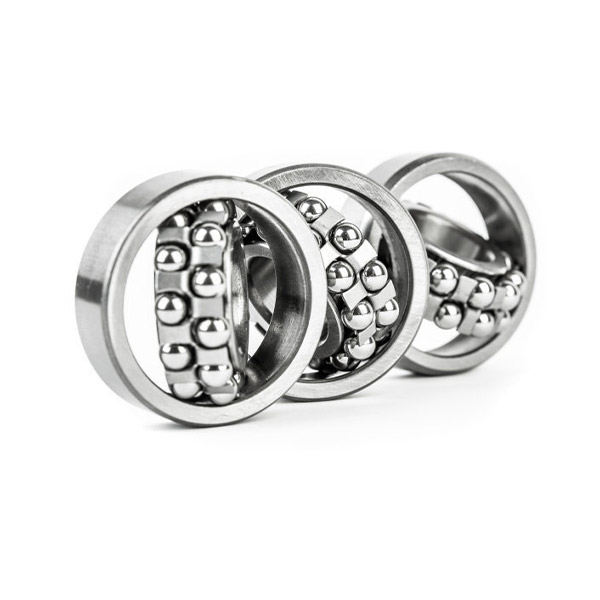
Third, poor precision of the shaft and self-aligning ball bearing housing and large deflection of the shaft are contributing factors. These three major causes of bearing burning will result in a burning state where the bearing raceways, rolling elements and cages generate intense heat during rotation, leading to discoloration, softening, welding and damage. It is recommended that during the use of bearings, great attention should be paid to achieving high precision and proper operation in all links such as installation, lubrication and clearance adjustment. This can reduce the risk of bearing burning and extend the service life of the bearings. 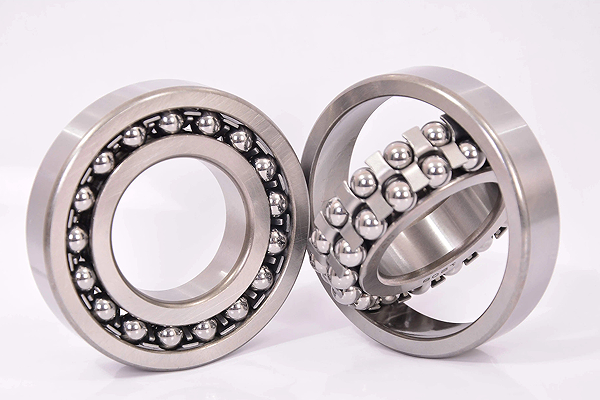
The causes of self-aligning bearing noise are relatively complex. First, wear on the mating surfaces of the inner and outer rings of the bearing. Such wear damages the fitting relationship between the bearing and the housing, as well as between the rolling bearing and the shaft, leading to the deviation of the axis from the correct position and abnormal noise when the shaft runs at high speed. When the bearing is fatigued, metal spalling on its surface will also increase the radial clearance of the bearing and cause abnormal noise. In addition, insufficient lubrication of the bearing leading to dry friction, as well as bearing breakage, can all produce abnormal noise. After a self-aligning ball bearing becomes worn and loose, the cage will become loose and damaged, which will also cause abnormal noise. 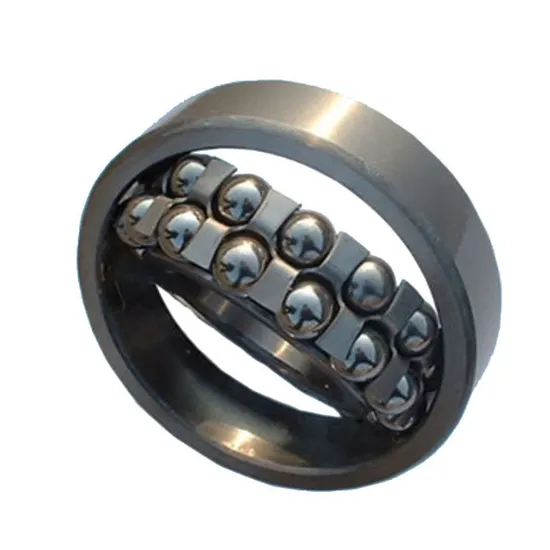
Solutions
(1) If the bearing is damaged, it should be replaced immediately.
(2) Insufficient, excessive lubricating grease or impurities such as iron filings in the bearing. The volume of bearing lubricating grease should not exceed 70% of the total volume; if impurities are present, the grease should be replaced.
(3) Excessively tight or loose fit between the shaft and the bearing. If the fit is too tight, the shaft should be reground; if too loose, a bushing should be fitted on the rotating shaft.
(4) Excessively tight or loose fit between the bearing and the end cover. If the fit is too tight, the bearing chamber should be machined; if too loose, a steel bushing should be fitted inside the end cover.
(5) Improper assembly of the end covers or bearing caps at both ends of the motor. Fit the spigots of the end covers or bearing caps in place and flush, then tighten the screws.
(6) Insufficient lubricating oil for the self-aligning ball bearing, presence of impurities or jamming of the oil ring. Refuel or replace with new oil, and repair or replace the oil ring accordingly.