Newsroom
How to Achieve Permanent Bearing Life for Radial Thrust Ball Bearing?
Thrust Ball Bearing are precision components, so they require a considerable degree of careful handling during use. Even if high-performance bearings are used, improper application will fail to achieve the expected performance and easily lead to bearing damage.
The installation and disassembly methods of Radial Thrust Ball Bearing shall be determined according to the bearing structure, size and the fit properties with bearing components. The pressure for installation and disassembly shall be directly applied to the end faces of the tightly fitted retaining rings, and shall not be transmitted through the rolling elements, as this will cause indentations on the working surfaces of the bearing, affect its normal operation, and even damage the bearing. Parts such as the bearing cage, seals and dust shields are prone to deformation, so pressure must not be applied to these parts during bearing installation or disassembly. 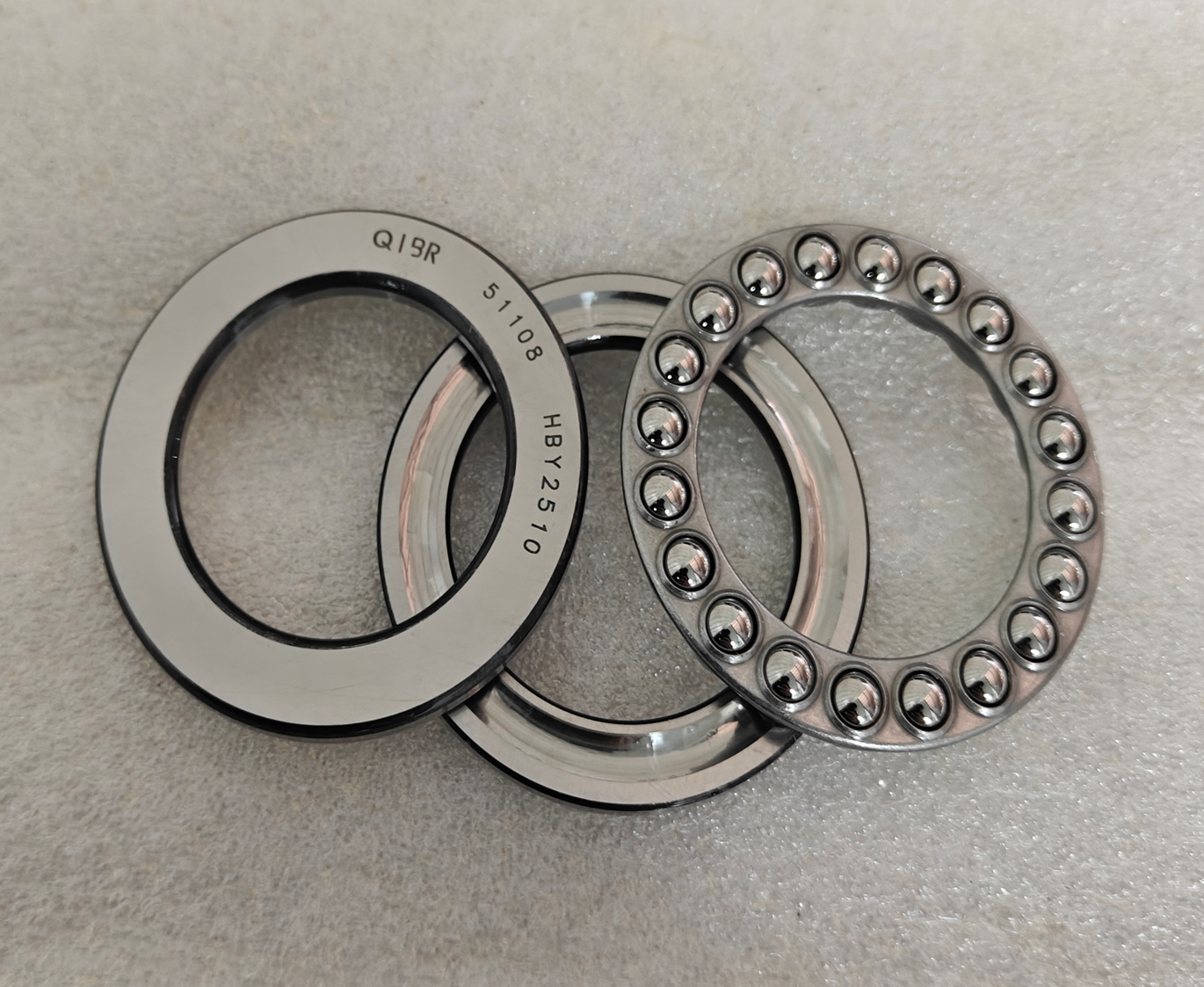
(1) Where the inner ring of the bearing is a tight fit with the shaft and the outer ring is a loose fit with the housing, the bearing can be first pressed onto the shaft using a press, and then the shaft together with the bearing is assembled into the housing. During pressing, a mounting sleeve made of soft metal (copper or soft steel) shall be placed on the end face of the thrust ball bearing. The inner diameter of the mounting sleeve shall be slightly larger than the shaft journal diameter, and the outer diameter shall be smaller than the rib diameter of the bearing inner ring to avoid pressing on the cage. A handle can be added to the sleeve for mass bearing installation.
When installing Radial Thrust Ball Bearing, the centerline of the bearing bore and the shaft must be aligned. Skewed bearing relative to the shaft not only makes installation difficult, but also causes indentations, shaft journal bending, and even fracture of the bearing inner ring. In places where a press is unavailable or cannot be used, the bearing can be installed with a mounting sleeve and a hammer. The hammering force shall be evenly transmitted over the entire circumference of the end face of the bearing ring, so the end face of the mounting sleeve subjected to hammering shall be made spherical. 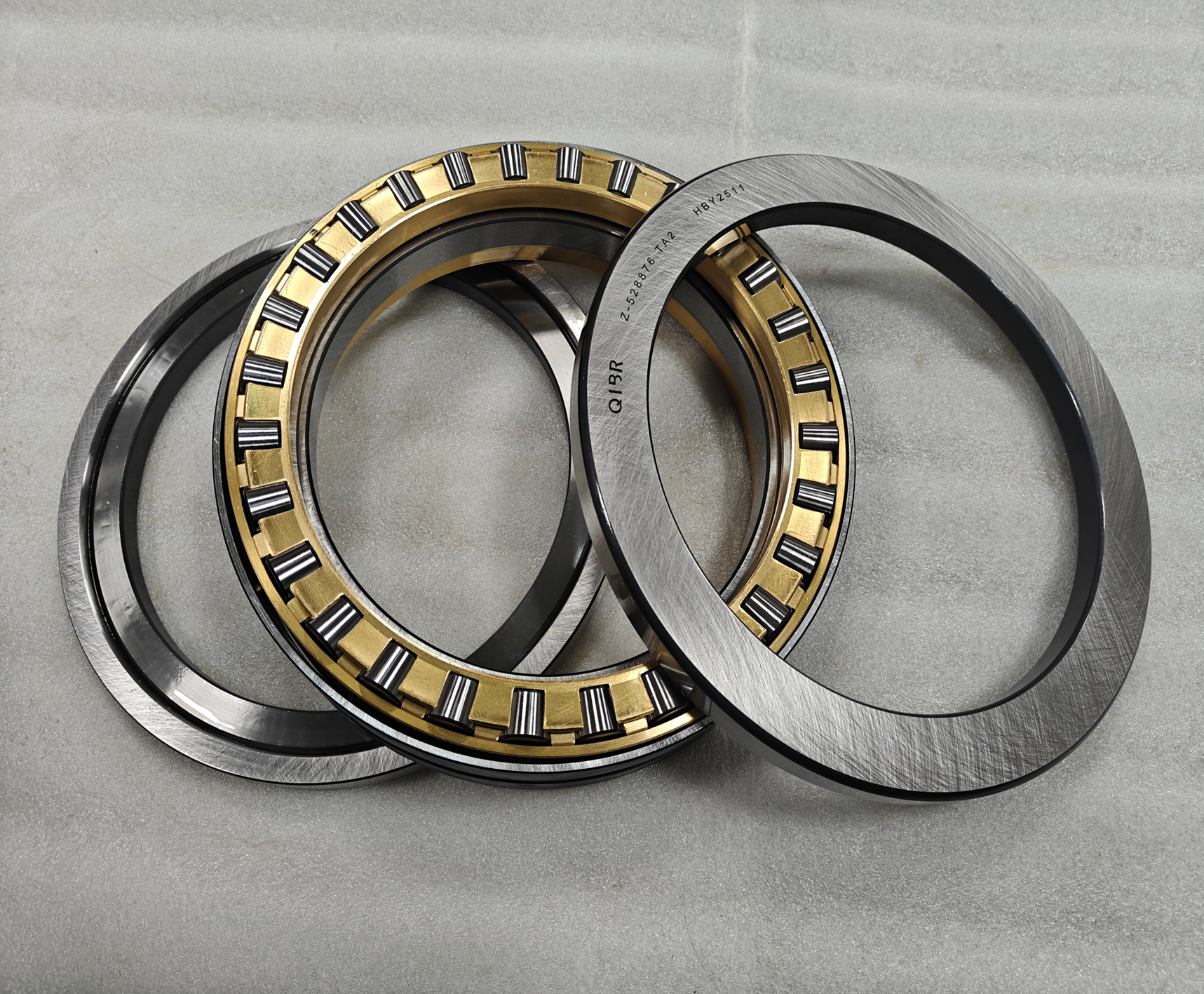
(2) Where the outer ring of the bearing is a tight fit with the housing bore and the inner ring is a loose fit with the shaft, the bearing can be first pressed into the housing, and the outer diameter of the mounting sleeve shall be slightly smaller than the housing bore diameter at this time.
(3) Where both the inner ring of the bearing and the shaft, and the outer ring and the housing bore are tight fits, the end face of the mounting sleeve shall be made into a ring that can press the end faces of both the inner and outer bearing rings at the same time, or a disc and a mounting sleeve shall be used to transmit pressure to the inner and outer rings simultaneously, pressing the bearing onto the shaft and into the housing. This installation method is particularly suitable for the installation of self-aligning spherical bearings. 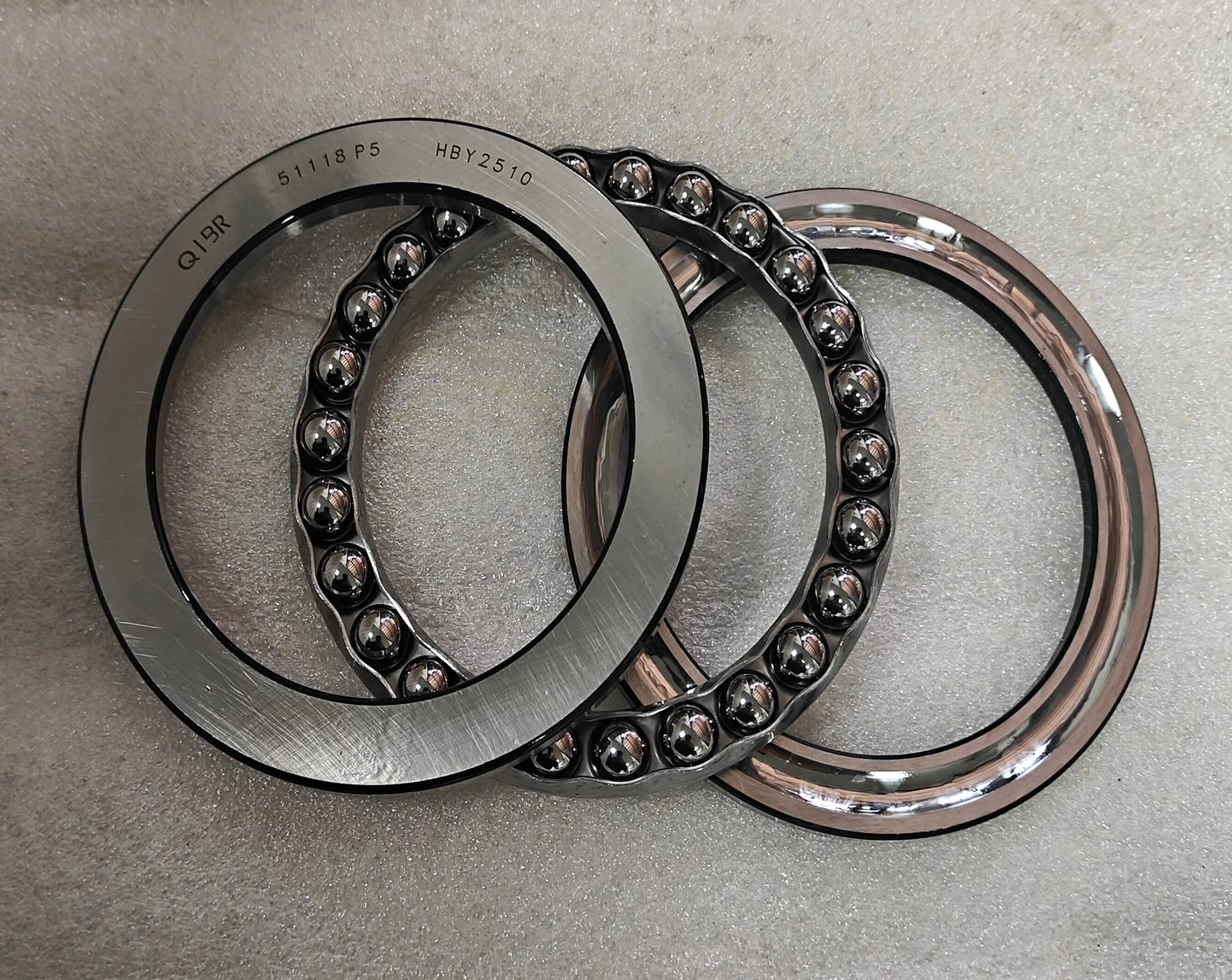
(4) Heating installation: The force required for installing Radial Thrust Ball Bearing is related to the bearing size and the magnitude of the fit interference. For medium and large bearings with large interference, the hot assembly method is commonly used. Before hot assembly, the bearing or separable bearing rings shall be evenly heated to 80~100°C (not exceeding 100°C) in an oil tank or special heater. Hot assembly of bearings requires skilled operation. After the bearing is taken out of the heating oil tank or heater, oil stains and attachments on the bearing surface shall be immediately wiped off with a clean cloth (cotton yarn is not allowed), and then it shall be placed in front of the mating surface and pushed to the position against the shaft shoulder in one operation. During the cooling process, the bearing shall be kept pushed tightly, or tapped lightly with a hammer through the mounting sleeve to make it fit closely. The bearing shall be rotated slightly during installation to prevent inclined installation or seizing.
When the outer ring of the thrust ball bearing is a tight fit with the housing bore, the housing can also be heated before assembling the bearing. Especially for bearing housings made of light metals, in the case of tight fits, the mating surfaces may be damaged by the pressing of the bearing outer ring, and the bearing housing shall be heated at this time.