Newsroom
How to Reduce the Noise of Tapered Roller Bearings
Tapered roller bearings are indispensable for mechanical operation, yet they also have inherent drawbacks that are difficult to overcome. Tapered roller bearings are one of the main sources of mechanical noise. So how can we reduce the noise of tapered roller bearings? Investigating the noise generation mechanism of tapered roller bearings and studying comprehensive control measures during production are key to improving their quality and achieving technological innovation. Compared with other types of products, tapered roller bearings have unique characteristics in structure, performance, and noise generation mechanism. 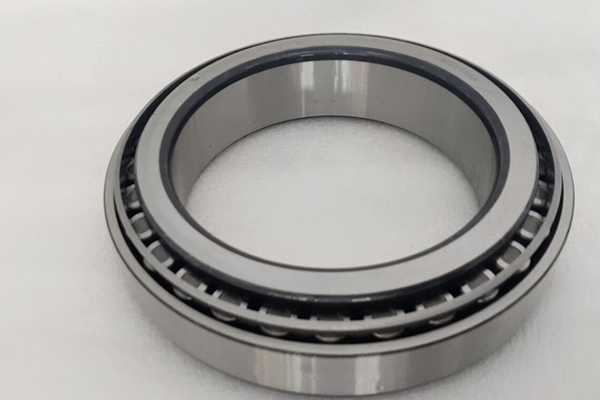
Vibration is inevitable during the operation of tapered roller bearings, which is partly caused by external factors. It can be seen that the key to solving the noise problem of tapered roller bearings lies in controlling their vibration.
First, the dimensional accuracy, geometric and positional accuracy, and surface quality of all components of tapered roller bearings shall meet the technical requirements of the corresponding accuracy grades. The main noise sources shall be identified and addressed with priority during machining. When a tapered roller bearing rotates, the cage is in a free-floating state. To reduce cage axial movement, the pocket length shall be manufactured to the lower deviation of the dimension. Meanwhile, surface polishing and phosphating treatment must be performed to reduce frictional noise between the cage and the rollers. In addition, when crimping the cage, it shall be tightened as much as possible without affecting the rotational flexibility of the bearing. 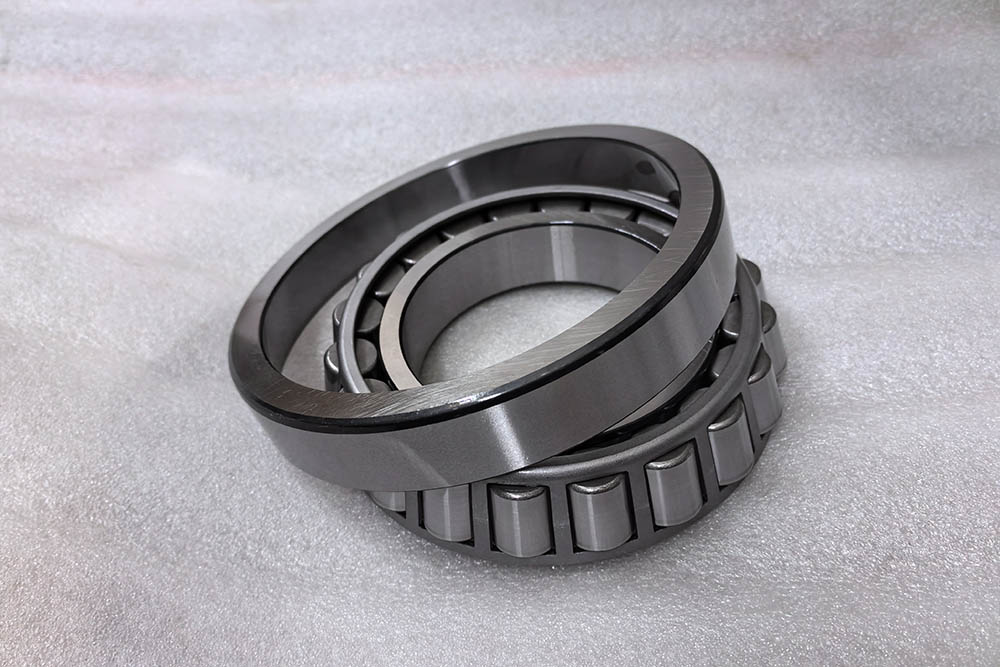
Components and finished tapered roller bearings shall be handled in strict accordance with operating procedures during machining, inspection, assembly, storage, and transportation to avoid defects such as bumps, deformations, and corrosion. Meanwhile, finished assembled bearings must be thoroughly cleaned to completely remove dust and adhesions and ensure cleanliness.
When a tapered roller bearing rotates, the raceway surfaces of the inner and outer rings form rolling contact with the rolling elements, resulting in dark running tracks on the raceways. The appearance of such running tracks is not abnormal and can reflect the load conditions. Therefore, when disassembling tapered roller bearings, close attention shall be paid to observing the running tracks on the raceway surfaces.
Careful observation of the tracks can reveal whether the bearing is subjected only to radial load, heavy axial load, moment load, or extreme uneven rigidity in the bearing housing. This helps check for unexpected loads and excessive mounting errors, providing clues for analyzing the causes of bearing failure. 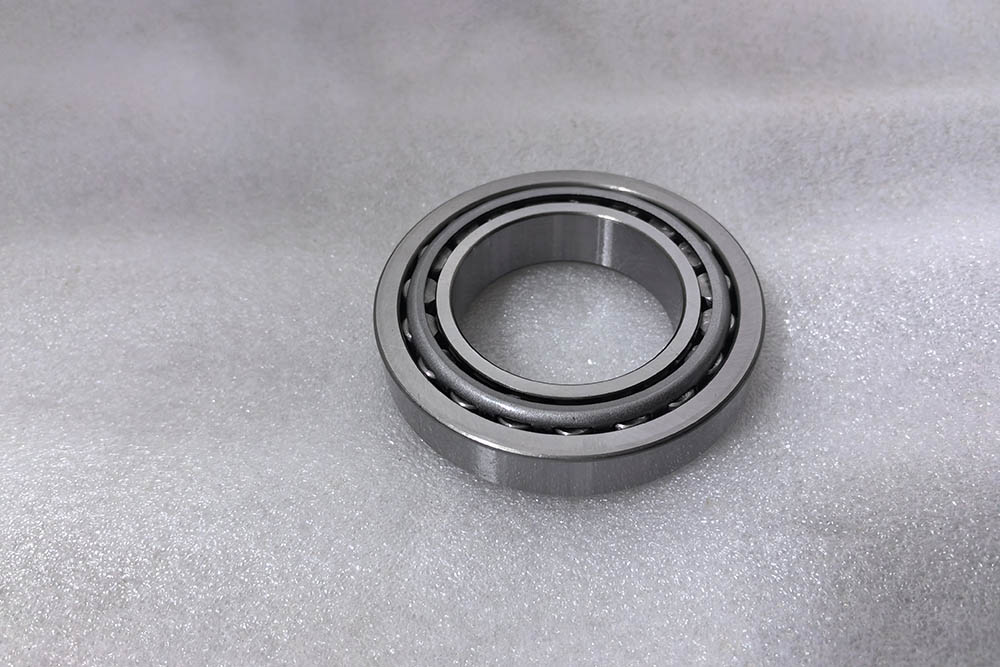
Lubrication is critically important for tapered roller bearings as well as all rolling bearings. However, it should be noted that excessive grease should not be applied to tapered roller bearings. The next step is lubricant replacement.
For bearings lubricated with engine oil, after draining the old oil, fresh oil should be refilled if possible, and the machine should run at low speed for several minutes to allow the oil to collect residual contaminants before draining again. For grease-lubricated bearings, when replacing grease, tools used for grease removal shall not have cotton materials contacting any part of the bearing, as residual fibers may wedge between rolling elements and cause damage, especially for small-sized tapered roller bearings. 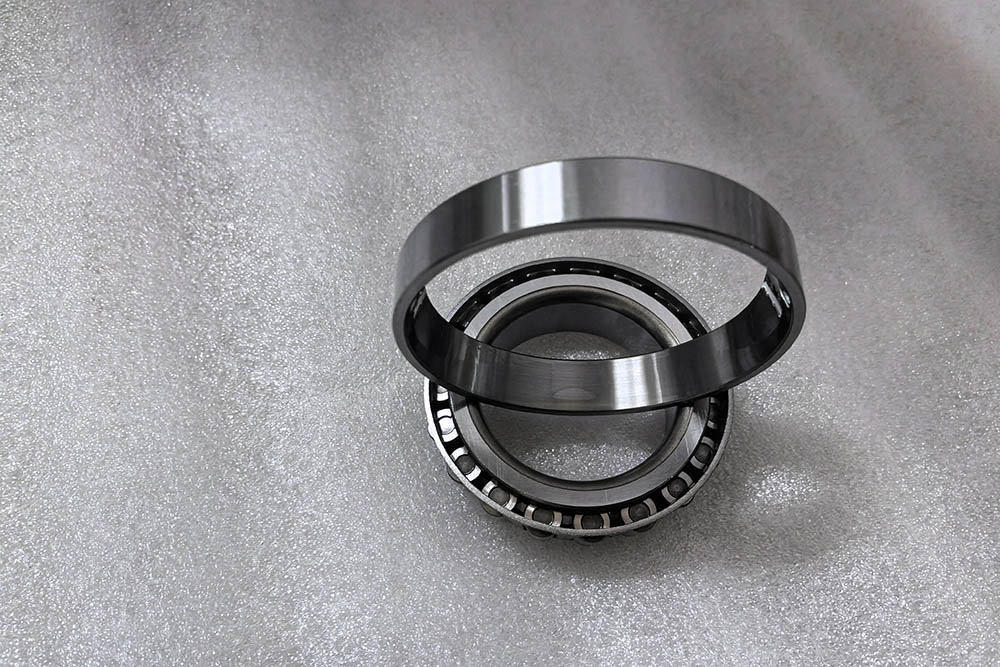
1. Crest Factor Diagnosis Method
The crest factor is defined as the ratio of peak value to RMS value. It is a dimensionless parameter. Its advantage in diagnosing rolling bearings is that it is unaffected by the bearing’s geometric dimensions, rotational speed, load, or sensor sensitivity. The crest factor is suitable for diagnosing localized faults.
Application: Monitor the trend of crest factor over time. Empirically, the crest factor is approximately 3–5 for normal rolling bearings. When damage occurs and develops in tapered roller bearings, the crest factor increases significantly beyond 3–5, possibly reaching 10–15. In severe failure stages, the crest factor returns to around 3.
2. Kurtosis Diagnosis Method
Kurtosis is defined as the normalized fourth central moment. It is also a dimensionless parameter. Similarly, it is not affected by bearing geometry, speed, load, or sensor sensitivity, making it suitable for localized fault diagnosis. 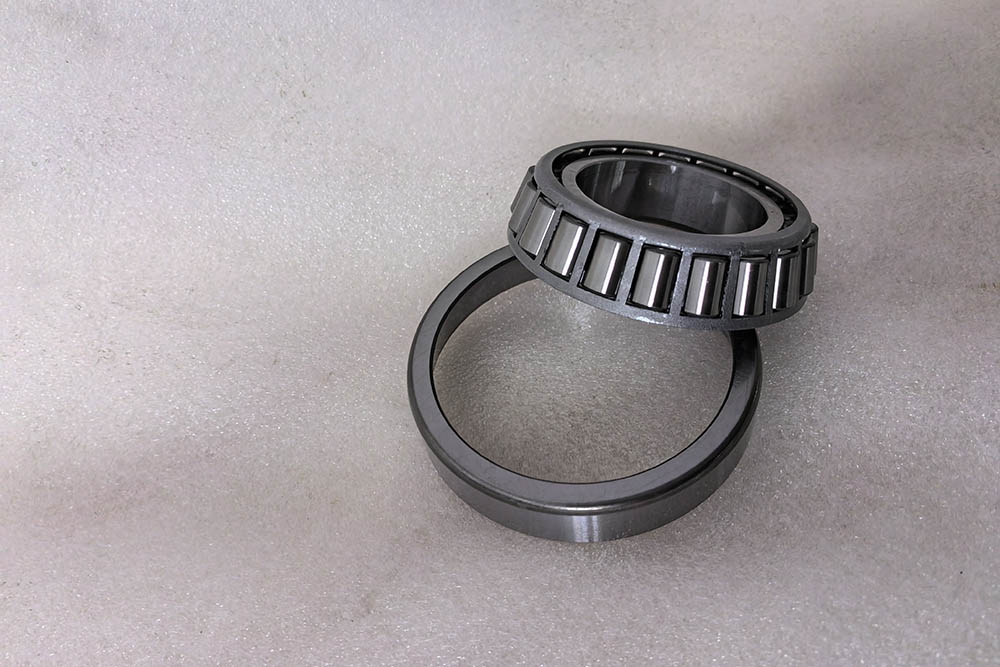
Application: Monitor the trend of kurtosis over time. Under normal conditions, the kurtosis of rolling bearings is approximately 3. When damage occurs and progresses, kurtosis rises sharply, even to several tens. In advanced failure stages, kurtosis falls back to around 3.