Newsroom
Why Are Only Spherical Roller Bearings Used in the Wheels?
This refers to wheel assemblies for industrial furnaces and heating furnaces, specifically those used in steel forging. Among heating furnaces and annealing furnaces, the bogie-hearth type is the most common, so each bogie consists of multiple wheel assemblies.
1. Why Are Spherical Roller Bearings Used in the Wheels Instead of Radial Bearings, Deep Groove Ball Bearings, Etc.?
The wheel speed is low during bogie travel, approximately 6 to 7 meters per minute, meaning the bearing operates at a relatively low rotational speed. 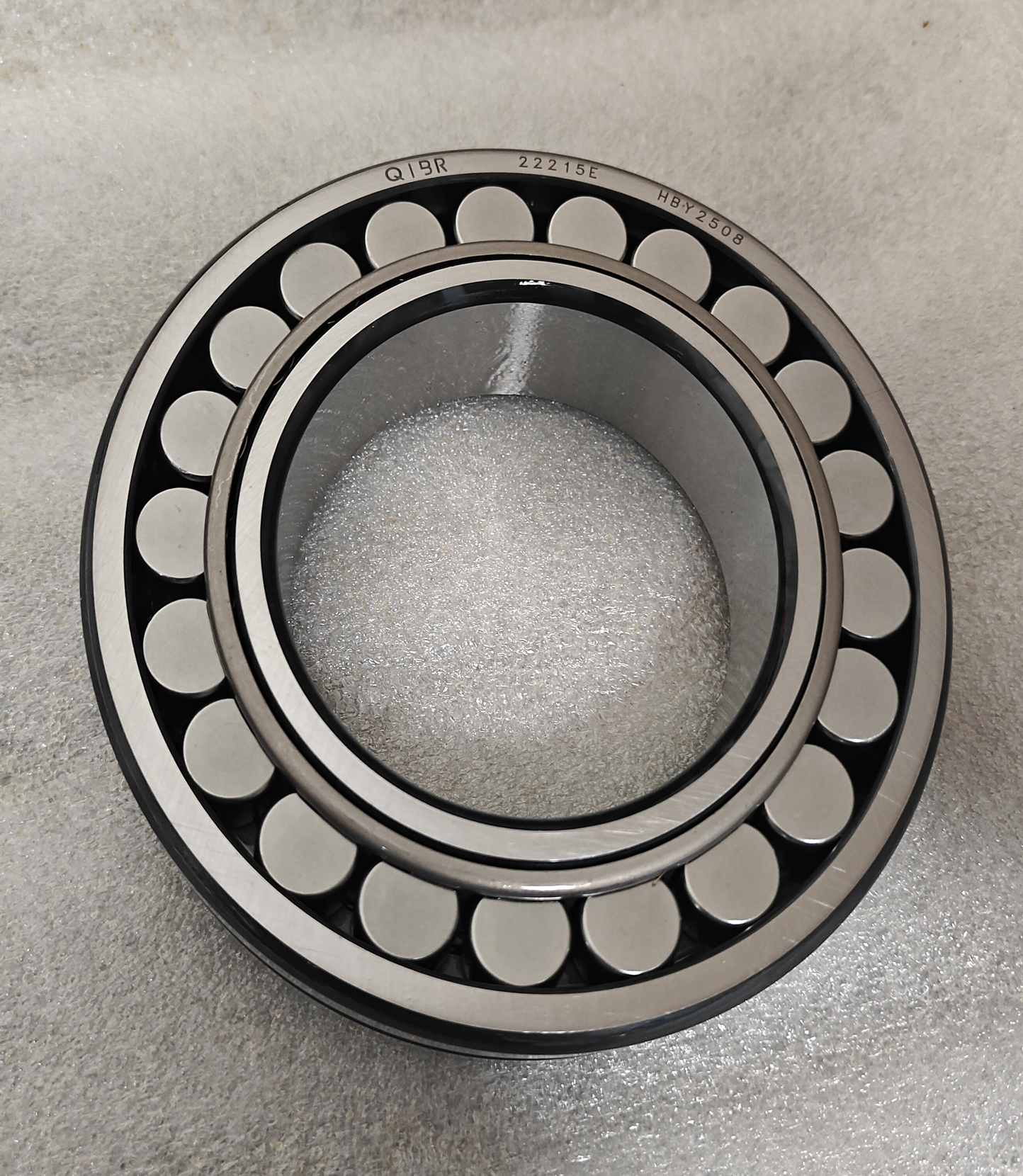
The bogie has no side wheels, only a single-sided wheel. The single-sided wheel structure is designed with a single-sided flange that fits into an angle-iron groove on the track. A unique advantage of spherical roller bearings is their ability to accommodate uneven or obstructed running surfaces during normal operation of small bogies. Spherical roller bearings feature two rows of symmetrical spherical rollers, a common spherical raceway in the outer ring, and two raceways in the inner ring that form a certain angle with the bearing axis, providing excellent self-aligning performance. This allows the bearing to function normally even when the shaft is bent or misaligned during installation. 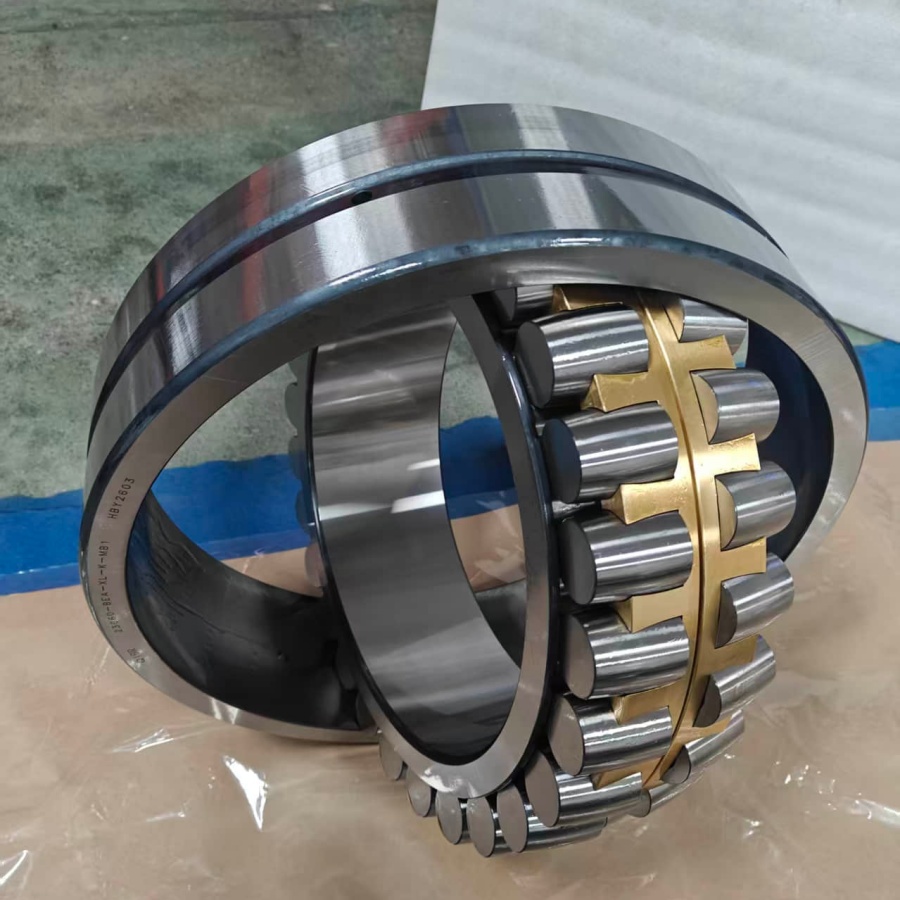
Spherical roller bearings are relatively inexpensive.
Spherical roller bearings can withstand not only radial loads but also bidirectional axial loads.
2. Basic Knowledge Extension: Radial and Axial Loads Carried by Bearings
Difference between axial and radial loads borne by bearings: The axis refers to the central shaft, and radial relates to the diameter. As noted, spherical roller bearings can carry both radial loads and bidirectional axial loads. 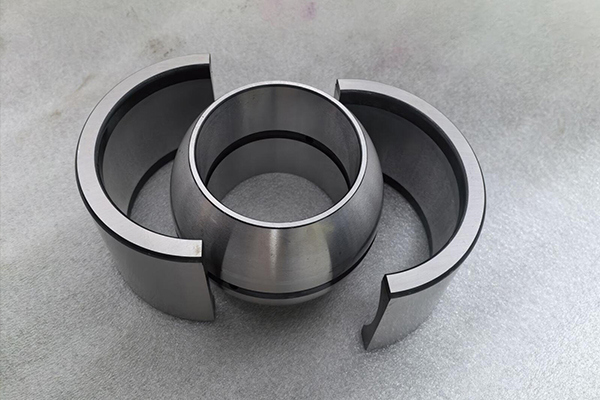
3. 3D Modeling of the Wheel Shaft and Spherical Roller Bearing Assembly
Structure of a bogie-hearth heating furnace wheel: the outer component is the wheel, with a central bore to accommodate the bearing, shaft, and spacer sleeve. The assembly uses two spherical roller bearings separated by a spacer sleeve. Lubrication of the inner wheel bearings is achieved by drilling a hole halfway along the center of the shaft and a radial hole in the shaft, allowing lubrication via an external oil cup.