Newsroom
Are Plastic Bearing Units Suitable for High-Speed Applications?
2026-03-27Plastic bearing units are generally not ideal for high-speed environments due to inherent material limitations such as low thermal resistance, insufficient rigidity, and high thermal expansion. While they offer advantages like corrosion resistance and lightweight design, their performance under high rotational speeds is often restricted compared to metal housings.
1. Heat Generation at High Speeds and Material Limitations
At high rotational speeds, bearings and seals generate significant frictional heat. Unlike metals, plastic materials have low thermal conductivity, making it difficult to dissipate heat efficiently.
- Temperature Rise: Heat accumulation can quickly elevate the housing temperature.
- Thermal Softening: Once the temperature approaches the material’s heat deflection point, the housing may soften or creep.
- Loss of Dimensional Accuracy: Deformation of the bearing seat can lead to loss of roundness and improper bearing fit, ultimately causing vibration and noise.
Additionally, the mechanical properties of plastics are highly temperature-sensitive::
- Reduced stiffness at elevated temperatures
- Increased deformation under load
- Uneven load distribution on bearing raceways, accelerating fatigue
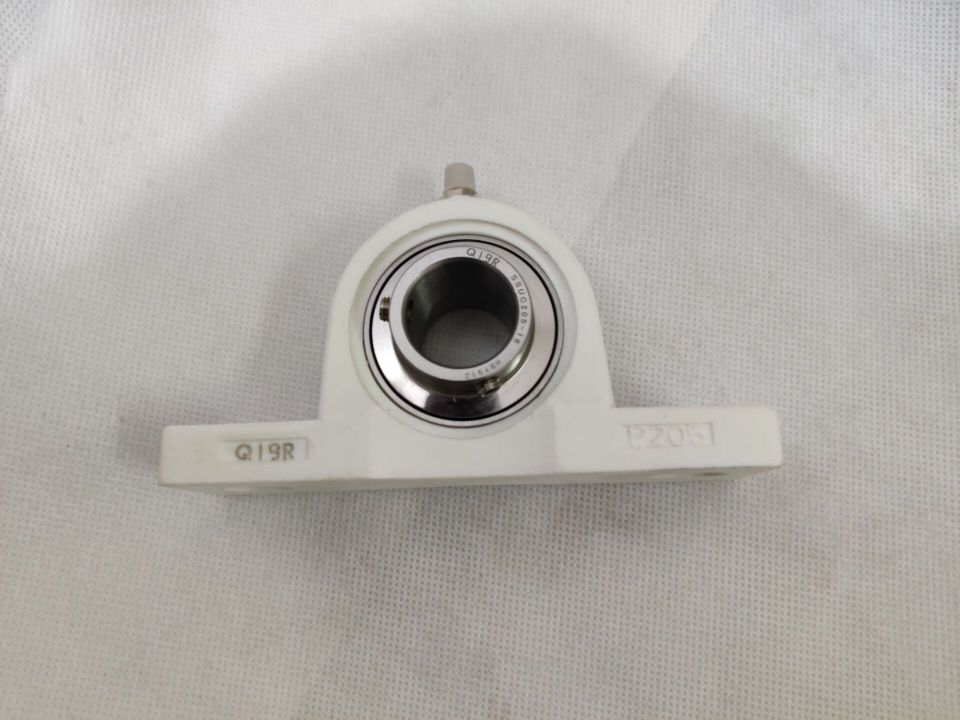
2. Challenges in Dynamic Balance and Vibration Control
High-speed applications demand excellent geometric precision and dynamic balance.
- Poor Geometric Stability: Plastic bearing units are more prone to deformation over time, especially under thermal stress.
- Increased Vibration: Even small dimensional changes can lead to imbalance, resulting in vibration and noise.
- Resonance Risk: While plastics can absorb vibration, excessive vibration may trigger resonance due to their elasticity.
Another key issue is fit stability:
- Plastics have a much higher coefficient of thermal expansion than bearing steel
- This can cause the bearing outer ring to loosen during operation
- Resulting in “creep” or movement inside the housing, leading to premature failure
3. High-Performance Plastics: Improvements and Limits
To enhance performance, manufacturers use engineered plastics such as:
- Polyamide (PA)
- Polyether ether ketone (PEEK)
Often reinforced with:
- Glass fibers
- Carbon fibers
Benefits:
- Improved strength and stiffness
- Better wear resistance
- Higher temperature tolerance
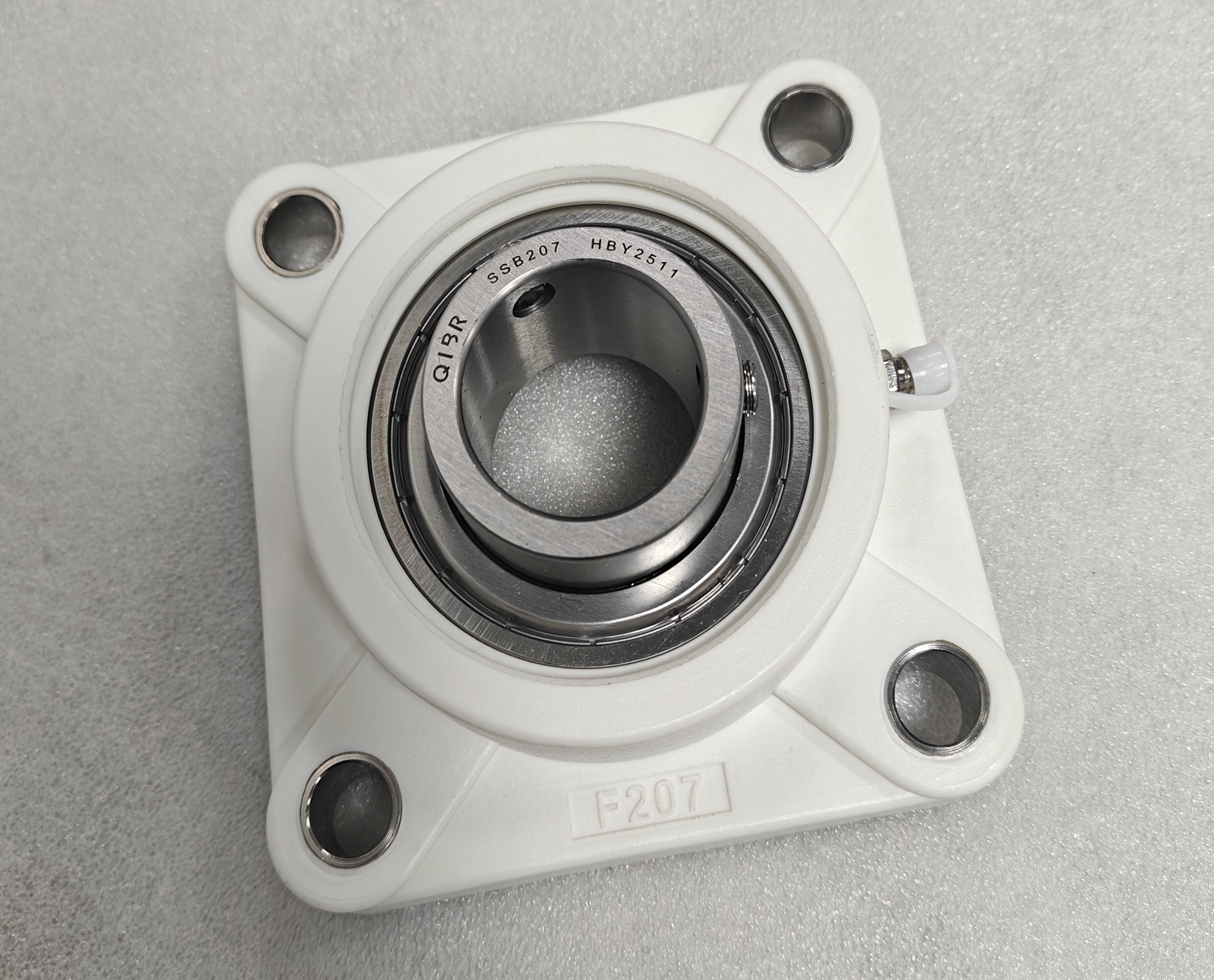
Limitations:
- Still not suitable for extreme high-speed (thousands of RPM) or heavy-load conditions
- Typically limited to medium-to-low speeds (hundreds of RPM)
- Performance can be affected by environmental factors such as chemicals and UV exposure
4. Conclusion
Plastic bearing units are not recommended for high-speed applications due to their susceptibility to heat-induced deformation, low rigidity, and thermal expansion mismatch with bearing steel.
They are best suited for:
- Low to medium speeds
- Light-load conditions
- Corrosive or weight-sensitive environments