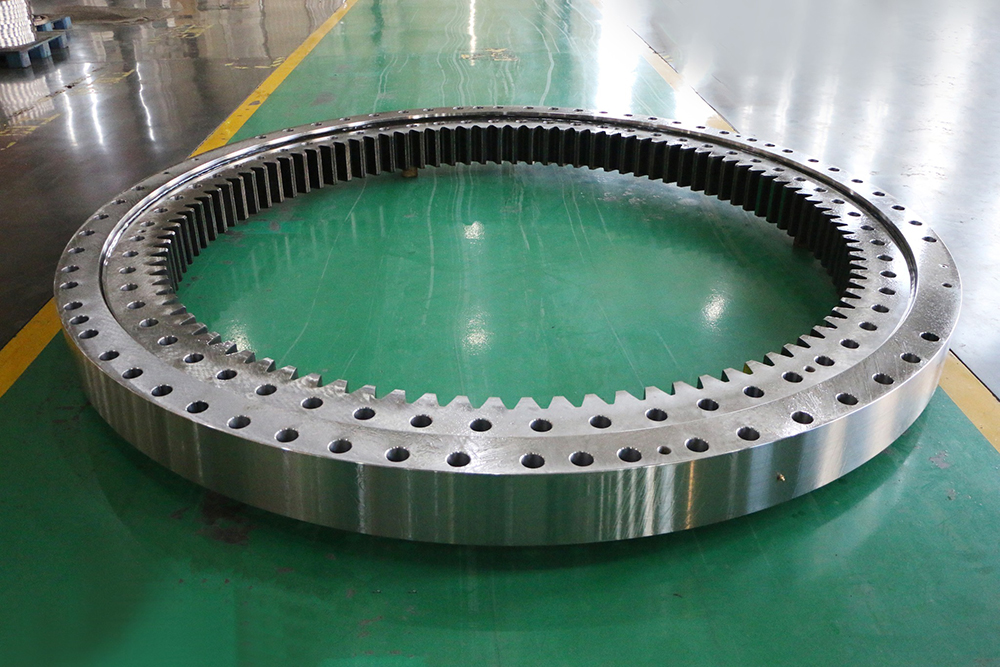
Thrust roller bearing is a type of rolling bearing specifically designed to withstand axial loads (forces parallel to the bearing axis). Their core design centers on "efficient axial force transmission" while featuring specific radial load-carrying capacity and structural characteristics, making them widely used in industrial transmission systems. Below is a detailed explanation from three dimensions: core characteristics, main types and differences, and typical applications.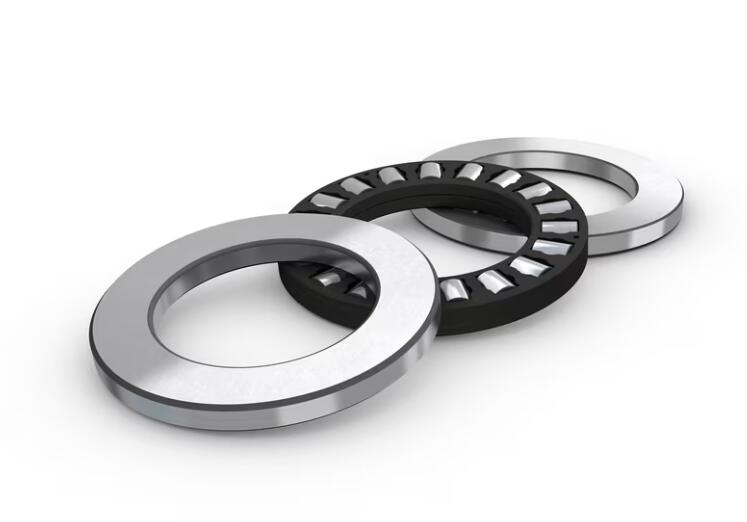
Unlike deep groove ball bearings (focused on radial loads) and angular contact ball bearings (supporting both radial and axial loads), the characteristics of thrust roller bearing is highly focused on "axial load-bearing", specifically manifested as follows:
- Core Advantage: The internal structure of the thrust roller bearing consists of "rollers + thrust cages + thrust washers". The contact between the rollers and the washers is line contact (rather than the point contact of ball bearings), resulting in a larger contact area. Therefore, it can withstand high-rated axial loads (including unidirectional or bidirectional axial forces), and some heavy-duty models can bear axial forces of thousands or even tens of thousands of tons.
- Limitation: It can only withstand small radial loads (usually 1/10 to 1/5 of the axial load). If the radial load is too large, it will cause stress concentration at the edges of the rollers and raceways, accelerating wear or even damage. Therefore, thrust roller bearing needs to be used in conjunction with radial bearings (such as cylindrical roller bearings).
- Due to the "end-face contact" structure of the rollers, large centrifugal force and frictional heat are easily generated during high-speed rotation. Therefore, the rated speed of thrust roller bearings is relatively low (usually ≤ 3000 r/min, and specific values should refer to the bearing type manual), making them more suitable for medium and low-speed working conditions.
- Specially designed "high-speed thrust roller bearings" (such as those with optimized cage materials and reduced roller diameter) can increase the speed, but they still cannot match radial bearings.
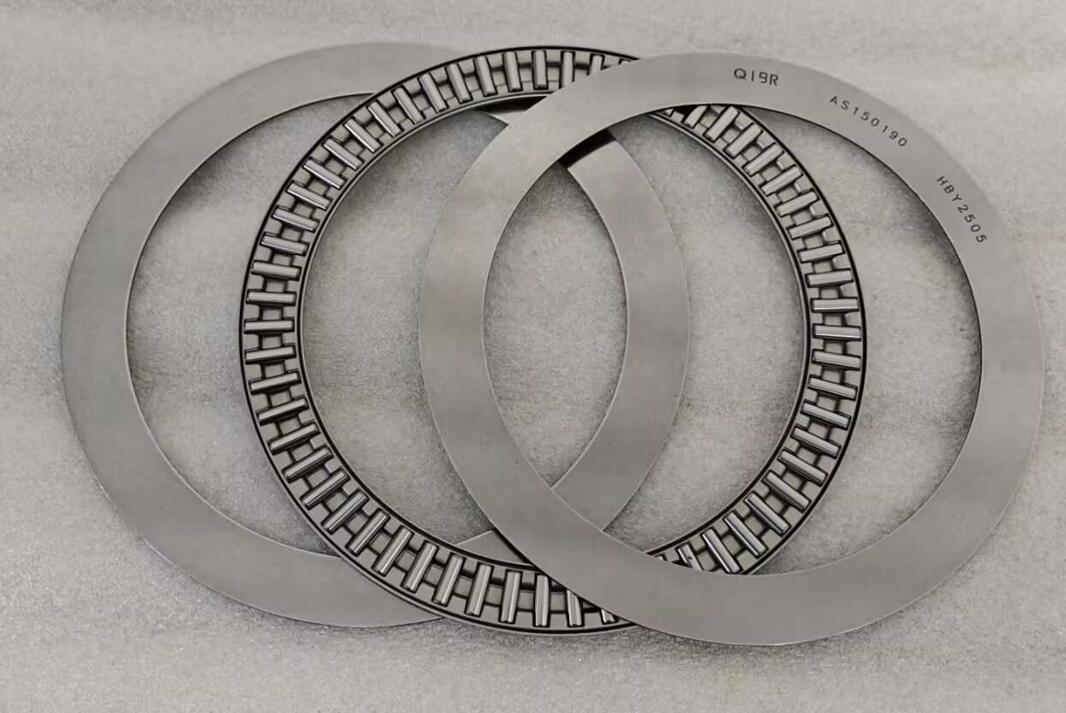
- The inner ring (shaft washer), outer ring (housing washer) and roller assembly of most thrust roller bearings are separable. During installation, the shaft washer can be mounted on the shaft and the housing washer in the bearing seat respectively, and then the roller assembly can be assembled. This facilitates disassembly and maintenance in narrow spaces or complex working conditions, especially suitable for the maintenance of large-scale equipment.
- If the coaxiality deviation between the shaft and the bearing housing is too large during installation, or the end face of the shaft is not perpendicular to the axis (excessive end runout), it will cause uneven force on the rollers and excessive local stress, shortening the bearing life. Therefore, during installation, it is necessary to ensure that "the perpendicularity between the end face of the shaft washer and the axis is ≤ 0.005 mm/m" and the coaxiality meets the equipment requirements.
- Due to the large friction caused by axial contact, it is necessary to select high-viscosity grease or extreme pressure lubricating oil (such as No. 2 lithium-based grease, industrial gear oil) to ensure sufficient lubrication between the rollers and the raceways;
- In harsh environments (such as dust, humidity), seals (such as rubber sealing rings, dust covers) should be used to prevent impurities from entering the inside of the bearing.
According to the roller shape and force direction, thrust roller bearing can be divided into three categories, and the applicable scenarios of different types vary significantly:
- Roller Shape: Cylindrical rollers
- Load Direction: Unidirectional axial load
- Core Features: Large contact area, strongest axial load-carrying capacity, suitable for heavy-duty and low-speed working conditions (e.g., presses, cranes)
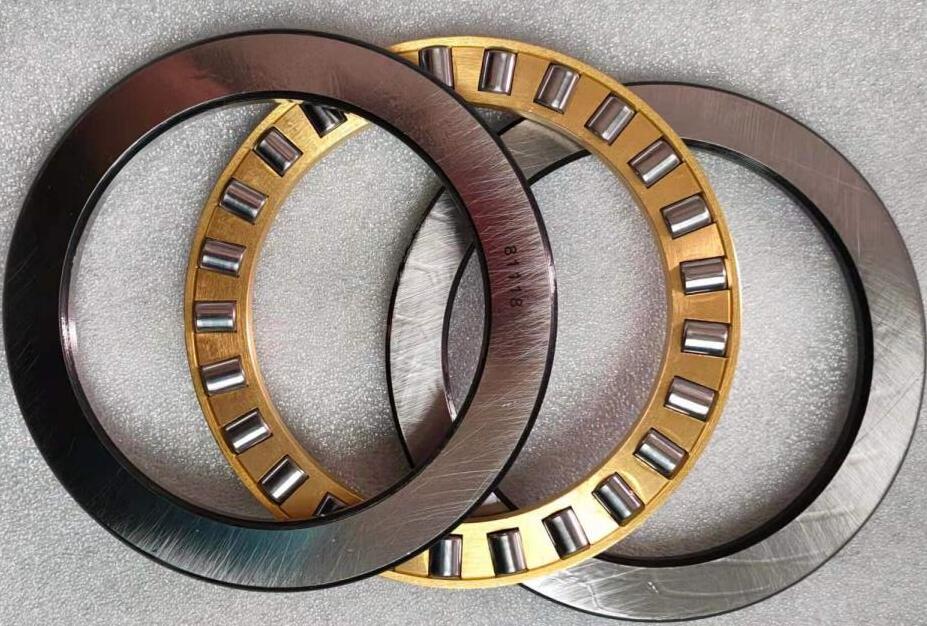
- Roller Shape: self-aligning rollers
- Load Direction: Unidirectional axial load
- Core Features: Self-aligning (allowing an angular deviation of ≤ 1.5° between the shaft and the housing washer), suitable for scenarios with low installation accuracy (e.g., rolling mills, vibrating screens)
- Roller Shape: Tapered rollers
- Load Direction: Unidirectional axial + small radial load
- Core Features: Can withstand both axial and small radial loads (radial load-carrying capacity is better than the first two types), suitable for scenarios requiring bidirectional force balance (e.g., automobile gearboxes, machine tool spindles)
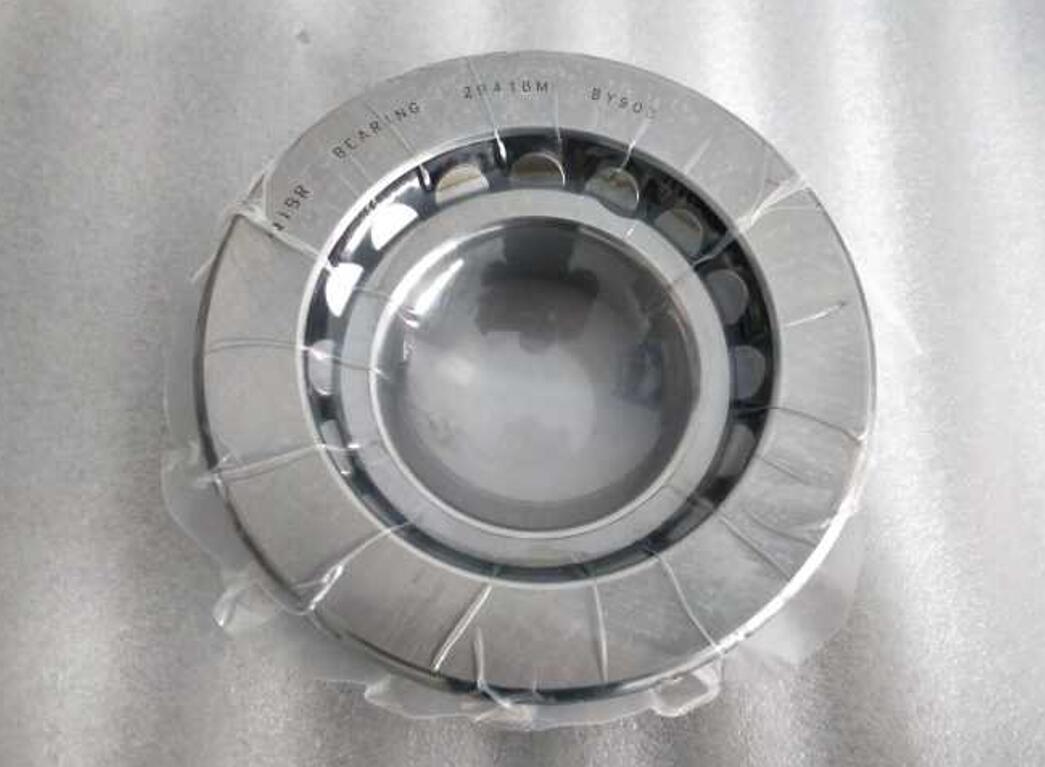
Based on the characteristics of "strong axial load-bearing and adaptability to medium and low speeds", thrust roller bearing is mainly used in mechanical systems that need to transmit axial forces, covering multiple industrial fields:
- Typical Scenarios: Rolling mills (supporting the axial force of rolling rolls), cranes (axial braking of winches), presses (axial load-bearing for the up-and-down movement of sliders)
- Suitable Types: Thrust cylindrical roller bearings (withstanding ultra-large axial forces), thrust self-aligning roller bearings (adapting to slight installation deviations of rolling mills)
- Typical Scenarios: Lathe spindles (axial positioning), milling machine worktables (axial force transmission of the feed system), grinding machines (axial stability of grinding wheels)
- Suitable Types: Thrust tapered roller bearings (supporting small radial forces and ensuring spindle accuracy), high-precision thrust cylindrical roller bearings (low friction and high stability)
- Typical Scenarios: Automobile gearboxes (axial force of gear shifting), truck rear axles (axial positioning of drive shafts), motorcycle engines (axial support of crankshafts)
- Suitable Type: Thrust tapered roller bearings (impact-resistant and adaptable to composite loads of gearboxes)
- Typical Scenarios: Reducers (axial force of input/output shafts), centrifugal pumps (axial thrust of impellers), excavators (axial load-bearing of slewing mechanisms)
- Selection Basis: Choose according to the load magnitude - thrust cylindrical roller bearings for heavy loads and thrust self-aligning roller bearings for normal loads
- Typical Scenarios: Wind turbines (axial positioning of main shafts), water turbines (axial thrust of runners), large motors (axial stability of rotors)
- Suitable Types: Thrust self-aligning roller bearings (adapting to slight vibrations and installation deviations of wind turbines), large thrust cylindrical roller bearings (withstanding ultra-large axial forces of water turbines)