Newsroom
How Proper Maintenance and Lubrication Extend the Life of Slewing Bearings
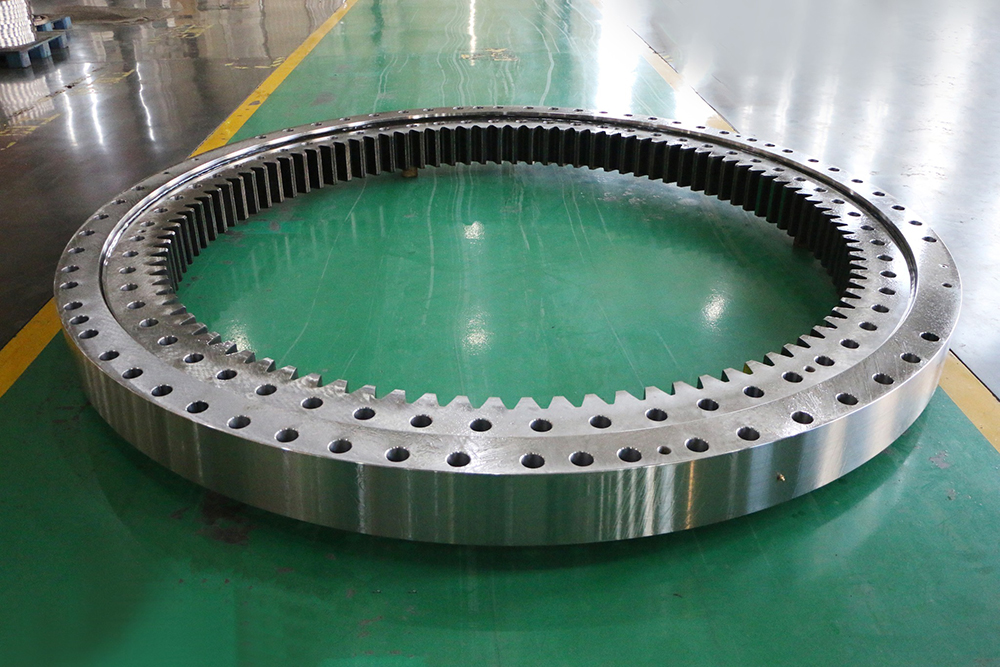
Slewing bearings are critical components widely used in construction machinery, cranes, wind turbines, port equipment, mining machinery, and other heavy-duty applications. They are designed to simultaneously withstand axial loads, radial loads, and overturning moments, making their operational condition directly linked to overall machine safety, reliability, and service life.
In practical applications, many slewing bearing failures are not caused by design or manufacturing issues, but by insufficient maintenance or improper lubrication. This article provides a professional overview of best practices for maintaining and lubricating slewing bearings from an engineering perspective.
1. Why Slewing Bearings Require Special Attention
Compared with standard rolling bearings, slewing bearings have several distinctive characteristics:
- Large diameter and low rotational speed
- Complex combined load conditions
- High sensitivity to installation accuracy
- Replacement is costly and time-consuming
Once damage such as pitting, spalling, or seizure occurs, it often results in unplanned downtime and significant repair costs. Therefore, systematic maintenance and correct lubrication are essential for long-term reliable operation.
2. Key Maintenance Practices for Slewing Bearings
2.1 Bolt Connection Inspection
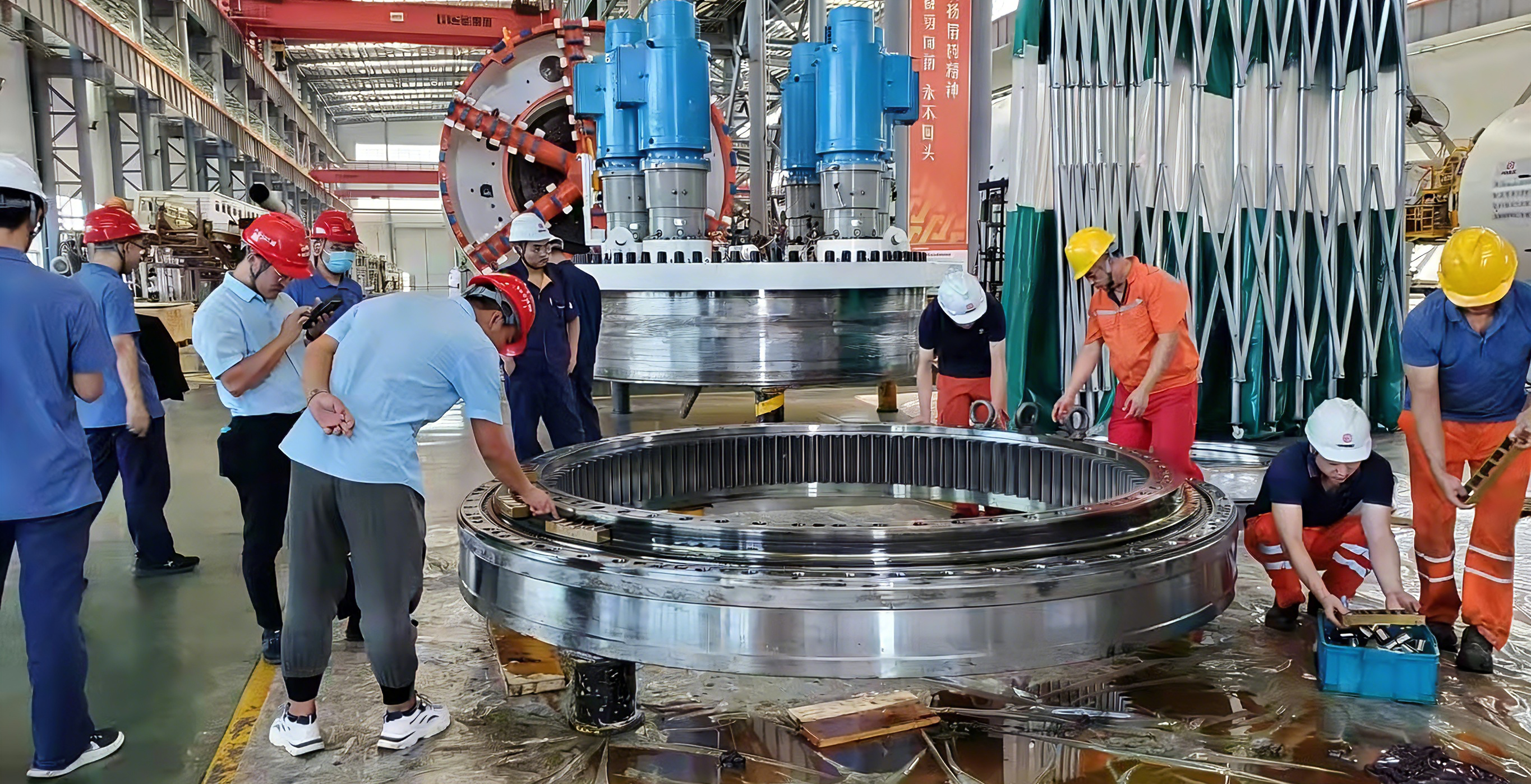
Slewing bearings are mounted to the machine structure using high-strength bolts. Bolt loosening is one of the most common causes of premature bearing failure.
Recommended practices:
- Perform the first inspection after 50–100 operating hours
- Conduct periodic inspections thereafter, with shorter intervals for heavy-load or shock-load applications
- Tighten bolts using a calibrated torque wrench
- Apply a cross-pattern tightening sequence to ensure uniform preload
- Replace damaged or stretched bolts as a complete set
2.2 Operating Condition Monitoring
During operation, the following signs should be closely monitored:
- Sudden increase in rotational resistance
- Abnormal noise or intermittent sticking
- Noticeable loss of rotational accuracy
Such symptoms may indicate:
- Insufficient or degraded lubrication
- Localized raceway damage
- Uneven mounting surfaces or structural deformation
Early detection allows corrective actions before severe damage occurs.
2.3 Seal and Contamination Control
Slewing bearings often operate in harsh environments with dust, water, mud, or corrosive substances. Seal failure allows contaminants to enter the raceway, accelerating wear.
Maintenance recommendations:
- Regularly inspect seals for aging, cracks, or displacement
- Clean hardened contaminants from the seal area
- In highly contaminated environments, shorten lubrication intervals to help purge foreign particles from the bearing
3. Lubrication Principles and Best Practices
3.1 Selection of Lubricating Grease
Slewing bearings are typically grease-lubricated. Grease selection should consider:
- Load level and shock conditions
- Operating temperature range
- Environmental exposure (water, dust, corrosion)
Common recommendations include:
- Lithium-based or lithium-complex greases with EP (Extreme Pressure) additives
- Greases with high base oil viscosity for heavy-load, low-speed applications
⚠️ Mixing different grease types or brands is not recommended unless compatibility is confirmed.
3.2 Correct Lubrication Method
- Inject grease through all lubrication ports
- Rotate the slewing structure slowly during lubrication
- Continue greasing until fresh grease is visibly purged from the seals
This process ensures uniform grease distribution across the raceway and also helps flush out old grease and contaminants.
3.3 Establishing Proper Lubrication Intervals
Lubrication intervals should be adjusted based on real operating conditions rather than fixed schedules:
- Standard intervals for light loads and clean environments
- Shorter intervals for heavy loads, shock loads, dusty or humid conditions
- Apply fresh grease before a long-term shutdown to prevent corrosion
4. Consequences of Poor Maintenance and Lubrication
Neglecting proper maintenance may lead to:
- Raceway pitting and surface spalling
- Local overheating and material fatigue
- Loss of rotational accuracy or functional failure
In many cases, the outcome is premature replacement of the slewing bearing, resulting in high repair costs and extended machine downtime.
Conclusion
Slewing bearings should not be considered “maintenance-free” components.
A structured maintenance plan, correct grease selection, and consistent lubrication practices are essential to ensure reliable operation and extended service life.
Proper maintenance not only protects the bearing itself but also safeguards the performance, safety, and long-term value of the entire machine.