Newsroom
How to Select the Guiding Accuracy of Linear Roller Bearings
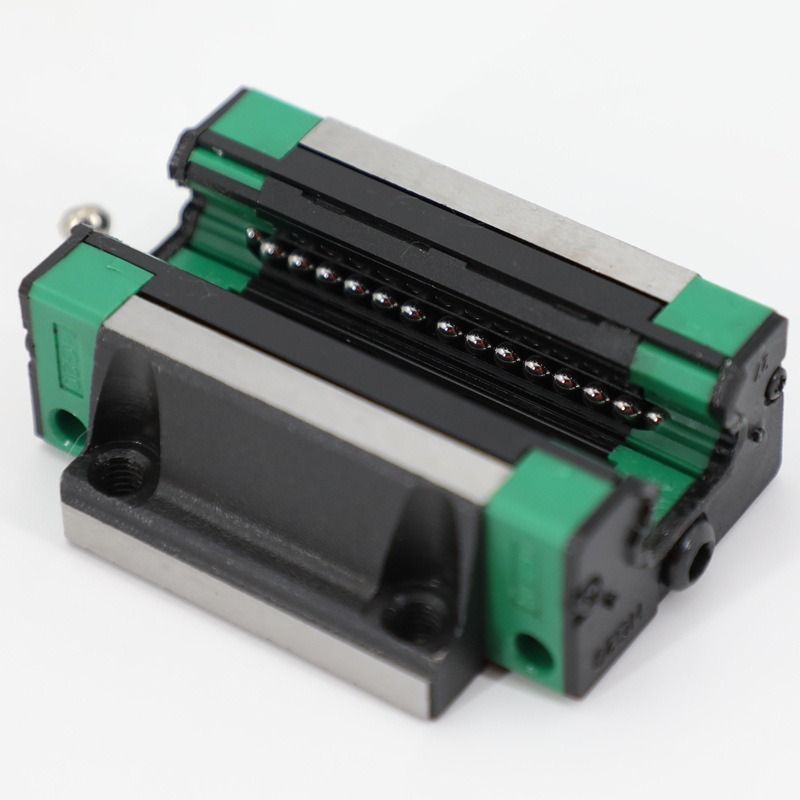
2025-12-26The selection of guiding accuracy for linear roller bearings must be determined based on the motion requirements and application scenarios of the equipment. Guiding accuracy grades (commonly classified as standard grade, high-precision grade, etc.) depend on positioning accuracy, repeat positioning accuracy, and running smoothness. High-precision applications (such as CNC machine tools and precision measurement equipment) must use high-precision bearings to ensure micron-level straightness and parallelism. For general handling or standard automation equipment, standard accuracy grades are usually sufficient to control costs.
I. Matching Application Scenarios with Accuracy Requirements
1. Positioning accuracy as the primary consideration
When selecting the guiding accuracy of linear roller bearings, the first step is to clarify the allowable positioning error of the equipment.
- High-precision applications
For applications requiring precise position control—such as semiconductor manufacturing equipment, coordinate measuring machines (CMMs), and high-precision CNC grinding machines—positioning accuracy requirements are often at the micron or sub-micron level. These applications must use high-precision or ultra-high-precision linear bearings to ensure that the straightness, parallelism, and rolling-element manufacturing tolerances meet the highest standards.
- General automation applications
For ordinary handling, assembly, and packaging machinery, where positioning accuracy requirements are relatively relaxed (for example, tens to hundreds of microns), standard or medium-precision linear roller bearings can be selected to achieve good cost performance.
2. Requirements for repeat positioning accuracy
Repeat positioning accuracy reflects the ability of equipment to return to the same position consistently. High-precision linear roller bearings provide more stable and uniform rolling motion, effectively reducing fluctuations in motion resistance and thereby ensuring high repeat positioning accuracy.
II. Impact of Accuracy Grades on Performance
1. Assurance of geometric accuracy
Guiding accuracy grades are mainly reflected in the geometric tolerance control of the linear roller bearing and its matched guide rail.
- Straightness and parallelism
High-precision bearings have tighter tolerances on the straightness and flatness of raceways and sliders, ensuring minimal lateral or vertical deviation throughout the entire stroke.
- Manufacturing tolerances
Higher accuracy grades imply stricter control over the roundness, surface roughness, and dimensional variation of rolling elements (such as balls) and raceways, resulting in smoother operation and lower vibration.
2. Contribution to system rigidity
High-precision bearings typically feature more stringent preload control and more refined internal structures.
- High rigidity
This design increases the stiffness of the guide system, enabling it to better resist deformation caused by external cutting forces or working loads, which is essential for maintaining dynamic accuracy (e.g., during high-speed machining).
III. Cost Considerations and Avoiding Overdesign
1. Nonlinear relationship between accuracy and cost
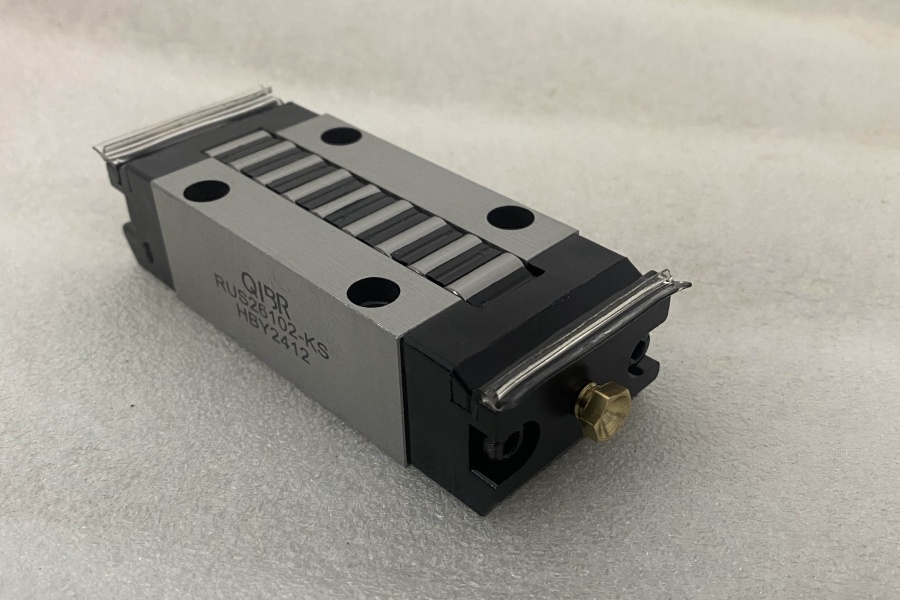
Improving guiding accuracy grades requires longer precision machining time, stricter quality control, and higher material standards. As a result, costs increase sharply and nonlinearly with each higher accuracy level.
- Risk of overdesign
Selecting the highest accuracy grade for equipment with low precision requirements significantly increases manufacturing costs. Moreover, if other system components (such as ball screws or machine frame rigidity) cannot match the bearing accuracy, the additional investment in precision often does not translate into real performance gains, leading to wasted resources.
2. Installation and maintenance requirements
High-precision linear roller bearings impose higher demands on installation and maintenance. They require high-accuracy mounting surfaces and professional tools for alignment and calibration.
- System matching
The selected guide accuracy must be compatible with the geometric accuracy of the mounting base, the precision of drive components (such as ball screws), and the load-carrying stiffness of the bearing system.
IV. Conclusion
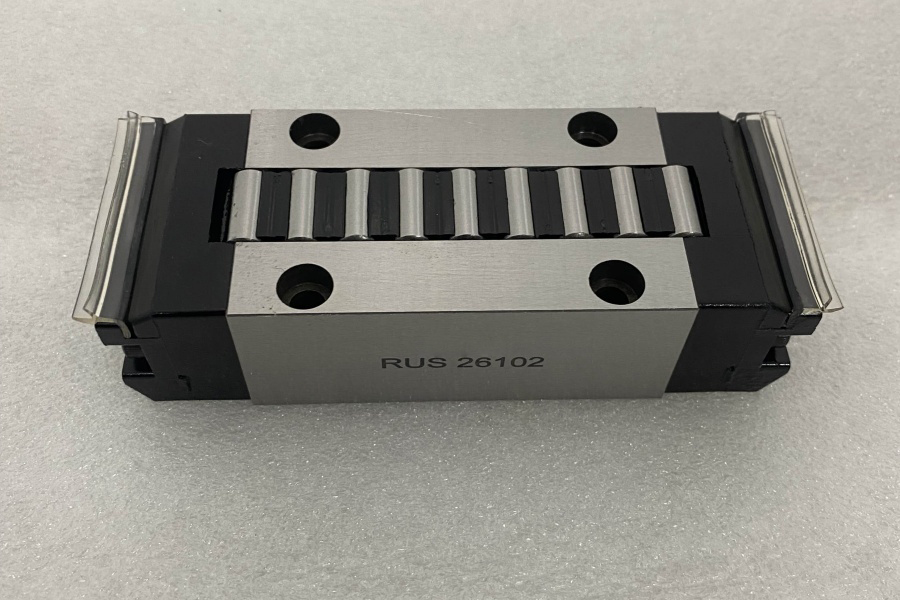
The selection of guiding accuracy for linear roller bearings should be based on meeting the equipment’s positioning and repeat positioning accuracy requirements. A balanced choice between high precision and standard precision should be made to avoid unnecessary cost increases caused by overdesign. From an engineering perspective, manufacturers’ accuracy grade specifications should be carefully reviewed, and decisions should be made scientifically based on actual operating conditions.