Newsroom
Hubless Motorcycle Design: Bearing Technology Behind a Radical Wheel Concept
Hubless motorcycles have attracted growing attention in recent years, appearing in concept vehicles, high-end custom builds, and experimental engineering projects. Characterized by an open wheel center and the absence of a traditional hub and axle, this unconventional design challenges long-established motorcycle engineering principles.
While hubless motorcycles are often discussed for their visual impact, their real technical significance lies in how loads, motion, and structural stiffness are managed—areas where bearing technology plays a decisive role.
Redefining Wheel Support Without a Central Hub
In conventional motorcycle designs, the wheel rotates around a central axle supported by standard rolling bearings. Load transmission is straightforward and well understood. In contrast, hubless motorcycles eliminate the central hub entirely, relying instead on a large-diameter outer bearing system integrated into the wheel rim and supporting structure.
This configuration fundamentally changes how forces are transmitted:
- Vehicle weight and dynamic loads are carried through the outer bearing circumference
- Steering and braking forces introduce axial loads and overturning moments
- Structural stiffness must be maintained without a central support point
As a result, the bearing system becomes a core load-bearing and positioning component, not merely a rotational aid. 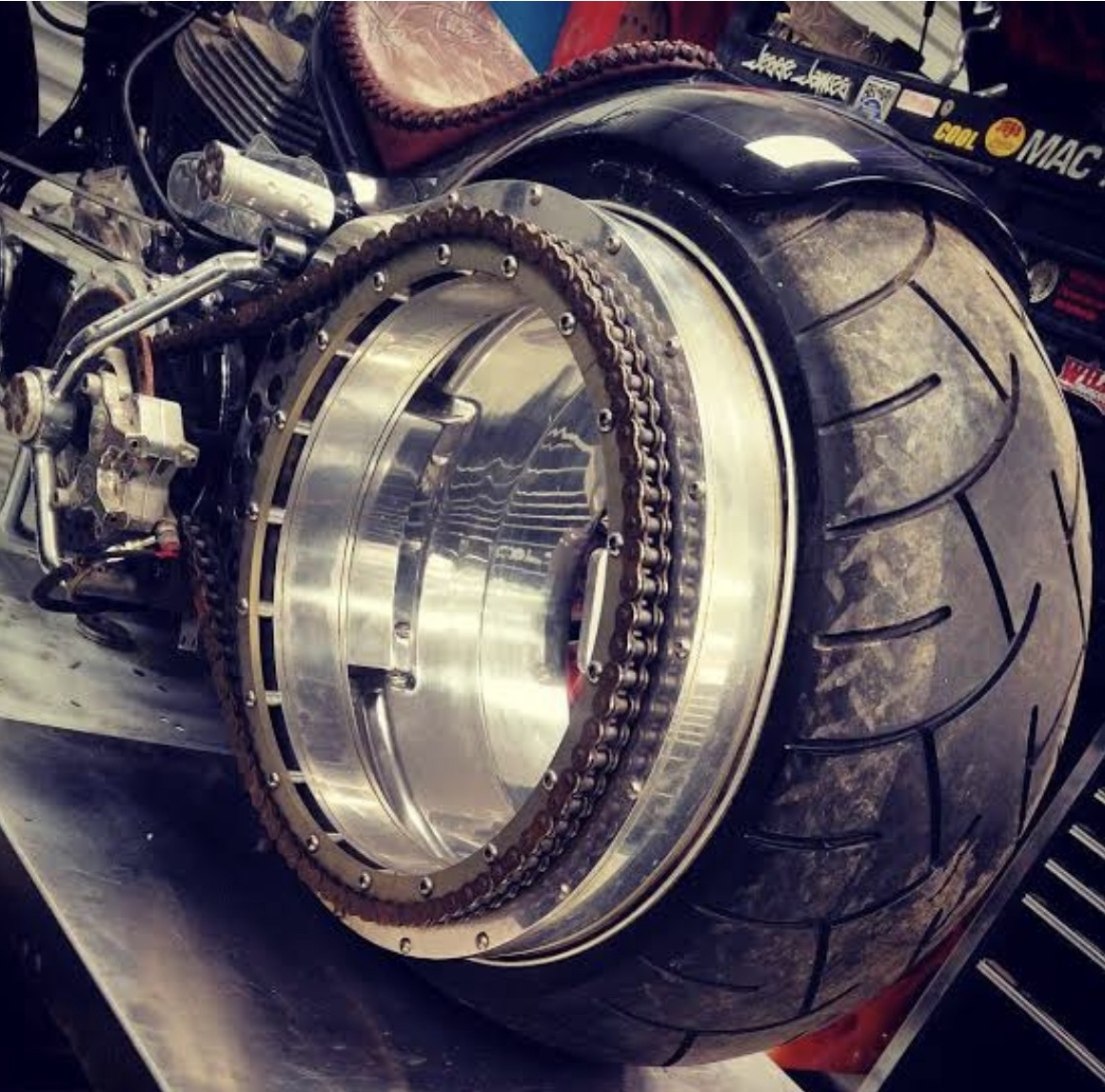
Bearing Load Characteristics in Hubless Motorcycles
Bearings used in hubless motorcycle applications must operate under complex combined loading conditions, including:
- Radial loads from vehicle mass and road input
- Axial loads generated during steering and braking
- Tilting moments caused by cornering and acceleration forces
These conditions demand bearing solutions with:
- High load-carrying capacity in multiple directions
- Excellent stiffness to minimize elastic deformation
- Stable performance at relatively low rotational speeds
Any loss of stiffness or uneven load distribution can directly affect steering precision, braking performance, and riding stability.
Typical Bearing Solutions for Hubless Designs
From an engineering perspective, several bearing types are suitable for hubless motorcycle systems:
Crossed roller bearings offer high rigidity and can simultaneously support radial, axial, and moment loads. Their compact axial design and high stiffness make them suitable for steering-related assemblies where precision is critical.
Four-Point Contact Ball Bearings
Four-point contact ball bearings can accommodate axial loads in both directions while supporting radial loads. With properly controlled preload, they provide smooth rotation and consistent contact characteristics, which are essential for stable steering behavior.
Customized Slewing Bearings
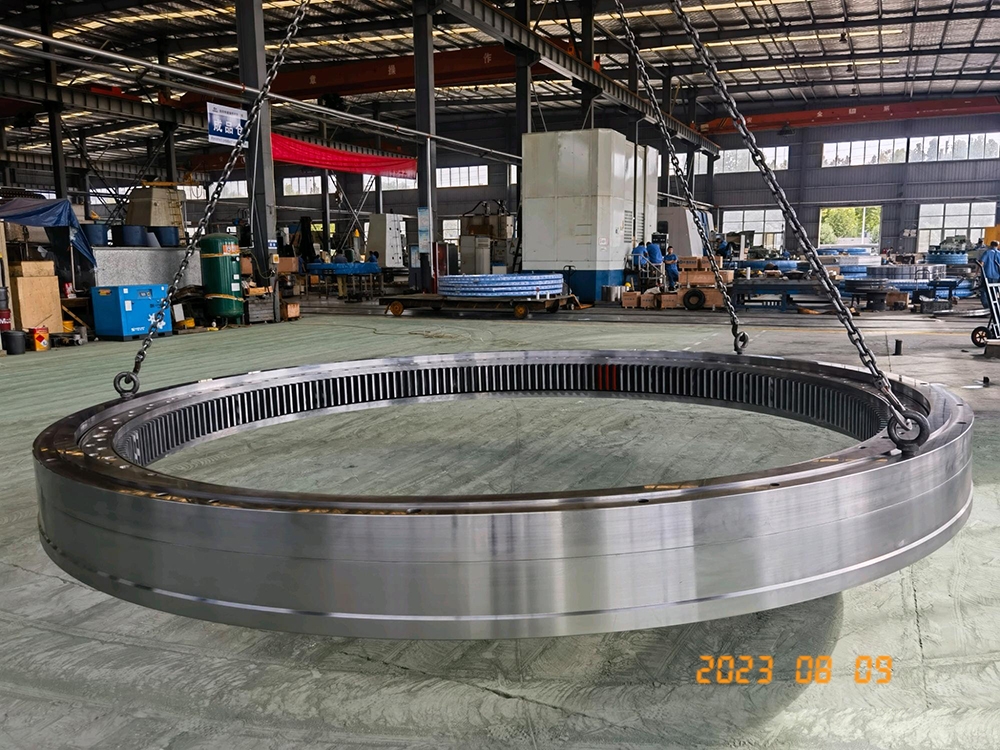
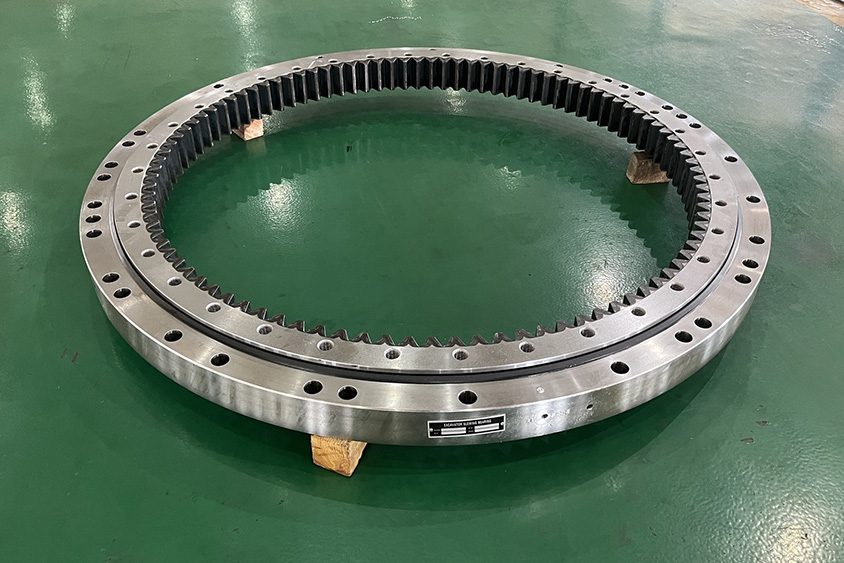
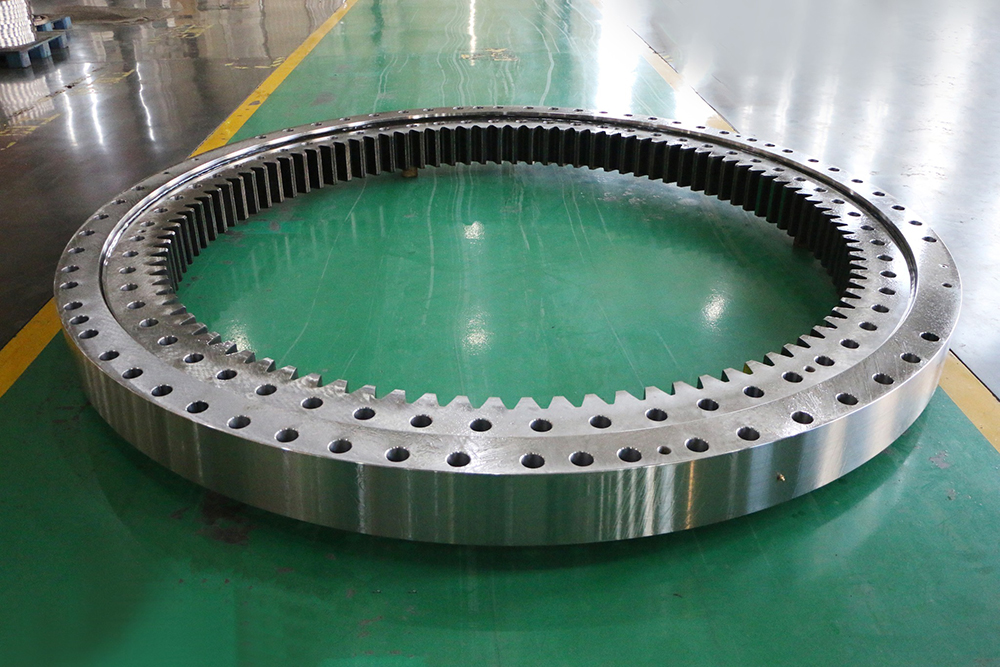
In many hubless designs, standard catalog bearings are insufficient. Customized thin-section slewing bearings or large-diameter ring bearings are often developed to meet specific requirements related to size, load capacity, sealing, and mounting interfaces.
In such applications, bearing selection becomes a system-level engineering decision rather than a standard component choice.
Installation Precision and Preload Control
Hubless motorcycle bearings are highly sensitive to installation accuracy. Key factors include:
- Flatness and concentricity of mounting surfaces
- Uniform bolt preload and structural rigidity
- Proper bearing preload to balance stiffness and friction
Incorrect installation or preload may lead to increased friction, abnormal wear, or steering instability. For this reason, bearing installation must be treated as part of the overall structural design, not as a secondary assembly step. 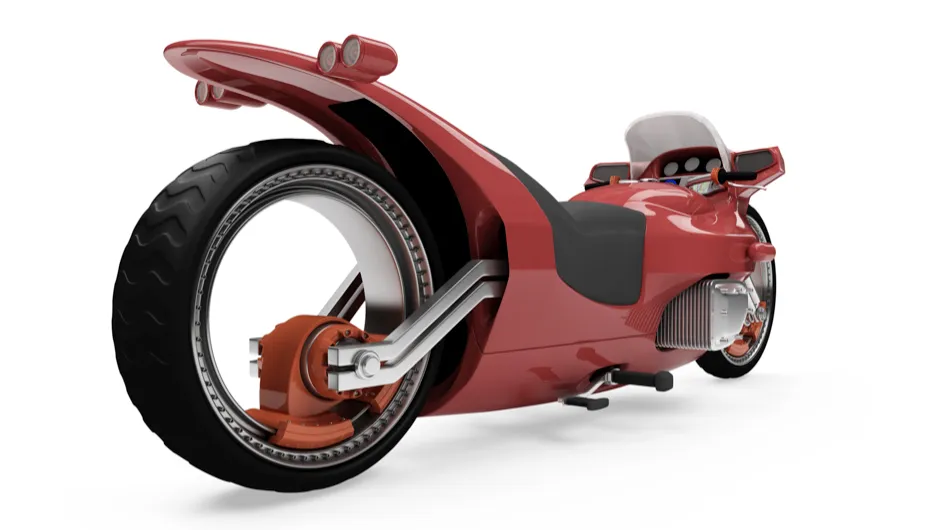
Lubrication and Environmental Protection
Due to their position near the wheel perimeter, hubless motorcycle bearings are exposed to dust, moisture, and road contaminants. Effective sealing and lubrication strategies are essential to ensure long service life.
High-performance greases with strong adhesion and extreme-pressure properties are typically required to maintain reliable lubrication under low-speed, high-load conditions.
Bearing Technology as an Enabler of Hubless Design
From a bearing manufacturer’s perspective, hubless motorcycles represent a clear example of how unconventional mechanical designs place higher demands on bearing performance, precision, and customization capability.
As hubless concepts evolve from experimental prototypes toward engineered products, bearing technology will remain a key enabling factor, influencing not only reliability but also overall system feasibility.
Conclusion
Hubless motorcycle design is not defined solely by its appearance. Its success depends on how effectively loads, motion, and stiffness are managed—areas where bearing engineering plays a central role.
For bearing manufacturers, such applications highlight the importance of advanced bearing design, application understanding, and system-level thinking in supporting next-generation mechanical innovations.