Newsroom
Impacts and Adjustment Techniques of Installation Clearance for Crossed Roller Bearings
2025-12-16  I. Core Impacts of Improper Installation Clearance Reservation
1. Bearing Overheating
Excessively small installation clearance will intensify internal friction of the crossed roller bearing, generating excessive heat and leading to a rise in bearing temperature. Prolonged overheating accelerates the deterioration of lubricants, reducing their lubricating performance and further worsening the friction and heat generation, forming a vicious cycle. This not only shortens the service life of lubricants but also aggravates bearing wear, directly affecting the normal operation of equipment.
2. Aggravated Wear and Shortened Service Life
Either excessively large or small clearance will cause uneven stress distribution inside the bearing, increasing local wear. Small clearance intensifies the contact stress between rolling elements and raceways, while large clearance triggers unnecessary vibration and impact of rolling elements during operation. Both scenarios accelerate bearing wear, shorten its service life, and increase equipment maintenance costs.
3. Deteriorated Operation Precision and Stability
Improper clearance impairs the rigidity and stability of the crossed roller bearing, resulting in reduced equipment operation precision. Excessively large clearance causes significant radial and axial runout of the bearing during operation, lowering the machining precision of equipment.
Deteriorated operation precision not only affects product quality but also increases the defective rate and reduces production efficiency. Additionally, large clearance easily leads to severe equipment vibration, which not only generates noise and pollutes the working environment but also further intensifies wear and even induces equipment failures. 
II. Practical Techniques for Clearance Adjustment
1. Accurate Clearance Measurement
Select appropriate tools based on the clearance size: Feeler gauges are suitable for measuring large clearances, and the corresponding thickness of the feeler gauge should be chosen until it can be inserted without obvious looseness. Dial indicators offer higher measurement accuracy; fix them on the bearing housing and monitor the clearance change between the inner and outer rings to ensure accurate measurement results.
2. Scientific Clearance Adjustment
Precise adjustment of the crossed roller bearing clearance can be achieved by increasing or decreasing the thickness of gaskets. Select an appropriate gasket thickness to ensure the clearance is within the design range. For bearings with adjusting nuts, the clearance can be adjusted by rotating the nuts. Use a torque wrench to ensure the tightening force of the nuts meets the design requirements, avoiding over-tightening or under-tightening.
3. Comprehensive Effect Verification
After adjustment, re-measure the clearance to ensure it meets the design requirements. Conduct multiple measurements with feeler gauges or dial indicators to ensure the accuracy of measurement results. Perform dynamic tests under equipment operating conditions to check the operating status of the crossed roller bearing. Ensure the bearing operates stably with the adjusted clearance through vibration analysis and temperature monitoring. 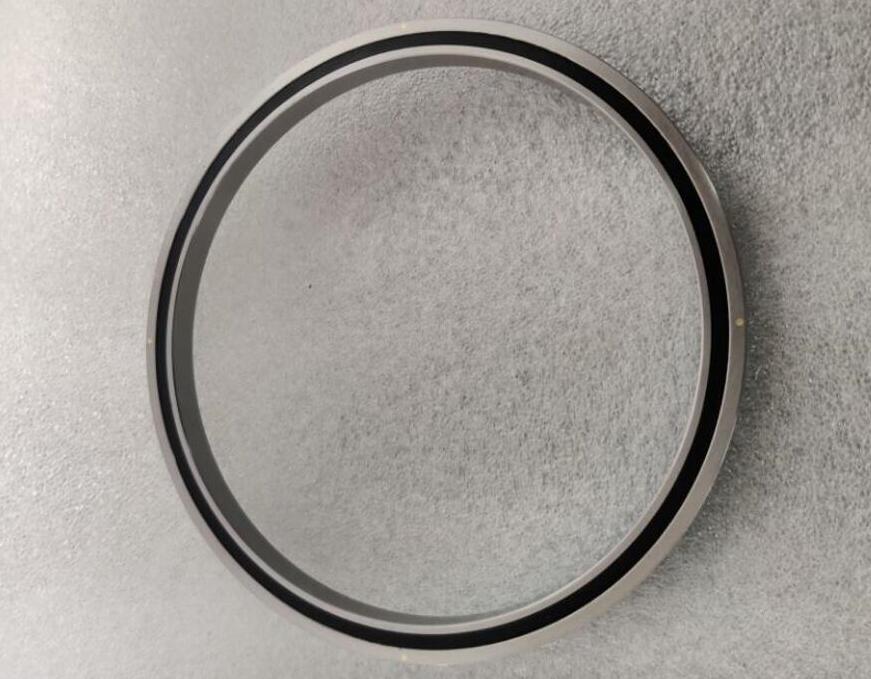
4. Key Notes
Follow manufacturer guidelines: Strictly follow the installation and adjustment guidelines provided by the manufacturer. These guidelines usually include detailed steps and precautions to ensure the accuracy and safety of the adjustment process.
- Use appropriate tools: Employ suitable measuring and adjusting tools such as feeler gauges, dial indicators, and torque wrenches. Ensure the accuracy and reliability of tools to avoid measurement errors caused by tool issues.
- Adjust gradually: Clearance adjustment should be carried out step by step. Re-measure after each adjustment to ensure the adjusted clearance meets requirements. Avoid excessive adjustment caused by large one-time adjustments.
- Record the adjustment process: Document each adjustment process and results, including measurement data and adjustment steps. These records help quickly locate problems in subsequent maintenance and adjustments, improving work efficiency.
- Conduct regular inspections: Regularly check the clearance of crossed roller bearings to ensure it remains within the design range during operation. Regular inspections can detect clearance changes in a timely manner, preventing equipment failures caused by improper clearance.

Installation clearance is crucial for the performance of crossed roller bearing, and improper reservation will seriously affect equipment operation. By adopting correct adjustment techniques such as accurate measurement, scientific adjustment, comprehensive verification, and standardized management, the clearance can be effectively controlled within a reasonable range, reducing wear and improving the operation precision and stability of equipment.
In practical applications, users should strictly follow the manufacturer's guidelines, use appropriate tools, adjust gradually, record the adjustment process, and conduct regular clearance inspections to ensure the stable operation of crossed roller bearings.
Through scientific management and technical optimization, the performance and reliability of crossed roller bearing can be improved, providing strong support for the stable operation of equipment.