Newsroom
Thrust Ball Bearings: Empowering Multi-Industry Operations with Strong Axial Load Capacity
2025-11-20 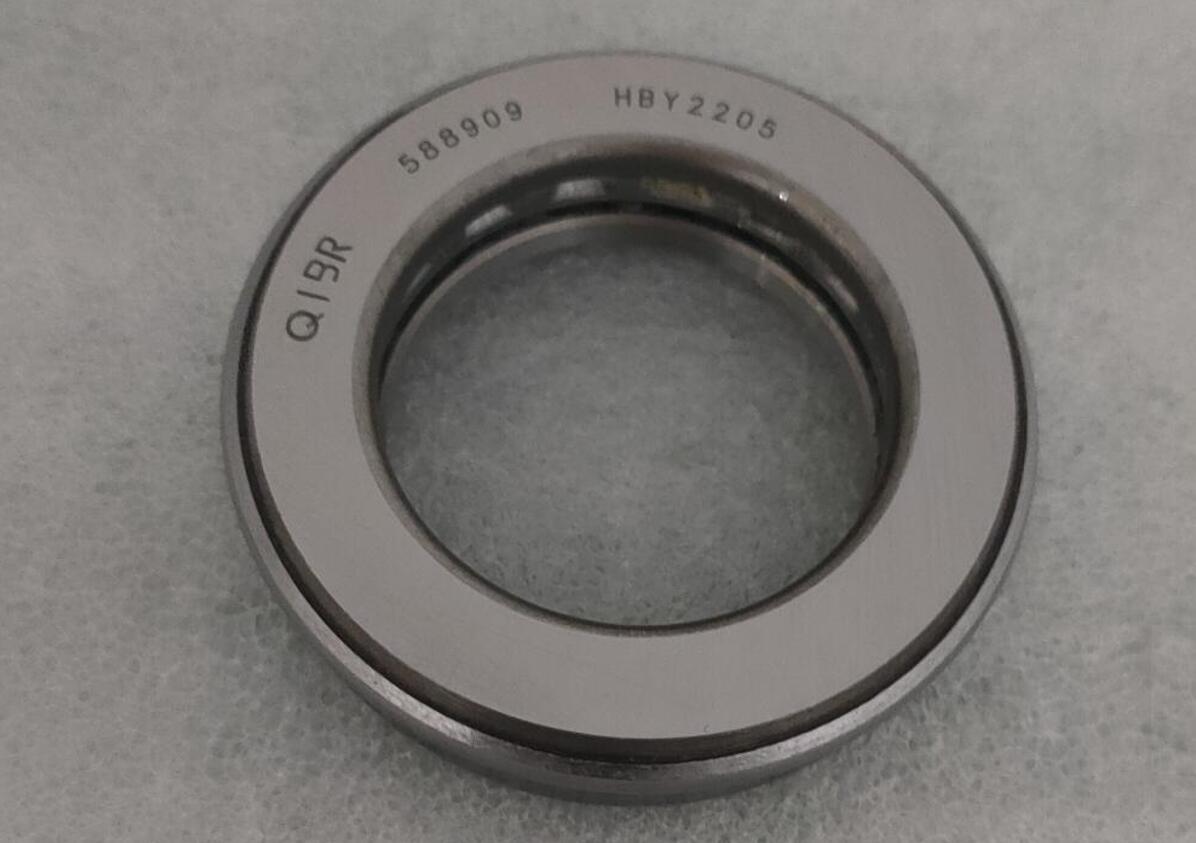 In the "power transmission joints" of industrial machinery, thrust ball bearing has emerged as critical components ensuring precise and stable equipment operation. Their core advantage lies in specialized axial load bearing, which complements deep groove ball bearings that focus on radial load bearing.
Thrust ball bearing specializes in withstanding axial forces. Boasting compact structure, low friction loss, and easy installation and maintenance, they have been widely applied in core industrial sectors such as machine tool processing, automotive manufacturing, and construction machinery.
I. Core Features: Decoding the Axial Load Advantages of Thrust Ball Bearings
Their core features can be summarized in three aspects:
- High Axial Load Efficiency: Designed exclusively for axial loads, their axial load-bearing efficiency is 3-5 times higher than ordinary radial bearings under the same installation space constraints. They are particularly suitable for industrial working conditions where "axial force is dominant and space is limited";
- Ultra-Low Friction Loss: The point-contact structure between balls and raceways, combined with precision grinding technology, enables the friction coefficient to be stably controlled within the range of 0.001-0.002, significantly reducing equipment operating energy consumption and improving overall transmission efficiency;
- Compact Structure & Easy Maintenance: With an overall small size, most adopt a separable design (inner and outer rings can be separated), facilitating installation in equipment components with limited space while greatly reducing the difficulty of disassembly and assembly during later maintenance.
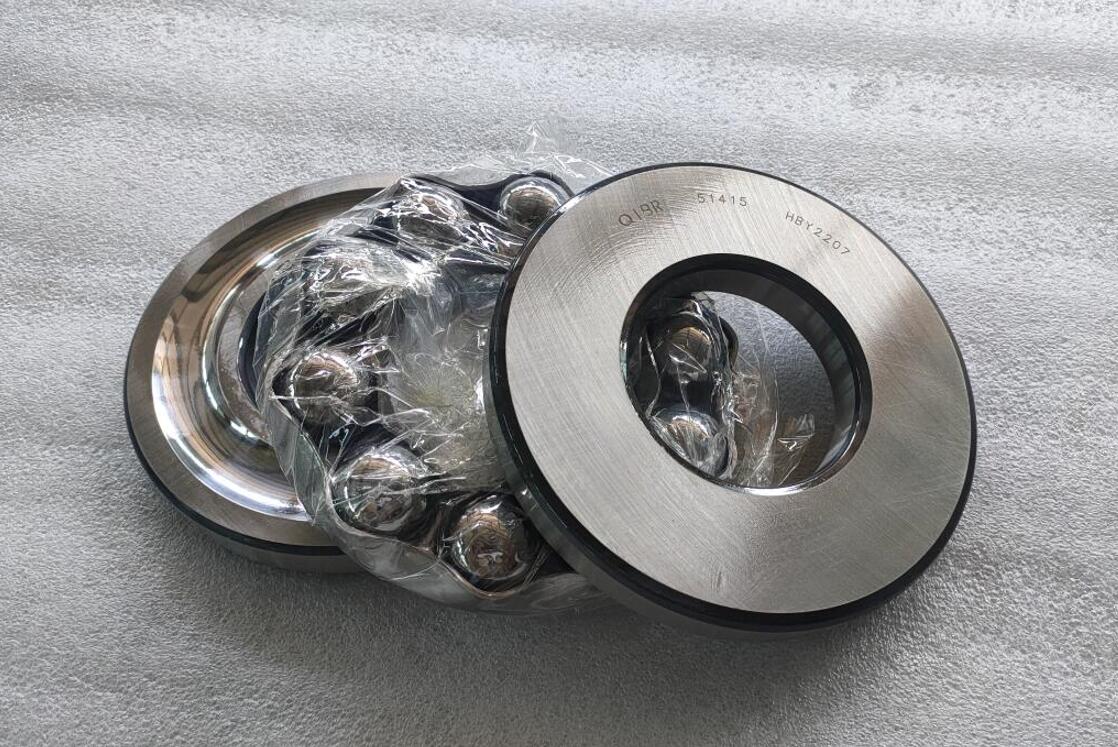
The integration of these features endows thrust ball bearing with unique competitive advantages in scenarios requiring "precise axial positioning + stable axial load bearing". These applications include axial positioning of machine tool spindles, reverse gear mechanisms of automotive transmissions, rotating support for crane hooks, pressure adjustment of printing machine press rolls, and axial stabilization of elevator traction machines. Among these, applications in machine tools, automobiles, and cranes are the most representative, with more prominent industrial value.
II. Key Applications
1. Machine Tool Spindles: Axial Positioning Benchmark for Processing Precision
In precision machine tool processing, axial runout of the spindle is a key factor affecting part processing accuracy, such as end face flatness and thread profile accuracy. Thrust ball bearing here assume the dual core role of "axial positioning + stable micro-load bearing".
Taking the CNC lathe spindle system as an example, the industry's mainstream solution is a combined design: radial bearings for anti-eccentric load and thrust ball bearings for axial control. Installed at the front end of the spindle, thrust ball bearings strictly control axial runout within 0.002mm through preloading technology, providing a benchmark guarantee for high-precision processing. 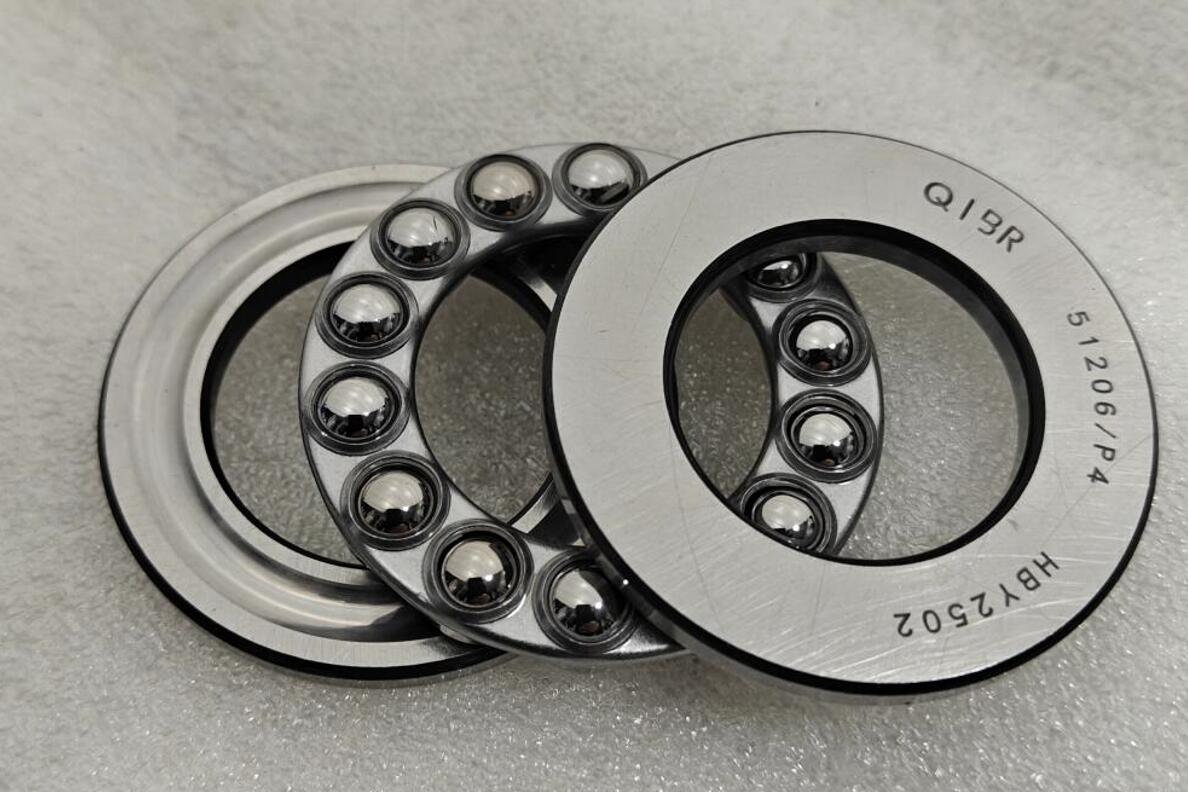
To meet the precision requirements of high-end machine tools, QIBR Bearing's R&D 511 series thrust ball bearing uses high-purity GCr15SiMn bearing steel as the base material. After strengthening via vacuum heat treatment, their surface hardness stably reaches HRC60-62.
2. Automotive Transmissions: Instant Load-Bearing Shield for Reverse Gear Mechanisms
The reverse gear mechanism of automotive transmissions has unique characteristics: short-term switching, high-frequency force bearing, and concentrated impact loads. This imposes strict requirements on the axial load capacity and impact resistance of bearings.
Thrust ball bearing stands out with their advantages of "high instantaneous load-bearing strength and fast impact force dispersion". They have become core force-transmitting components between reverse gears and output shafts. When the vehicle shifts to reverse gear, the axial force from gear meshing acts directly on the bearings, and the balls' rolling characteristics quickly disperse the impact to the raceways, effectively avoiding gear end face wear.
New energy vehicle transmissions demand higher rotational speeds, exceeding 6000rpm in some models. Addressing this, QIBR Bearing has specially optimized the cage structure of thrust ball bearings, replacing traditional steel with high-strength nylon. 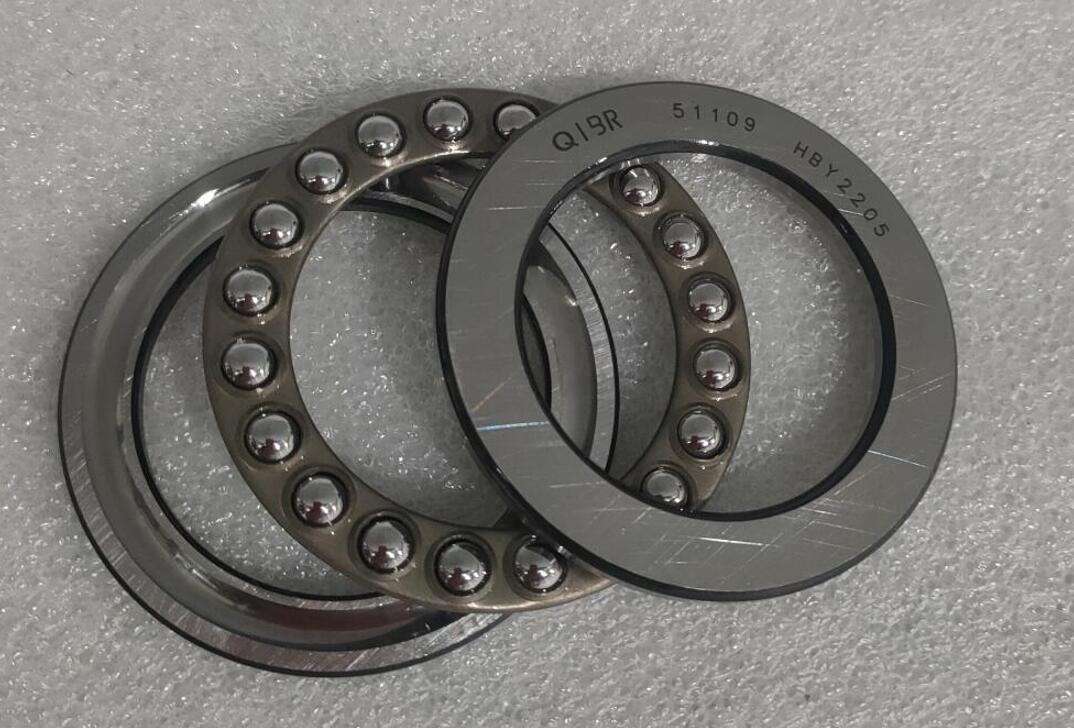
3. Crane Hooks: Axial Support Core for Heavy-Load Rotation
Crane hooks face dual requirements during operation: bearing the vertical gravity of heavy objects and enabling 360° rotation. Thrust ball bearing here undertakes the dual tasks of "axial gravity bearing + auxiliary flexible rotation".
For heavy-duty cranes above 50 tons, the industry generally uses double-row thrust ball bearings. By increasing the axial contact area to improve load capacity, a single set can stably withstand axial loads of up to 200kN.
Construction machinery operates in dusty, easily contaminated environments. To tackle this, QIBR Bearing's customized double-row thrust ball bearings integrate a double-lip dust-proof sealing structure, effectively blocking dust and muddy water.
In a mine hoisting project, these bearings extended service life from 6 months (traditional products) to 18 months. This reduced maintenance frequency by two-thirds and cut comprehensive maintenance costs by 65%, earning bulk repeat orders from the construction party. 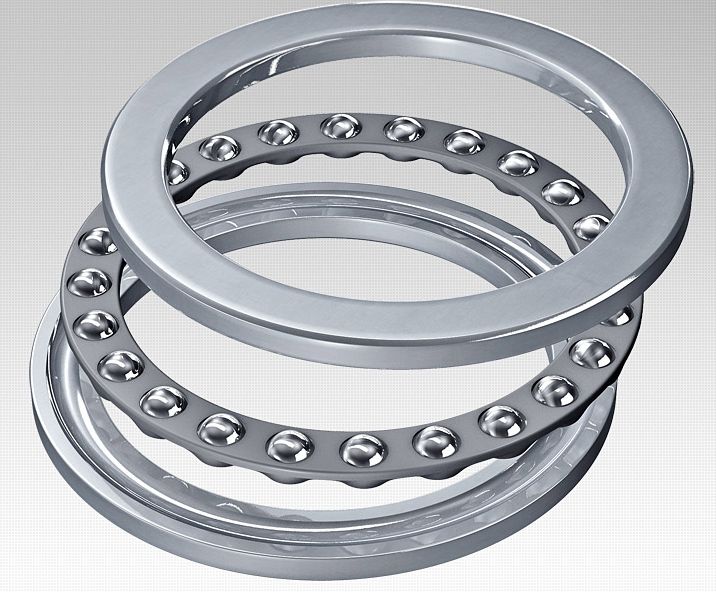
Beyond the three core scenarios, thrust ball bearing has valuable applications in other sectors. In printing, they accurately bear press roll axial adjustment pressure, ensuring uniform ink layers. In elevators, they stably support traction wheel axial force, enhancing operation smoothness and safety.
Their value drives industrial upgrading in three dimensions. On cost: extending component life and reducing maintenance lowers total equipment lifecycle cost. On efficiency: low friction cuts energy consumption and boosts continuous operation efficiency. On quality: precise axial positioning improves end-product processing accuracy or operation stability.