Newsroom
What Are Electrically Insulated Bearings and Why Are They Important in Modern Machinery?
As electric motors and variable frequency drives (VFDs) become increasingly common in modern industry, a hidden challenge is gaining more attention: electrical damage in bearings.
Electrically insulated bearings have emerged as a reliable solution to protect equipment from current-induced failures, ensuring longer service life and improved operational stability.
What Causes Electrical Damage in Bearings?
In many electric motor applications, especially those using frequency converters or inverters, stray electrical currents can pass through the shaft and flow into the bearing.
This can lead to:
- Electrical discharge machining (EDM) damage
- Surface pitting and fluting
- Increased vibration and noise
- Premature bearing failure
Even small electrical currents can cause significant damage over time, making electrical protection a critical consideration in modern equipment design.
What Are Electrically Insulated Bearings?
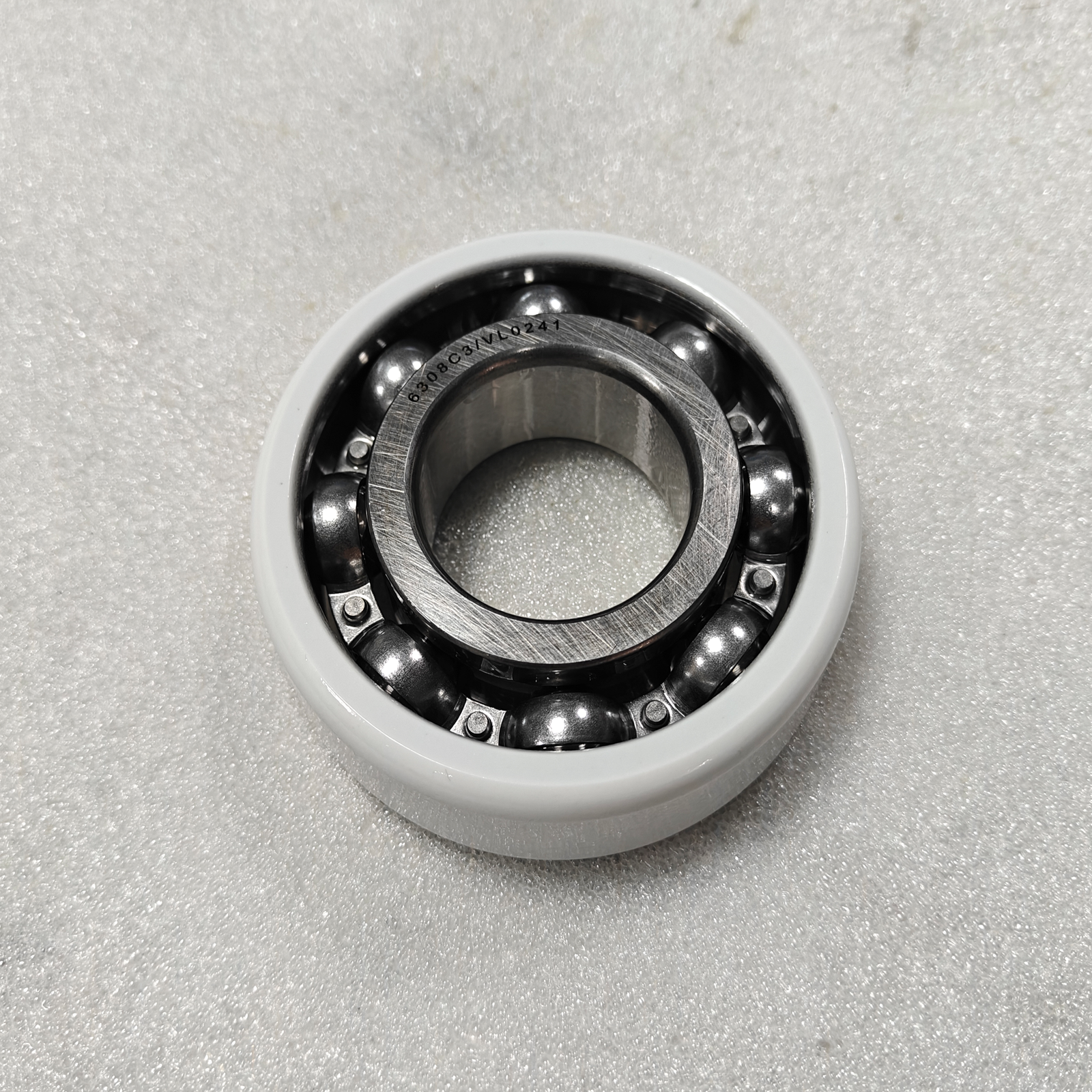
Electrically insulated bearings are designed to prevent the flow of electrical current through the bearing. This is typically achieved by applying an insulating layer to one of the bearing rings.
Common insulation methods include:
- Ceramic coating on the outer or inner ring
- Oxide-based insulating layers
- Hybrid designs with ceramic rolling elements
These solutions effectively block electrical current paths, protecting the bearing from electrical erosion.
Key Advantages of Electrically Insulated Bearings
Electrically insulated bearings provide several important benefits in industrial applications:
Protection against electrical erosion
They prevent current from passing through the rolling elements, eliminating EDM damage.
Extended service life
By reducing wear and surface damage, bearing life is significantly improved.
Improved reliability
Stable operation with reduced vibration and noise enhances overall equipment performance.
Compatibility with high-speed systems
These bearings perform well in electric motors, generators, and inverter-driven systems.
Typical Applications
Electrically insulated bearings are widely used in applications where electrical current is present or likely to occur:
- Electric motors with variable frequency drives (VFDs)
- Wind turbine generators
- Railway traction motors
- Electric vehicles (EVs)
- Industrial pumps and compressors
In these systems, electrical insulation is essential for preventing unexpected failures and reducing maintenance costs.
Related Bearing Solutions
In addition to insulated bearings, other solutions may also be considered depending on application requirements:
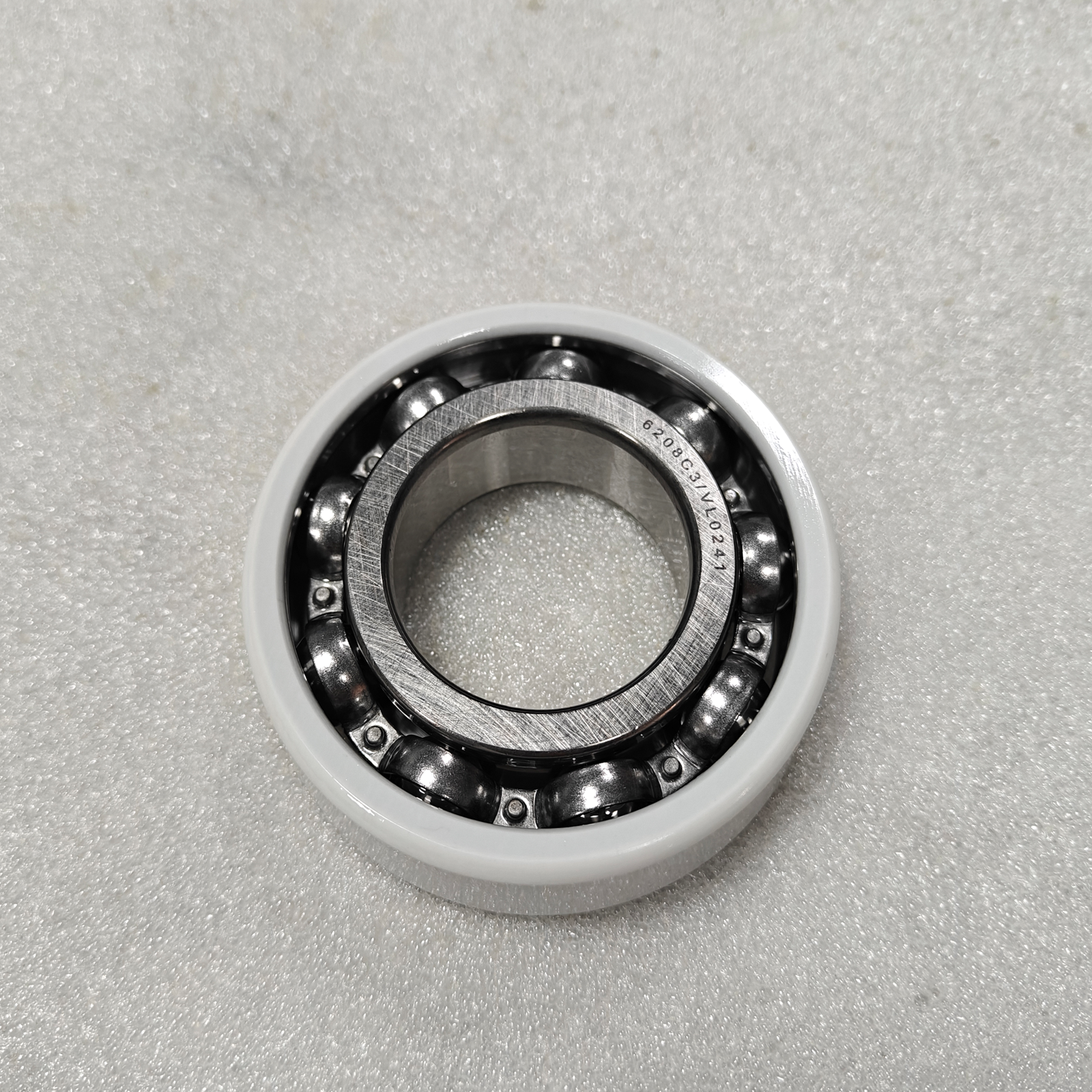
Widely used in electric motors for high-speed and low-friction performance.
Angular Contact Ball Bearings
Suitable for applications requiring combined load support and higher rigidity.
Hybrid Ceramic Bearings
Using ceramic rolling elements, these bearings offer both electrical insulation and high-speed performance.
Conclusion
As industries continue to move toward electrification and high-efficiency systems, the risk of electrical damage in bearings becomes increasingly significant. Electrically insulated bearings provide an effective and reliable solution to this challenge.
Understanding when and why to use insulated bearings helps engineers improve equipment reliability, reduce maintenance costs, and extend service life in modern machinery.