Newsroom
What is ball screw
2026-01-22 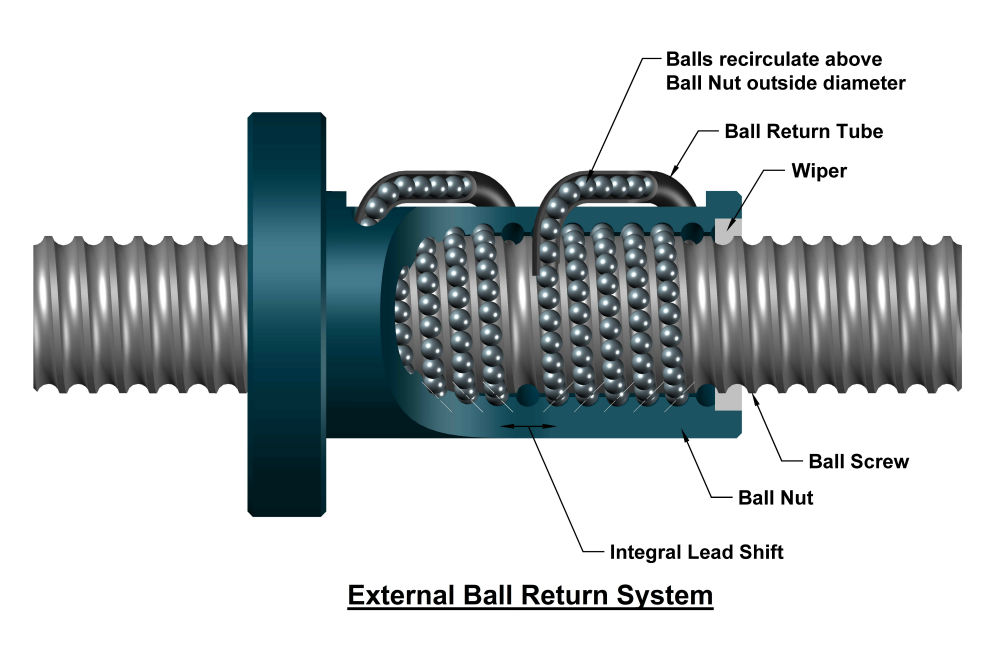 A ball screw is a mechanical transmission component that converts rotary motion into high-precision linear motion (and vice versa, linear motion into rotary motion). Its core design replaces the sliding friction of traditional lead screws with the rolling friction of steel balls, which drastically reduces resistance, improves transmission accuracy and efficiency.
I. Core Structure of a Ball Screw
Modular in design, a ball screw consists of four basic components, with the ball circulation structure being its key design feature. The overall structure is compact and its precision is controllable:
Screw Shaft: Its surface is machined with high-precision helical raceways (arc grooves matching steel balls), the core for transmitting rotary motion. The raceway precision directly determines the overall transmission accuracy.
Nut: Matched with the screw shaft, it is also internally machined with helical raceways that form a closed rolling path for steel balls with the screw raceways. A ball circulation structure is integrated into the nut.
Steel Balls: High-precision bearing steel balls (G10 precision and above) with minimal spherical diameter tolerance. The quantity is adapted to the screw load to ensure smooth rotation.
Circulation Assembly: Divided into internal circulation and external circulation types, it recirculates steel balls back to the starting position after their movement in the raceways, forming uninterrupted cyclic rolling and avoiding ball accumulation – a core design point of ball screws.
Internal circulation: Realized by return guides (ball deflectors) on the nut, featuring a compact structure and small radial size, suitable for high-precision, limited-space applications.
External circulation: The two ends of the raceway are connected by a return tube, with the circulation path outside the nut. It has a large ball capacity and high load-bearing capacity, suitable for heavy-load, high-speed applications. 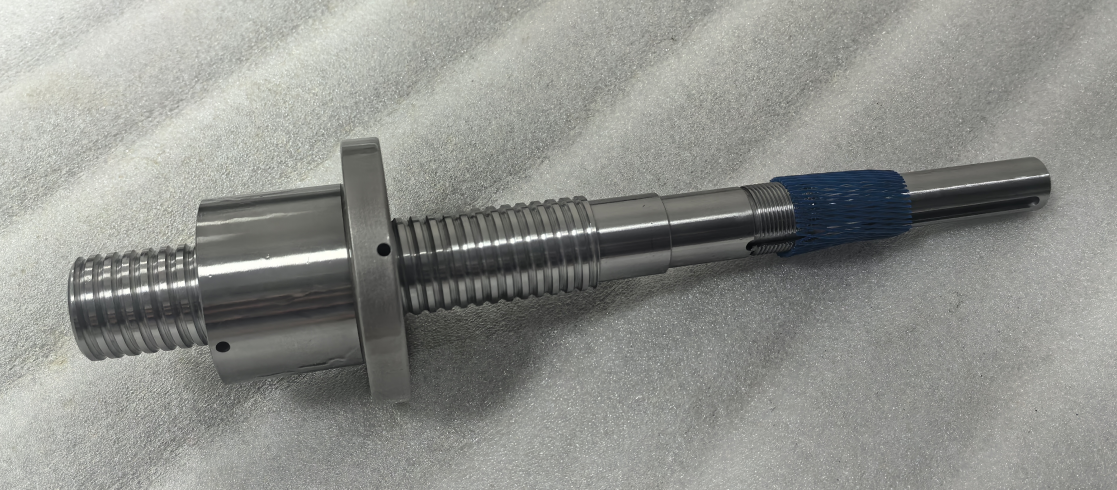
II. Core Working Principle
When the screw shaft rotates, the screw raceways push the steel balls to roll along the nut raceways.
At the end of the raceway, the steel balls return to the starting end of the raceway through the circulation assembly to form continuous circulation.
The rolling of the steel balls drives the nut to perform precise linear motion, converting rotary motion into linear motion (the reverse operation drives the screw shaft to rotate via linear motion of the nut).
Throughout the process, the steel balls make point/line contact with the raceways, with friction resistance only 1/10 to 1/3 of that of traditional lead screws. 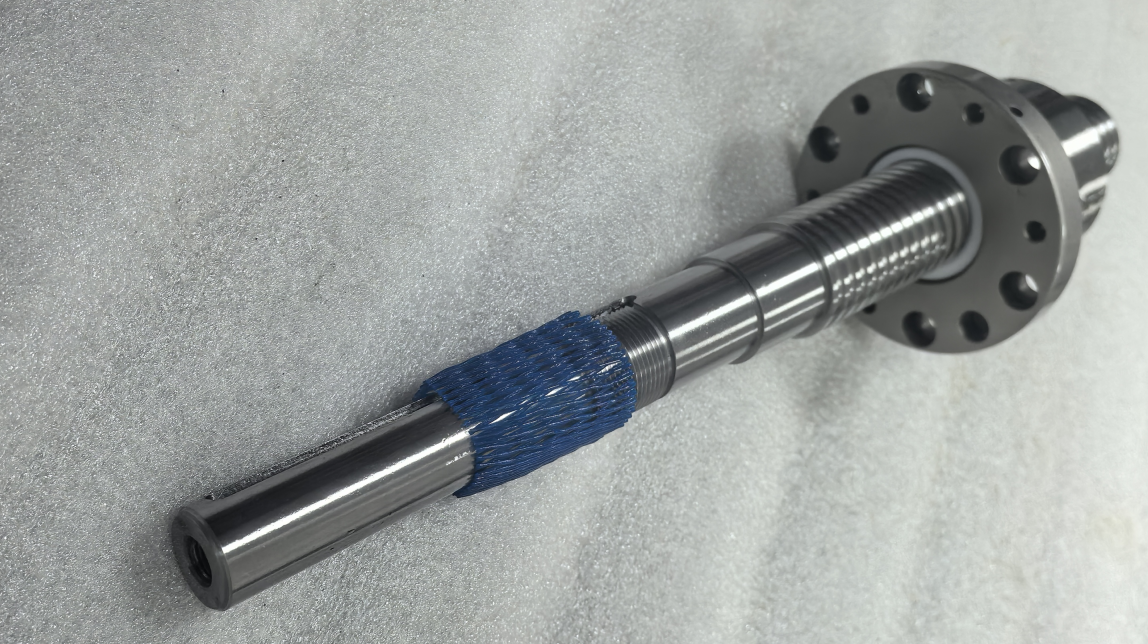
III. Core Characteristics (Distinct Advantages over Traditional Lead Screws)
As a precision drive element, its characteristics fully meet the industrial equipment requirements for high precision, high efficiency and high rigidity, which is the core reason for replacing lead screws:
Ultra-high transmission efficiency: Rolling friction replaces sliding friction, with a transmission efficiency of 90%~98%, far higher than the 30%~50% of lead screws. It greatly saves power loss and is suitable for precision drive sources such as servo motors.
Superior positioning accuracy: The raceways are finished with high-precision grinding (precision grades up to C0, C1, C3, etc.), with no sliding clearance. Zero-backlash transmission can be achieved with a preloading structure, with positioning accuracy reaching the micron level and higher repeat positioning accuracy, meeting the precise positioning needs of machine tools and automation equipment.
Smooth motion without crawling: No "crawling phenomenon" (uneven speed) of lead screws at low speeds, ensuring smooth operation – ideal for precision feeding and micro-displacement adjustment scenarios.
High rigidity with preload capability: Clearance between the screw and nut can be eliminated by double-nut preloading (e.g., shim type, tooth differential type, offset nut type), while improving the overall structural rigidity. It can withstand a certain axial load and reduce deformation under force to ensure processing/transmission stability.
Long service life and simple maintenance: Minimal wear due to rolling friction, with a rated dynamic load much higher than that of lead screws. The service life can reach tens of thousands of hours under normal lubrication; daily maintenance only requires regular grease replenishment with low maintenance costs.
Reversible transmission: It can freely convert linear motion into rotary motion (no self-locking property). If anti-falling/anti-reversing is required for the equipment, additional braking devices (e.g., electromagnetic brakes, one-way bearings) must be equipped.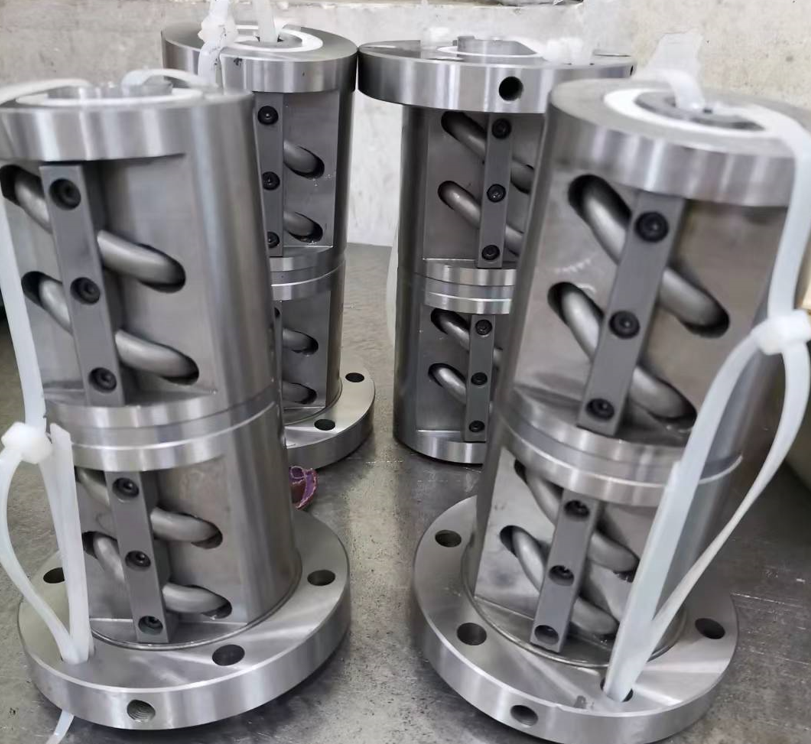
IV. Typical Application Scenarios
Due to its high precision and efficiency, it is widely used in industrial equipment requiring precise linear transmission, and is also the main matching scenario for ball screw support bearings – the two are used in synchronous matching:
Machine tools: Feeding axes and spindle box movement of CNC lathes, milling machines, machining centers and grinders;
Automation equipment: Industrial robots (linear modules), automated production lines, precision conveying mechanisms;
Precision machinery: Semiconductor lithography machines, wafer processing equipment, precision measuring instruments;
Engineering/civil equipment: Lifting platforms, precision printing machines, mold clamping mechanisms of injection molding machines, 3D printers.
V. Matching Relationship with Ball Screw Support Bearings
The ball screw support bearings you focused on previously are high-precision angular contact ball bearings specially designed for ball screws. The two form an indivisible precision matched combination, with the core matching points as follows:
The two ends of the ball screw shaft need to be supported for rotation and axially positioned by support bearings. The bearing precision directly determines the screw's rotation accuracy, which in turn affects the linear transmission accuracy.
Ball screws are mainly subject to axial force with a small amount of radial force. Therefore, the matching support bearings are angular contact ball bearings with high axial load capacity and high rigidity (contact angle 25°/40°), which must be used in pairs (DB/DF/DT) to achieve bidirectional axial positioning.
The precision grades of the two must match: for example, a C3 grade ball screw must be matched with P4/P2 grade high-precision ball screw support bearings; otherwise, the overall transmission accuracy will be reduced due to insufficient bearing precision.