Newsroom
Analysis of three common problems of thin section ball bearing with equal cross-sections
Regarding the use of thin section ball bearing with equal cross-sections, do we often encounter such related questions: "'Why does the sealing performance of equal-section bearings decrease?', 'Why do sealed bearings with equal cross-sections have grease leakage problems?', 'Why do bearings get stuck when they rotate?'" etc. How do we judge and find out the reasons for these problems? 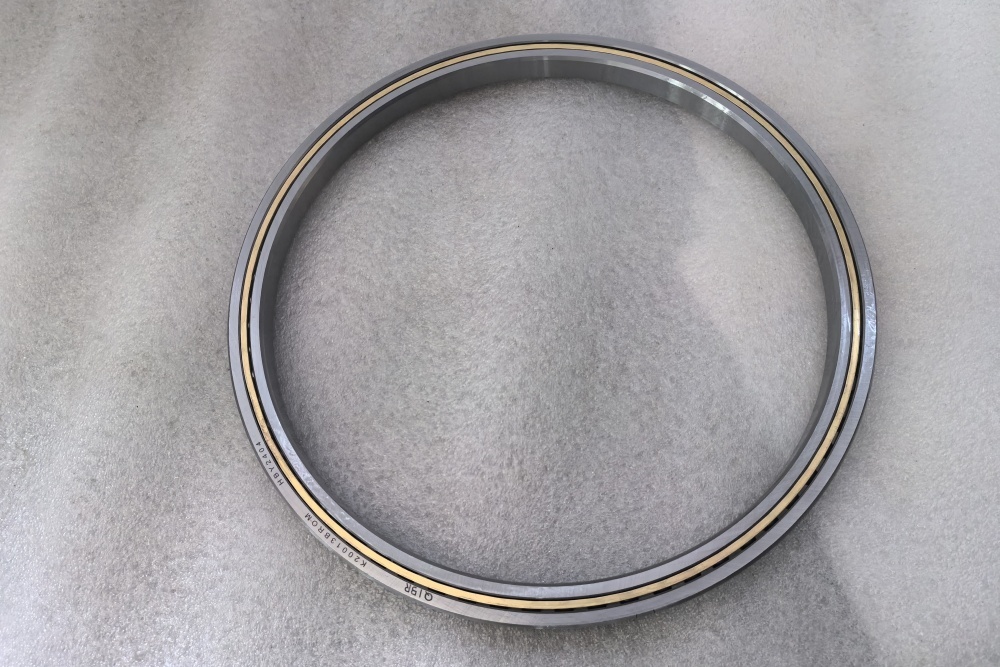
Why does the sealing performance of thin section ball bearing decrease?
The phenomenon is: large friction torque; poor performance against dust and dirt.
The reason is: the thin section ball bearing has special structure: thin wall, small volume, light weight, small sealing space, poor rigidity, easy deformation and other characteristics. The hot processing, cold processing and inspection of bearing parts, including seals, bring great difficulties and it is difficult to improve their processing accuracy. At present, this type of seal structure and size on the market are basically the same. Due to processing errors, the sealing performance is poor or the friction torque is large, which cannot meet the requirements of the bearing. 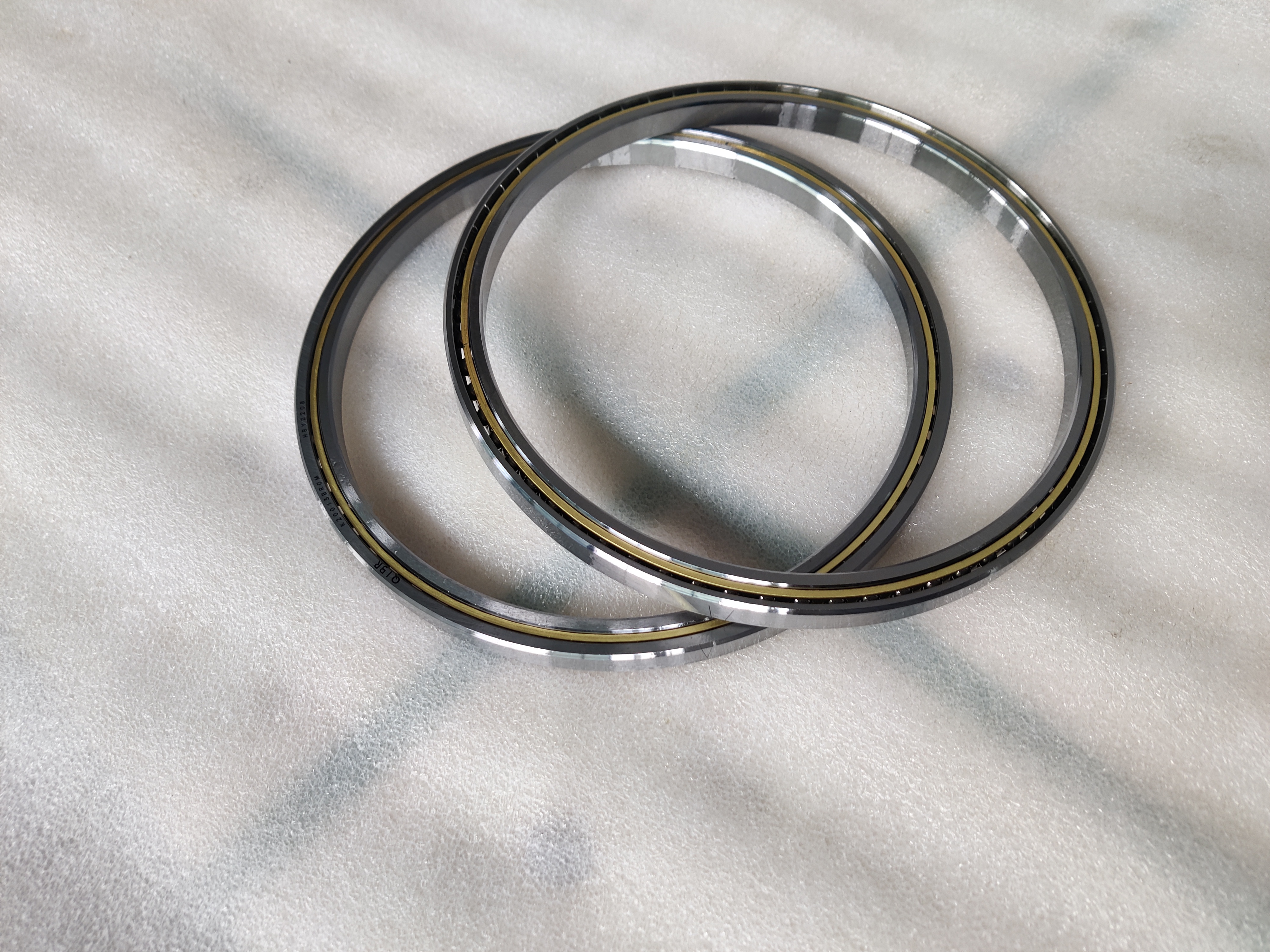
Solution: In order to meet the sealing requirements and friction torque requirements of the bearing, combined with the machining accuracy of the easy deformation and dimensional tolerance of the bearing parts and the machining accuracy of the sealing ring, the structural dimensions of the sealing ring are personalized according to the limited bearing space to make up for the machining accuracy error of the bearing parts and seals, achieve the expected results, and meet user requirements. 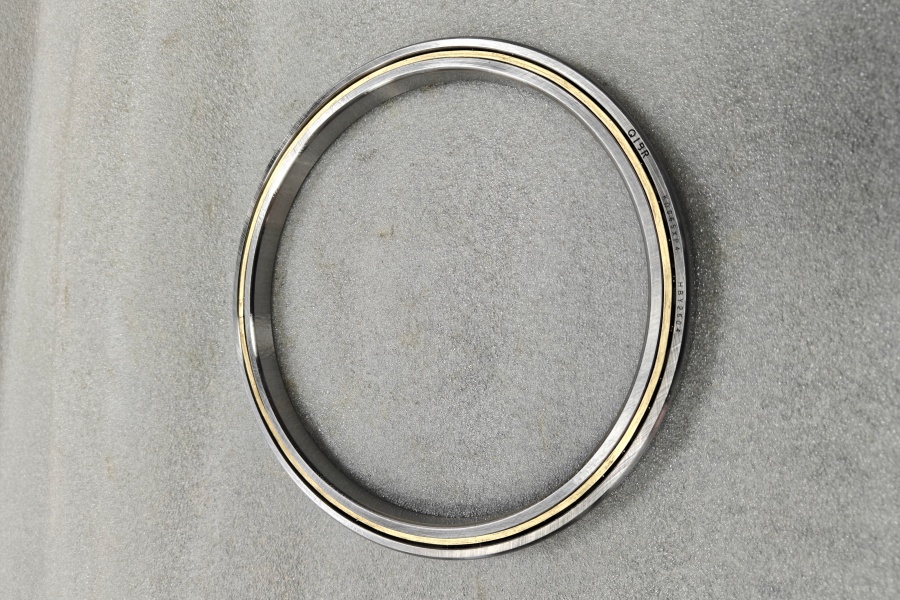
Why do thin section ball bearings have grease leakage problems?
The phenomenon is: the grease inside the bearing overflows from its sealing lip.
The reason is that the thin section ball bearing has special structural dimensions and a small sealing space, which limits the rationality of the sealing structure.
Solution: Choose a reasonable process method and pass multiple process tests to eliminate grease leakage in sealed bearings while meeting the usage requirements. 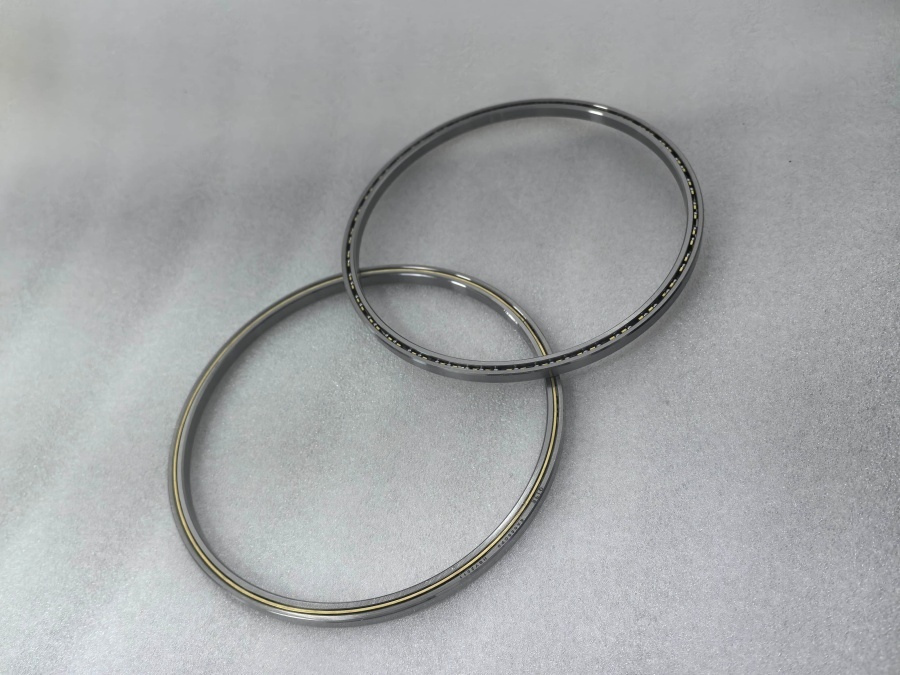
Why does the bearing get stuck when it rotates?
The phenomenon is: when the bearing is rotated under axial force or radial force, the hand feels sometimes large and sometimes small, blocked and not running smoothly. When rotating quickly or at high speed, vibration and noise will occur.
The reason is: the bearing is not clean, there is dirt on the working surface or the working surface is rough and damaged. 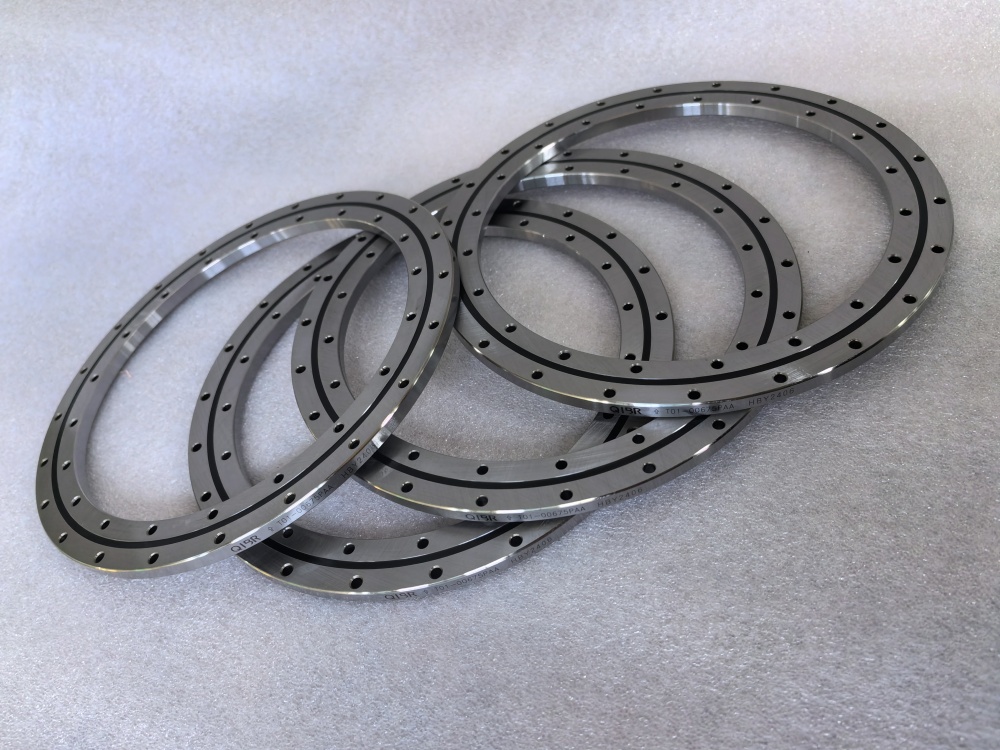
Solution: Choose appropriate cleaning fluids and cleaning methods, strictly control the quality of the working surface, improve inspection methods, and ensure that the bearings are clean and free of foreign matter.