Newsroom
Applications of Ultra-Thin Angular Contact Ball Bearings
Amidst the accelerating evolution of high-end equipment toward miniaturization, lightweight design, high precision, and high rotational speeds, ultra-thin angular contact ball bearings have emerged as critical foundational components within precision transmission systems, distinguished by their unique structural and performance advantages.
I. Core Technical Features: A Dual Breakthrough in Ultra-Thin Configuration and Precision Performance
Ultra-thin angular contact ball bearings belong to the category of thin-walled, high-precision angular contact bearings—typically represented by the 718 and 719 series. Their defining characteristics include an outer-to-inner diameter ratio of ≤1.25, an exceptionally thin cross-section, and a design that simultaneously achieves both lightweight properties and high rigidity. Compared to conventional angular contact ball bearings, they represent a multi-faceted technical breakthrough. 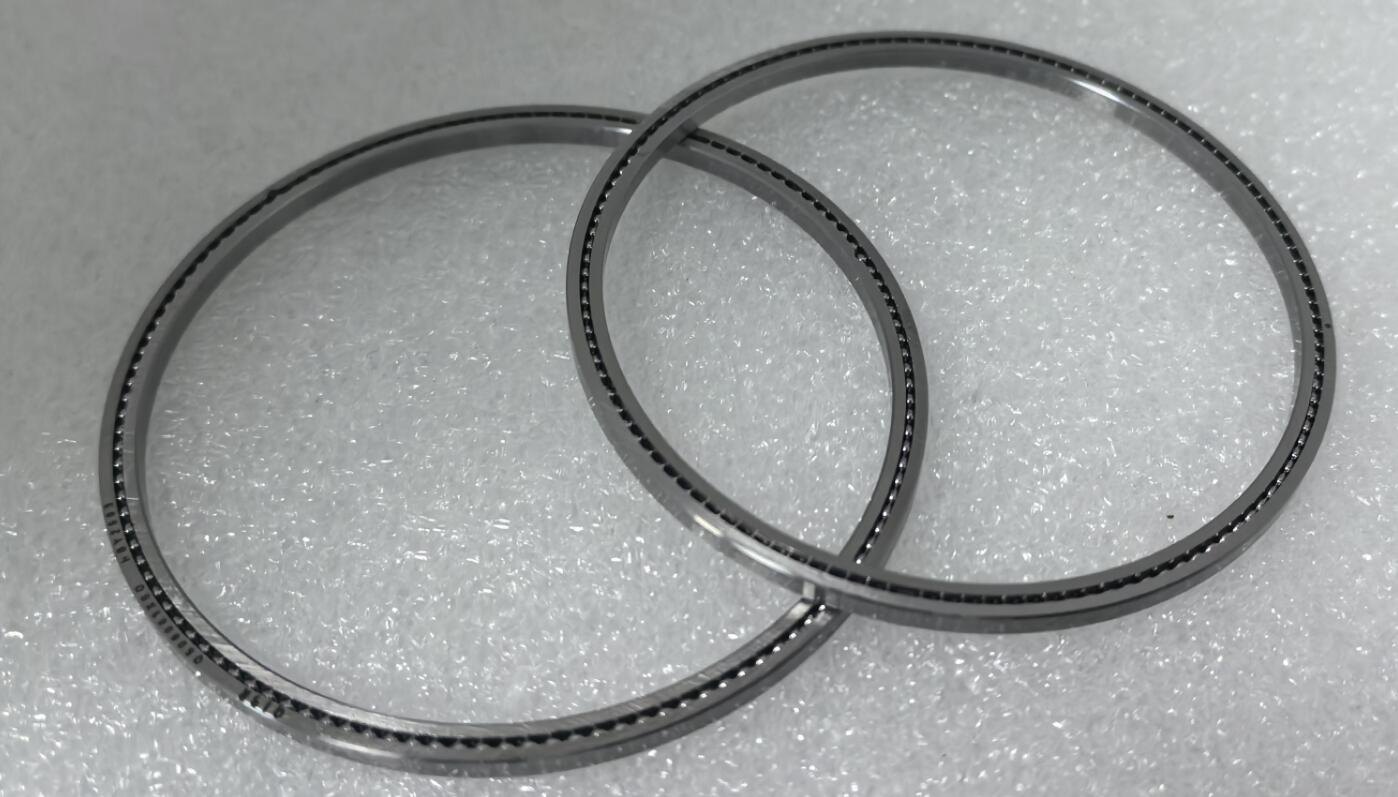
Combined Load-Bearing Capacity and High Rigidity Ensure Operational Stability. These bearings feature a standard contact angle design ranging from 15° to 25°, enabling them to simultaneously accommodate both radial loads and unidirectional axial loads; notably, a larger contact angle corresponds to a greater axial load-bearing capacity. The optimized structural matching between the raceways and steel balls effectively counteracts overturning moments. When combined with pre-tensioned assembly, this design delivers high-rigidity support, ensuring that positioning accuracy remains undiminished even under conditions of high-speed start-stop cycles or alternating loads, thereby fully satisfying the rigidity requirements of precision transmission systems. 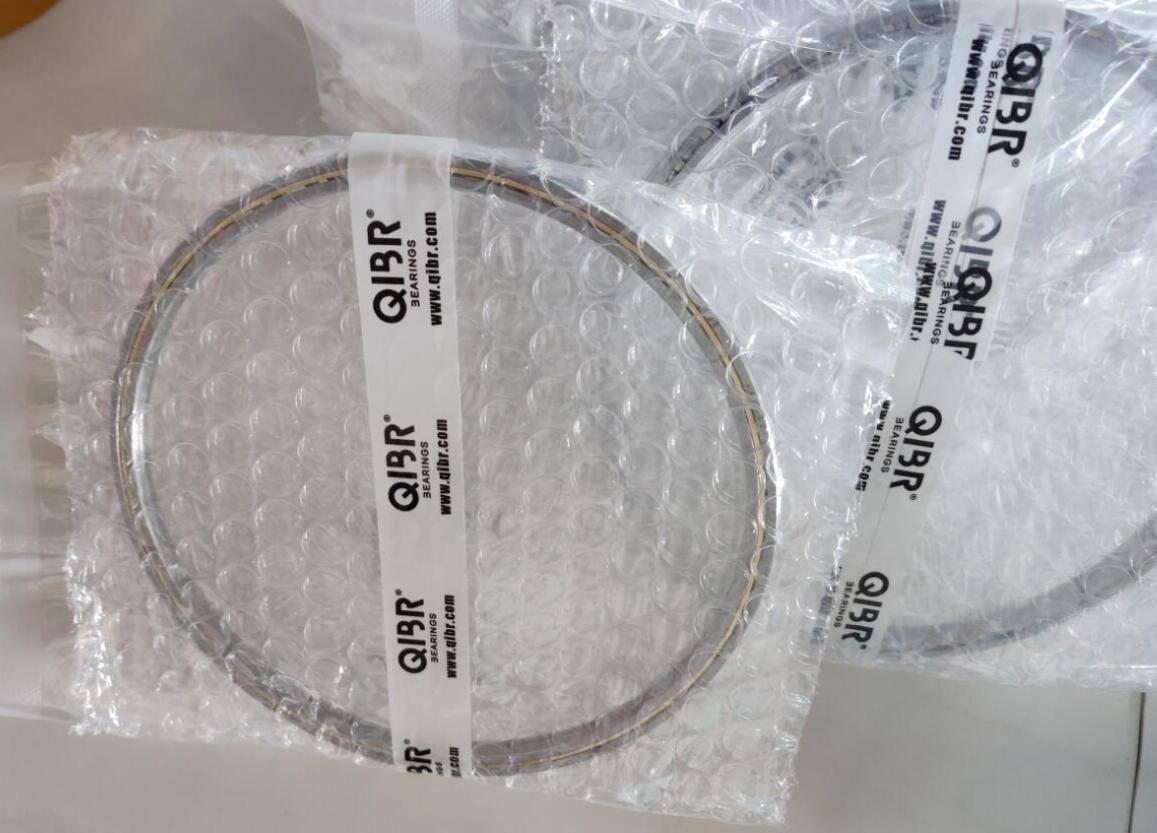
Long Service Life and High Reliability Reduce Total Lifecycle Costs. Constructed from premium bearing steel and stainless steel—combined with surface hardening treatments—these products exhibit enhanced resistance to wear, corrosion, and extreme temperatures. For select products, fatigue life reaches 2.5 times that of conventional bearings, extending maintenance intervals to between 8,000 and 10,000 hours. This results in a reduction of approximately 25% in total lifecycle costs, making them ideally suited for applications—such as in aerospace and medical equipment—that demand maintenance-free operation and exceptional reliability. 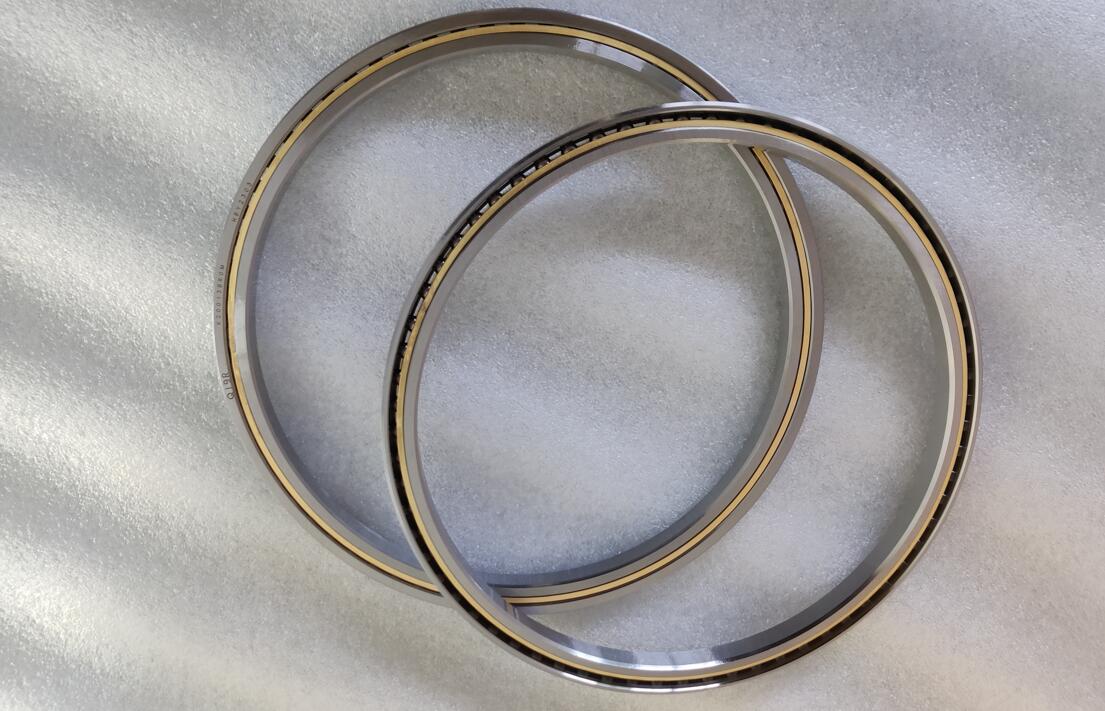
II. Deep Integration Across Multiple Fields: Bolstering the Core Performance of High-End Equipment
Characterized by their compact size, precision, high-speed capabilities, and reliability, ultra-thin angular contact ball bearings serve as the "core joints" of high-end equipment. Spanning six key sectors, they play a pivotal role in driving technological upgrades across various industries.
In the realm of industrial robotics and automation, these bearings serve as core components within robot joints, rotary tables, and servo motors. Their ultra-thin profile reduces the volume and weight of robotic joints, thereby enhancing agility and load-bearing capacity. Furthermore, their high repetitive positioning accuracy ensures precise robotic operation—making them suitable for applications such as welding, assembly, and sorting—and serves as a critical enabler for the lightweight design and intelligent functionality of modern robots. 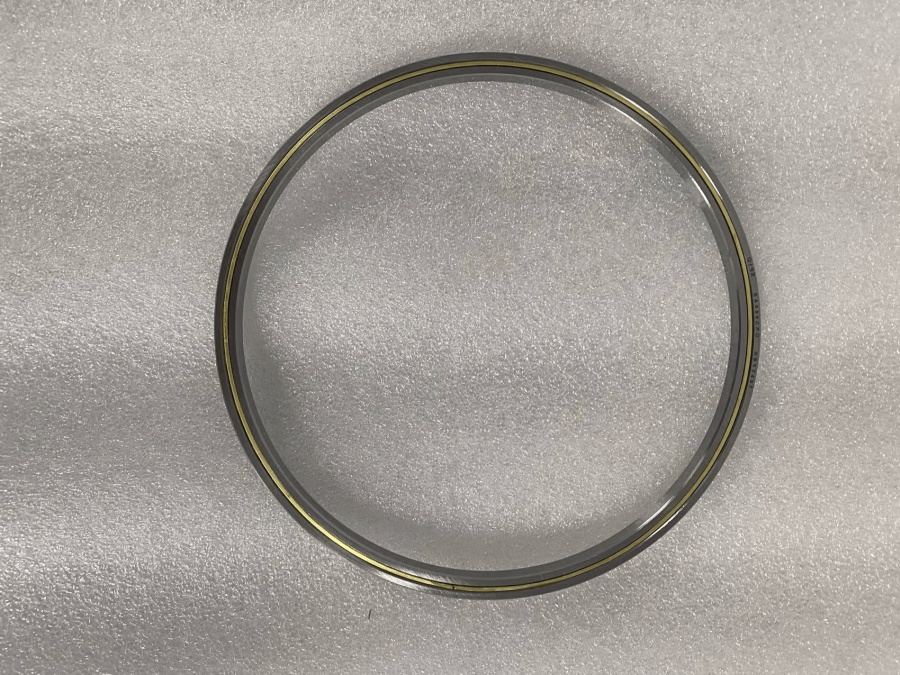
Within the field of precision machine tools and high-speed spindles, these bearings are utilized in CNC machine tool spindles, rotary tables, and tool clamping mechanisms to enhance machining accuracy and surface finish quality. Under high-speed cutting conditions, the bearings maintain low vibration levels and minimal temperature rise, ensuring the stable operation of the spindle. This capability facilitates the achievement of surface roughness values below Ra 0.8μm for critical components—such as aero-engine blades and precision molds—and supports breakthroughs in the localization of high-end machine tool manufacturing.
In the aerospace and UAV sectors, these bearings are deployed in satellite attitude control mechanisms, drone transmission systems, and aero-engine accessories. Their lightweight design reduces aircraft payload, thereby extending flight endurance and enhancing payload capacity. Moreover, their exceptional reliability and shock resistance enable them to withstand extreme operating conditions—including vacuum environments, temperature extremes, and intense vibration—establishing them as fundamental components for space exploration missions and the electrification of commercial aviation. 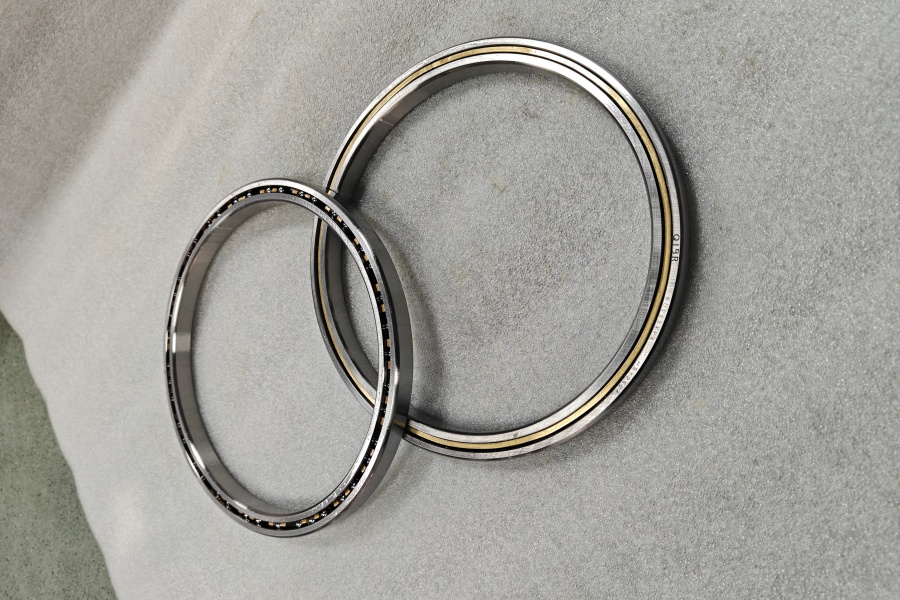
In the field of new energy equipment, our products are deployed in photovoltaic tracking systems, wind turbine pitch control mechanisms, and electric vehicle motors. Their compact structures facilitate integrated equipment designs, enhancing energy utilization efficiency and operational stability, and thereby contributing to the realization of "Dual Carbon" goals.
III. Technological Iteration and Market Trends: Accelerating Localization and High-End Substitution
Driven by the surging demand for high-end manufacturing, the technology for ultra-thin angular contact ball bearings is evolving toward miniaturization, ceramic integration, intelligent functionality, and customization. In terms of materials, the expanded application of hybrid ceramics, stainless steel, and specialized alloys enhances adaptability to extreme operating conditions. Regarding manufacturing processes, the adoption of laser cladding and digital simulation has shortened R&D cycles, compressing the new product development timeline from 18 months to under 10 months. In terms of performance, breakthroughs are being achieved in achieving higher rotational speeds, lower friction, and extended service life, thereby supporting the continuous upgrading of equipment performance.