Newsroom
Classification and Application Scenarios of Crossed Roller Bearing
The structure of crossed roller bearings is divided into three types: split outer ring and integral inner ring; integral outer ring and split inner ring; and integral outer ring and inner ring. The rolling elements are cylindrical rollers, arranged vertically at 90° to each other in V-shaped raceways, and separated by spacers. This structure enables a single bearing to withstand loads from all directions, including axial loads, radial loads and overturning moments. Meanwhile, the overall dimensions are miniaturized, and the bearing features high rigidity, high rotation accuracy and composite load-bearing capacity, making it suitable for applications such as joints and rotating parts of industrial robots, rotary tables of machining centers, rotating parts of manipulators, precision rotary tables, medical machinery and measuring instruments. 
RB Type (Integral Inner Ring, Split Outer Ring)
This is the basic type of crossed roller bearings. The outer ring is split into two pieces while the inner ring has an integral structure, making it suitable for occasions requiring high rotation accuracy of the inner ring.
RE Type (Split Inner Ring, Integral Outer Ring)
Also a basic type of crossed roller bearings, it has the same overall dimensions as the RB type, but adopts an integral outer ring and a split inner ring structure. It is suitable for occasions requiring high rotation accuracy of the inner ring.
RU Type (Integral Inner and Outer Rings, with Mounting Holes)
Both the outer ring and inner ring are equipped with mounting holes, eliminating the need for fixing flanges and supporting seats during installation. In addition, since both the outer and inner rings are of integral structure, installation has almost no impact on performance, thus ensuring stable rotation accuracy and torque. It is applicable to occasions where both the outer ring and inner ring rotate. 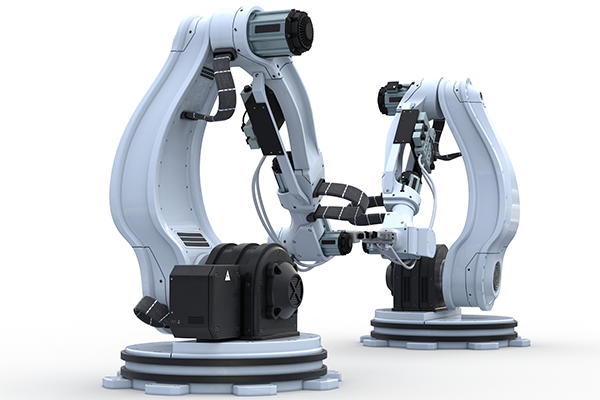
RA Type (Integral Inner Ring, Split Outer Ring, Ultra-Thin)
This is a compact type that minimizes the thickness of the inner and outer rings of the RB type to the limit. It shares the same split outer ring structure as the RB type, making it ideal for parts requiring lightweight and compact design, such as rotating parts of robots and manipulators.
RA-C Type (Integral Inner and Outer Rings, with Split in Outer Ring)
Its main dimensions are the same as those of the RA type. With a notch structure on the outer ring, this type maintains high rigidity of the outer ring and is therefore suitable for applications where the outer ring rotates. 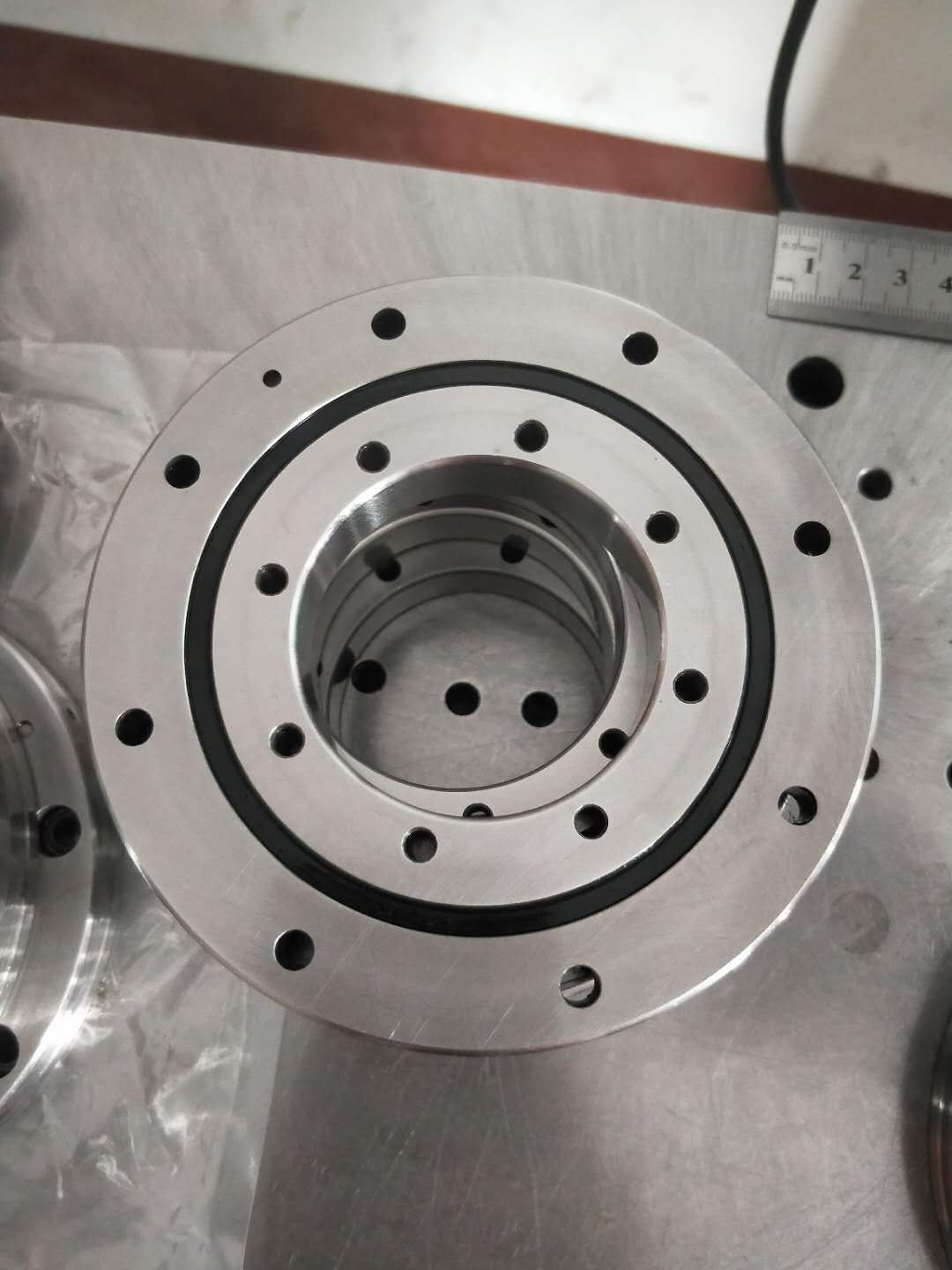
SX Type (Integral Inner Ring, Split Outer Ring, Ultra-Thin)
For the same shaft diameter, this type has a smaller cross-sectional size than the RB type. Due to its ultra-thin design, neither the outer ring nor the inner ring is provided with mounting holes, so flanges and supporting seats are required for fixing during installation. It is suitable for occasions where the inner ring rotates.
CRBH Type (Integral Inner and Outer Rings, Ultra-Thin)
Featuring an ultra-thin design, this type has no mounting holes on either the outer ring or the inner ring, so flanges and supporting seats are needed for installation. In addition, the integral structure of the inner and outer rings ensures that installation does not affect performance, delivering stable rotation accuracy and torque. It is suitable for occasions where both the outer and inner rings rotate and miniaturized dimensions are required.