Newsroom
Diagnosing Failure in Angular Contact Ball Bearings
In the manufacturing industry, high-speed precision angular contact ball bearings are the most commonly used components in spindle assemblies. Operating at extremely high rotational speeds, these bearings can sometimes generate significant heat. If this heat is not dissipated promptly, it can lead to the overheating of the angular contact ball bearings and cause the temperature of adjacent machine tool components to rise, resulting in thermal deformation. In severe cases, this can cause a misalignment between the spindle and the tailstock; this not only compromises the intrinsic precision of the machine tool and the accuracy of the machining process but can also lead to the complete burnout of the bearings. 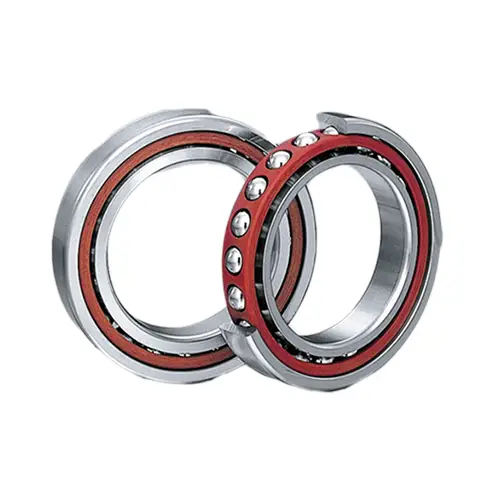
Rated fatigue life refers to the total number of revolutions that a group of bearings of the same model can undergo—while operating under identical conditions—before 90% of the angular contact ball bearings exhibit spalling caused by rolling fatigue. When the rotational speed is constant, the rated fatigue life is often expressed in terms of total operating time. When analyzing the service life of thrust ball bearings, one must not consider fatigue life in isolation; rather, one must take into account several operational limits based on the specific performance requirements of the bearing. Examples of such limits include grease life (for grease-lubricated bearings), noise life, and wear life. 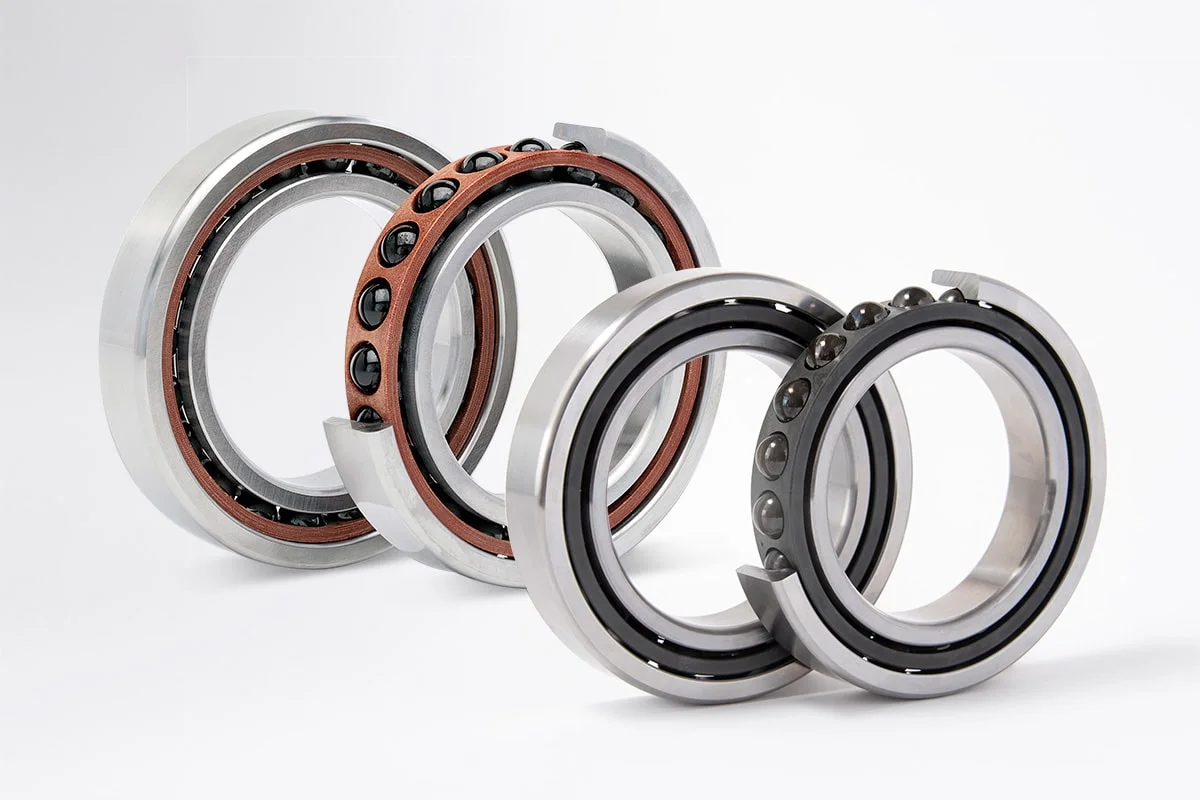
Since the criteria for these operational limits vary depending on the specific application, empirical limits are often established and selected in advance. Consequently, merely examining the physical damage to an angular contact ball bearing makes it difficult to identify the true root cause of the failure. However, if one possesses information regarding the machinery in which the thrust ball bearing is installed, the operating conditions, the surrounding structural configuration, and the circumstances immediately preceding and following the incident, it becomes possible—by correlating this contextual information with the observed damage to the bearing—to identify the underlying causes and prevent similar accidents from recurring. 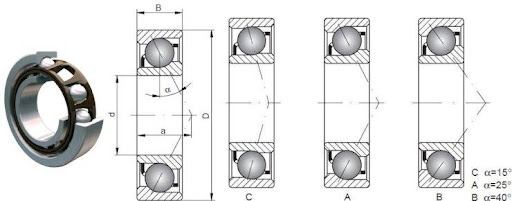
During inspection and handling, if it becomes necessary to directly handle oil-free bearings with one's hands, one must thoroughly wash away any perspiration from the hands and apply a coating of high-quality mineral oil before proceeding. Particular care must be taken to prevent rust during the rainy season and the summer months. Under certain specific operating conditions, angular contact ball bearings can achieve a service life that exceeds the predictions of traditional calculation methods—particularly when operating under light loads. 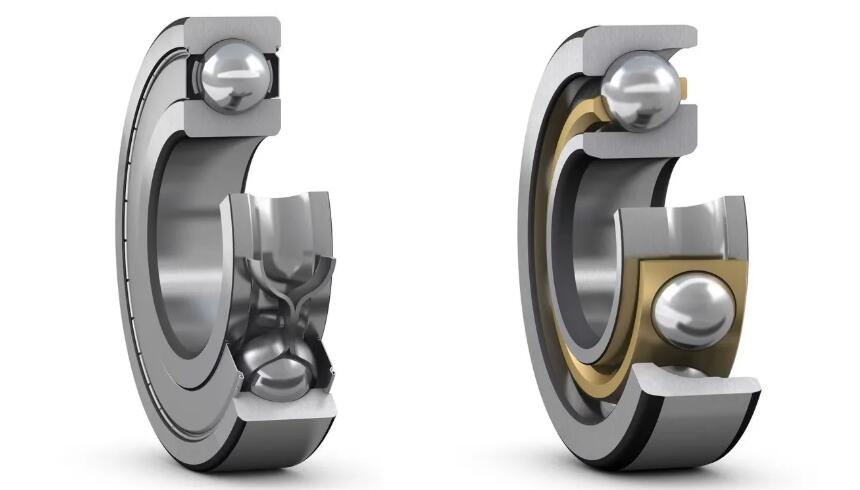
These specific operating conditions involve situations where the rolling surfaces (both the raceways and the rolling elements) are effectively separated by a lubricating oil film, thereby mitigating surface damage that might otherwise be caused by contaminants. Indeed, under truly ideal conditions, the concept of "permanent bearing life" becomes a tangible possibility. When an angular contact ball bearing rotates, the raceway surfaces of both the inner and outer rings—due to their rolling contact with the rolling elements—will exhibit a distinct running track (appearing as a matte finish). The presence of such a track on the raceway surface is not indicative of an abnormality; rather, it serves as a means to discern the bearing's load conditions. Therefore, when disassembling a bearing, please pay close attention to and carefully observe the running tracks on the raceway surfaces.