Newsroom
Applications of Tapered Roller Bearings in Gears
2026-03-31 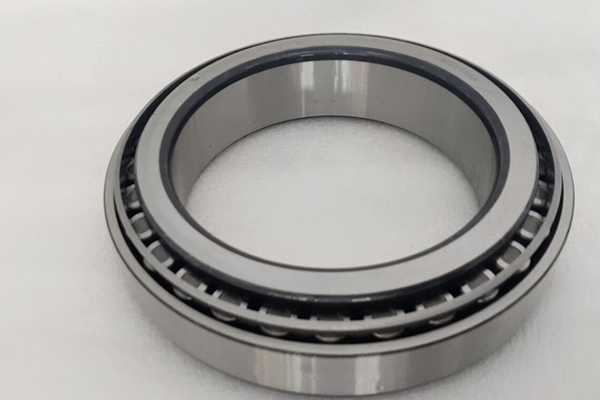 Gear meshing (especially for helical gears, bevel gears/pinion gears, and spiral bevel gears) generates the following forces and requirements:
- Radial load (primary)
- Axial load (critical, must be reliably resisted)
- Impact load, alternating stress, and vibration
- Need for precise axial positioning, control of gear backlash, and improvement of transmission rigidity
Tapered roller bearings are perfectly matched to these needs due to the following advantages:
- Composite Load Capacity: A single row can withstand both radial and unidirectional axial loads; paired installation (DB/DF/DT) enables resistance to bidirectional axial loads.
- Line Contact: Load-bearing capacity is significantly higher than that of ball bearings, with impact resistance and long service life.
- Preload/Adjustable Clearance: Achieve zero clearance or minimal preload through installation adjustments, greatly enhancing shaft system rigidity, reducing vibration, and ensuring gear meshing accuracy.
- High Rigidity: Prevents shaft deformation during operation, guarantees uniform gear tooth surface meshing, and lowers noise and pitting risk.
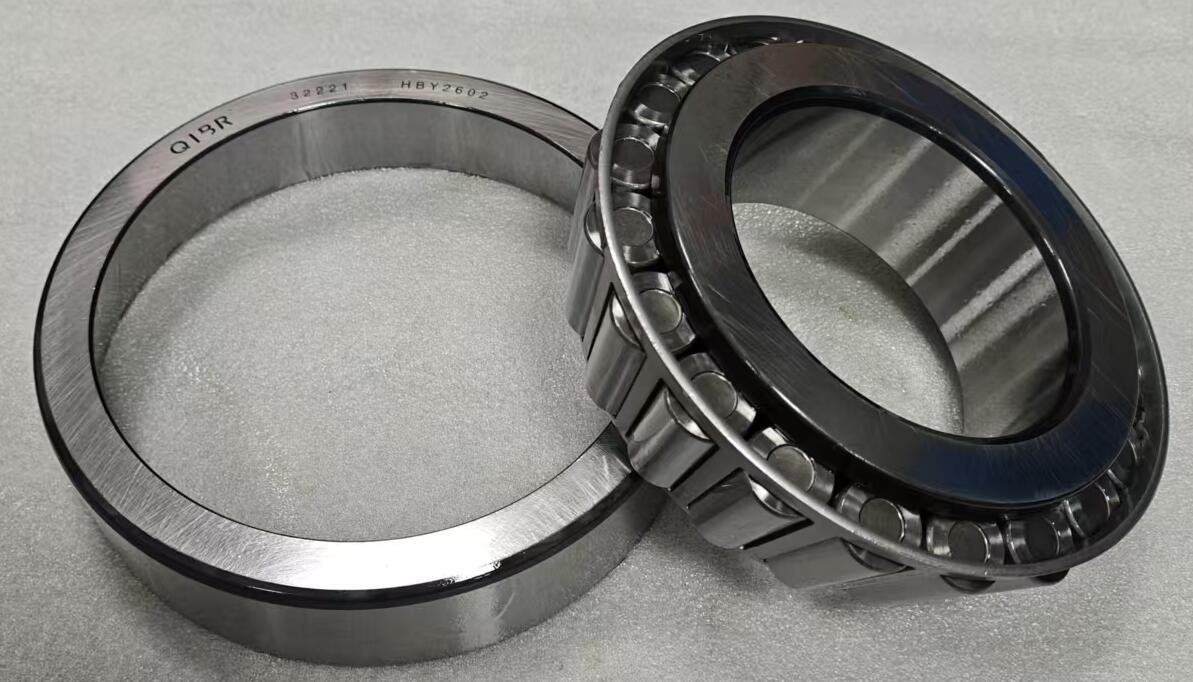
Typical Installation Methods (Standard for Gearboxes)
Single-row tapered roller bearings must be used in pairs (to balance additional axial force) with three classic arrangements:
- Back-to-Back (DB)
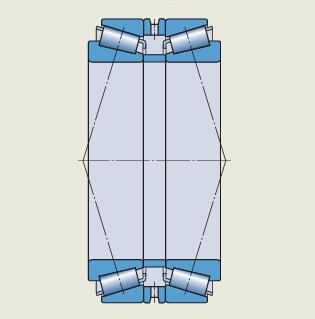
Expanded contact angle, superior resistance to overturning moment and highest rigidity
Application: Cantilever gears, heavy-duty input/output shafts, bevel gear pairs
- Face-to-Face (DF)
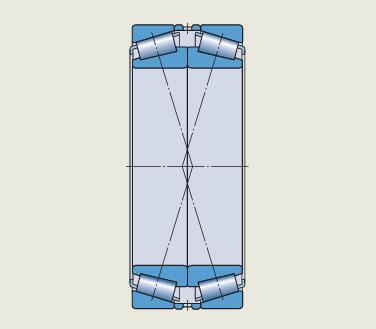
Contracted contact angle, allows slight angular misalignment and easier installation
Application: Shafts with general coaxiality and short span
- Tandem (DT)
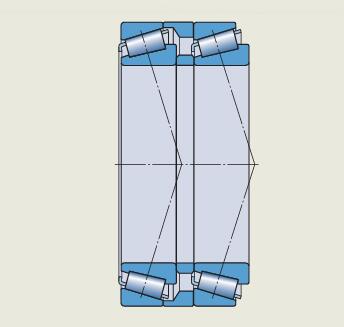
Unidirectional arrangement, significantly enhances unidirectional axial load-bearing capacity
Application: Scenarios with large axial loads (e.g., high-speed and high-ratio transmissions)
Typical Applications in Gear Mechanisms
1. Automotive/Construction Machinery Transmission (Most Mainstream)
1). Transmission/Gearbox: Countershaft, output shaft, reverse shaft (helical gears generate strong axial forces)
2). Final Drive / Reduction Gear:
- Drive pinion shaft (pinion): 2 sets of DB-matched tapered roller bearings (heavy load + axial load + cantilever)
- Differential: Support for left and right half-shaft gears
3). Transfer Case, Wheel Reducer 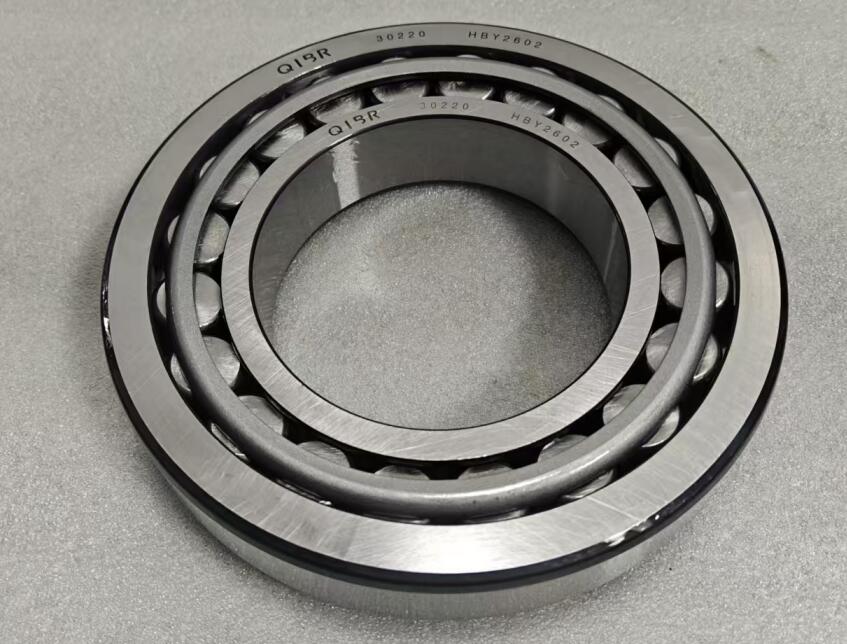
2. Industrial Reducers / Gearboxes
- Hard-tooth/Heavy-Duty Reducers (metallurgy, mining, cement, rolling mills)
- Planetary Reducers: Support for sun gears and planet carriers
- Extruder, Crusher, Crane Gearboxes
- Machine Tool Headstock / Gearbox: Main shaft, feed shafts (high precision + rigidity)
3. Rail Transit / Wind Power
- High-Speed Rail/Subway Gearboxes: Traction motor—gearbox—axle
- Wind Turbine Gearboxes: High-speed stage, planetary stages, output stages (heavy load + impact + partial load)
4. Agricultural Machinery / Heavy Engineering Machinery
- Combined Harvesters, Tractor Gearboxes
- Travel/rotation gearboxes of construction machinery (loaders, excavators)
1. Pairing Principle
- Single-row bearings must be paired with the same model and precision
- Prioritize DB (back-to-back): Optimal for rigidity, positioning, and alignment
2. Preload and Clearance
1). Mandatory control of preload/clearance for gear applications:
- Light load/high speed: Minimal clearance
- Heavy load/impact: Light preload
- Precision transmission: Zero clearance/moderate preload
2). Achieve precise adjustment via gasket thickness, locking nut torque, and axial compression amount
3. Lubrication and Sealing
- Oil lubrication is commonly used in gearboxes (shared with gears)
- Tapered roller bearings are sensitive to lubrication: Ensure adequate oil film, contamination resistance, and pollution prevention
4. Speed Limit
- Limit speed is lower than that of ball bearings/cylindrical roller bearings
- Prioritize angular contact ball bearings or double-row tapered roller bearings for high-speed scenarios