Newsroom
Differences Between 304 Stainless Steel Deep Groove Ball Bearings and 420 Stainless Steel Bearing
2026-04-22  I. Material Differences
1. Basic Type and Composition
304 (Austenitic Stainless Steel)
- Composition: Cr 18–20%, Ni 8–11%, C ≤0.08%
- Structure: Austenite, non-magnetic (or weakly magnetic)
- Hardness: HB ≤200 (HRC ≤28), soft with good toughness
- Heat Treatment: Cannot be hardened by quenching, only slightly increased in hardness through cold working
420 (Martensitic Stainless Steel, Cutting Tool Grade)
- Composition: Cr 12–14%, Ni ≤0.75%, C 0.16–0.25%
- Structure: Martensite, magnetic
- Hardness: HRC 50–55, hard and wear-resistant after quenching
- Heat Treatment: Quenchable + temperable, significantly improving hardness and strength
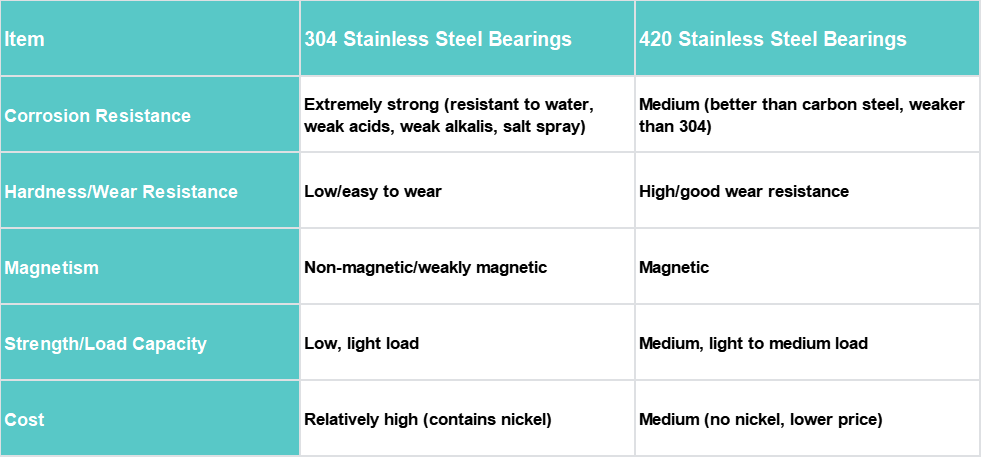
2. Performance Comparison
II. Application Differences (How to Choose)
1. 304 Stainless Steel Deep Groove Ball Bearings: Scenarios Requiring Strong Corrosion Resistance, Sanitation and Non-Magnetism
- Food and Beverage Machinery: Filling machines, mixers, baking equipment (water-resistant, detergent-resistant, food-grade)
- Medical/Pharmaceutical Equipment: Centrifuges, surgical instruments, sterile production lines (non-magnetic, corrosion-resistant, high-temperature sterilizable)
- Chemical/Humid Environments: Water pumps, valves, marine equipment (resistant to weak acids, weak alkalis and salt spray)
- Electronics/Precision Instruments: Optical equipment, sensors (non-magnetic, no interference with magnetic fields)
- Limitations: Not suitable for heavy loads or high speeds, prone to wear and short service life
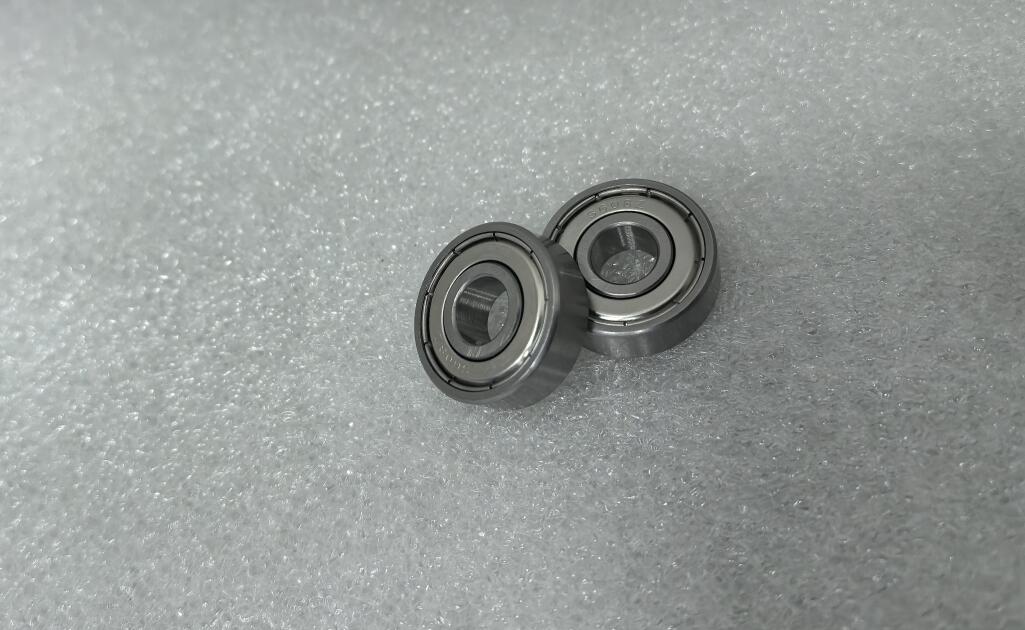
2. 420 Stainless Steel Deep Groove Ball Bearings: Scenarios with General Corrosion, Requiring Wear Resistance and Medium Load
- General Mechanical Equipment: Motors, pumps, fans, gearboxes (low cost, wear-resistant, general rust prevention)
- Daily Use/Home Appliances: Washing machines, air conditioners, small household appliance bearings
- Light-Load Food Components: Low-load food machinery (cost-sensitive, mild rust prevention)
- Precision Instruments/Tools: Measuring tools, cutting tools, small machine tools (requiring a certain degree of hardness and rust prevention)
- Limitations: Corrosion resistance is inferior to 304, not suitable for strong acids, strong alkalis or seawater; magnetic, cannot be used in non-magnetic equipment
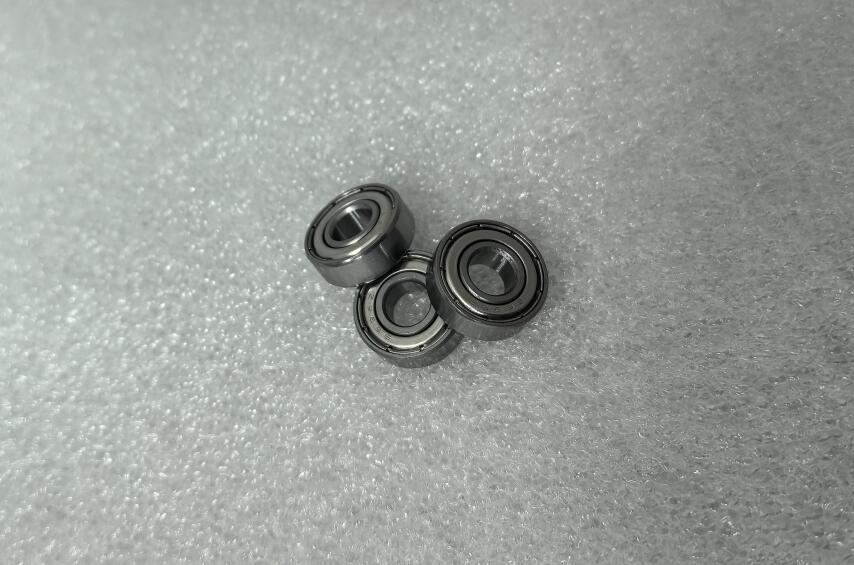
III. Quick Selection Suggestions
- For humid/acid-alkali/salt spray environments, or requiring sanitation and non-magnetism → Choose 304 Stainless Steel Deep Groove Ball Bearing
- For general environments, requiring wear resistance, medium load and cost control → Choose 420 Stainless Steel Deep Groove Ball Bearing
- For heavy load/high speed/high wear resistance → Consider 440C Stainless Steel Deep Groove Ball Bearing (hardness HRC 58–62, medium corrosion resistance)