Newsroom
Features for Bicycle Bearing
2026-04-27 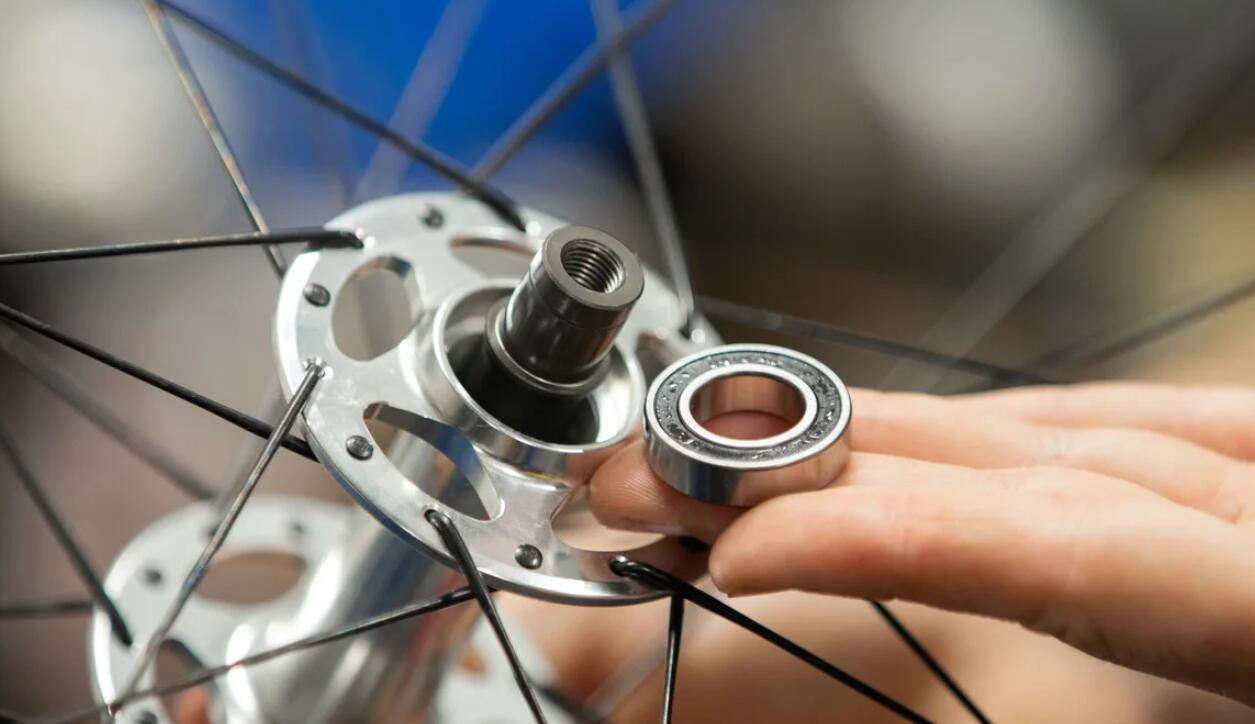 The core features for bicycle bearings are high precision, low friction, high sealing performance, lightweight durability, and high-speed adaptability. They are designed to reduce power loss, improve speed limits, and extend service life, perfectly matching the rigorous requirements of road racing, track racing and mountain biking competitions.
I. Structure & Precision
Standard deep groove structure: Inner and outer rings of bicycle bearings with continuous arc raceways, small contact area between steel balls and raceways, ensuring smooth rolling.
High-grade tolerance: Mostly ABEC-3/5/7 (ordinary bicycles usually use ABEC-1/3), with minimal radial runout and almost no play during rotation.
Precision components:
- Steel balls: G5/G10 grade (super precision ground)
- Cage: Nylon/copper solid, low vibration, and resistant to steel ball friction.
- Material: Bearing steel GCr15 or mixed ceramic (steel ring + ceramic ball), hardness HRC60-64.
II. Low Friction and High Efficiency
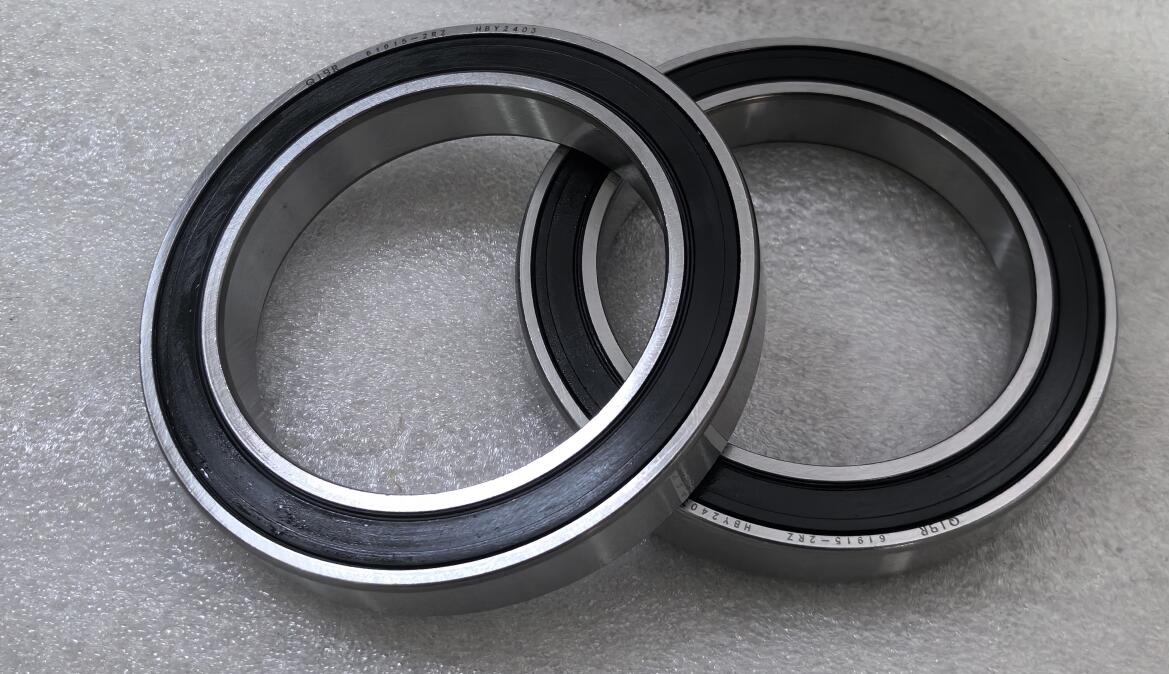
Optimized Contact Angle: Standard 0° contact angle minimizes radial friction, suitable for high-speed hub/pedal rotation.
Low-Viscosity Lubrication: Filled with high-speed, low-viscosity grease (such as fully synthetic lithium-based grease), resulting in 30%+ lower resistance than ordinary grease.
Ceramic Ball Advantages: Ceramic (Si₃N₄) has low density, high hardness, and self-lubricating properties, reducing friction by 15–20%, resulting in lower temperature rise and higher maximum rotational speed.
III. High Sealing & Dust/Water Resistance
Double-sided contact seal: Non-contact/low-friction contact rubber seal, preventing the intrusion of mud, water and sand without adding extra resistance.
Maze + rubber seal composite: High-end models adopt double-layer sealing, with dust and water resistance up to IP67, adapting to rainy days and muddy tracks. 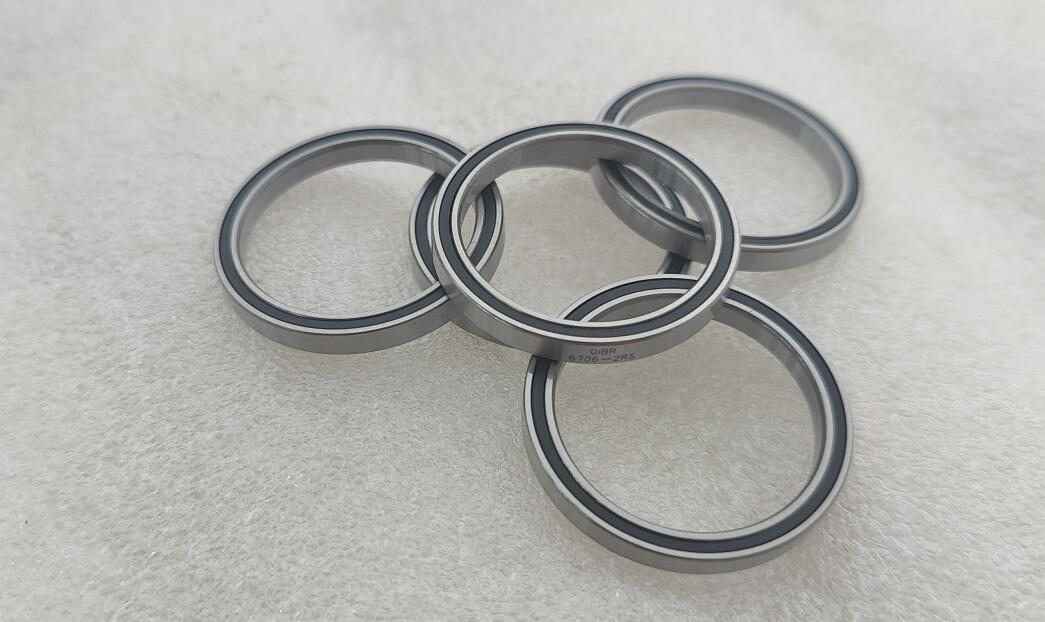
IV. High Speed & Durability
High limit speed: Up to 20,000–25,000 RPM for steel bearings, and 30,000 RPM+ for ceramic bearings, meeting the high-speed needs of road and track races.
High load-bearing capacity: Mainly bearing radial load, and can withstand a certain amount of bidirectional axial force, adapting to the composite force during sprinting and climbing.
Long service life: With precise manufacturing, good sealing and proper lubrication, bicycle bearings' service life is 2–3 times that of ordinary deep groove ball bearings, reducing the frequency of post-race maintenance. 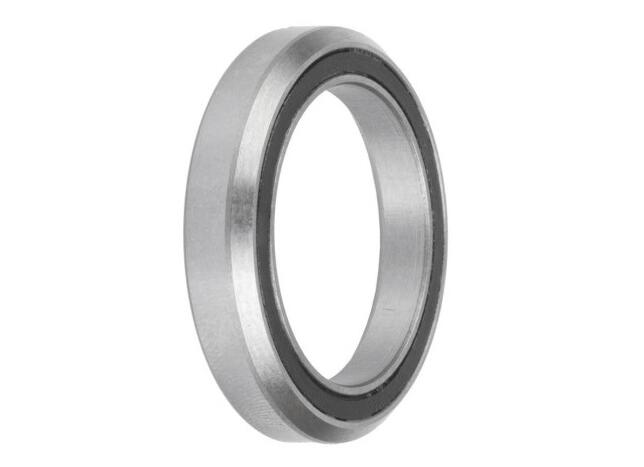
V. Lightweight & Adaptability
Thin-walled design: Such as 6800/6900 series (inner diameter × outer diameter × width: 15×24×5, 17×26×5, etc.), lightweight and compact structure, suitable for competitive wheel sets and pedals.
Strong interchangeability: Standard sizes (such as 6802, 61903) can directly replace ordinary bearings with low upgrade cost.
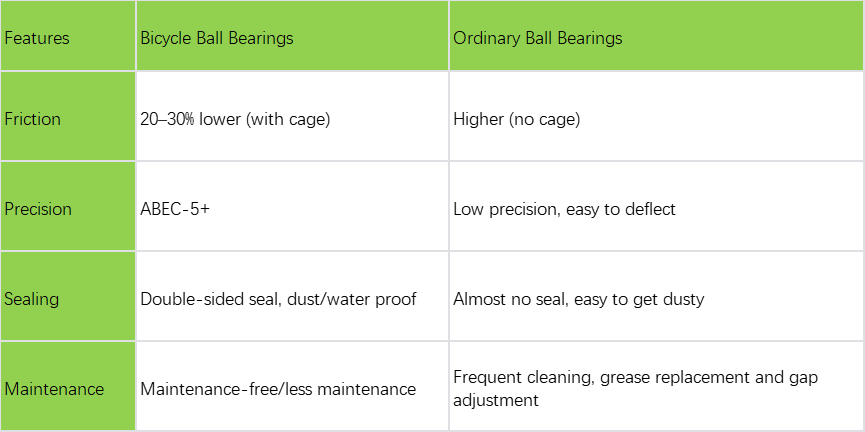
VI. Comparison with Ordinary Ball Bearings
Typical Applications
Road bikes: Hubs (front/rear), headsets, pedals, bottom brackets.
Track racing: High-speed hubs, closed wheel bearings.
Mountain bike competitions: Lightweight hubs, shock absorber pivot points (partial).