Newsroom
Functions of Ribs, Retaining Rings, Locating Slot and Angle Rings for Cylindrical Roller Bearings
2026-01-26 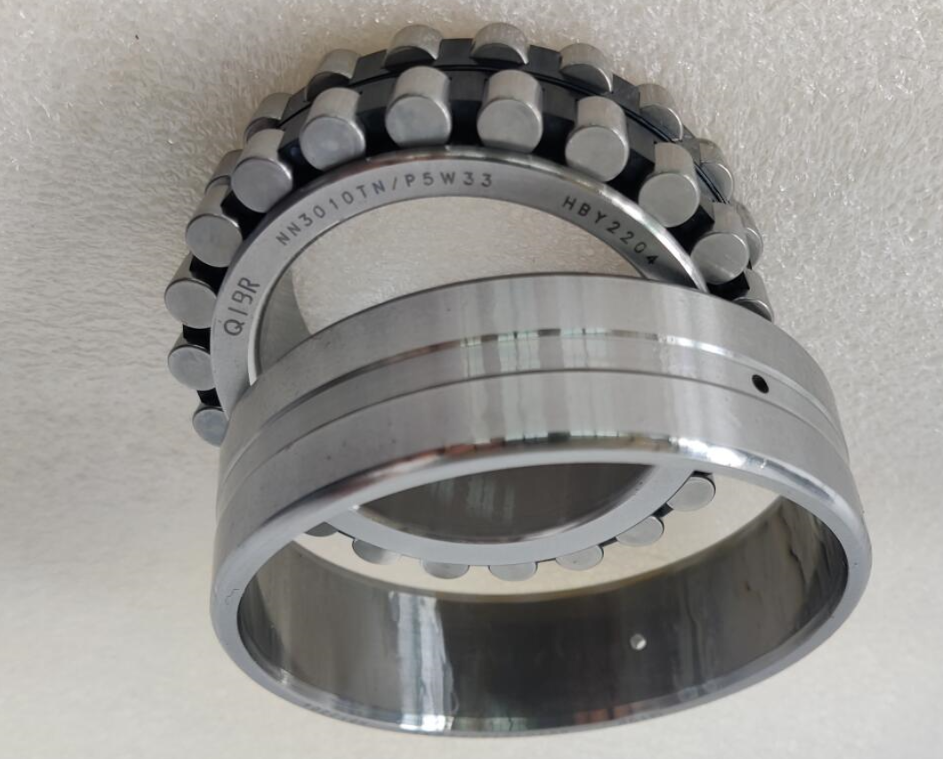 Ribs, retaining rings, fixing rings and angle rings of cylindrical roller bearing are all key accessories/structures for axial positioning/limiting, guiding rolling elements and restraining bearing components. Their core functions center on axial limiting, rolling element guiding, bearing component fixation and adaptation to installation working conditions. The four types of structures differ significantly in design position, applicable scenarios and specific functions. Some are integrated structures of bearings, while others are purchased installation accessories. Their core functions and applicable characteristics are described in detail below, combined with practical engineering application scenarios:
1. Rib/Flange – Integrated core guiding and axial limiting structure of bearing inner/outer rings
A rib is an integrally machined annular protrusion on the inner or outer ring of a cylindrical roller bearing, divided into inner ring rib and outer ring rib. As a core structure of the bearing body, it is non-detachable and the foundation for cylindrical roller bearing to achieve basic axial constraint.
Core Functions
- Axial guiding and positioning of rolling elements: Guide cylindrical rollers to perform pure rolling on the raceway, prevent axial movement and inclination of rollers, avoid hard friction between roller end faces and raceway edges, reduce wear and ensure rotation accuracy.
- Basic axial limiting: Provide axial limiting for rollers and can bear slight axial force (not the main axial load-bearing structure, only suitable for pure radial load working conditions without large axial force).
- Guarantee internal bearing clearance: The axial clearance of rollers inside the bearing is limited by the machining accuracy of ribs, avoiding increased bearing vibration and noise caused by excessive axial movement of rollers.
Applicable Scenarios
The body structure of all cylindrical roller bearing (NU/NJ/NF/NUP and other series). For example, NJ-type bearings have double ribs on the inner ring and no ribs on the outer ring, and NU-type bearings have double ribs on the outer ring and no ribs on the inner ring. The arrangement form of ribs directly determines the axial limiting capacity of the bearing. 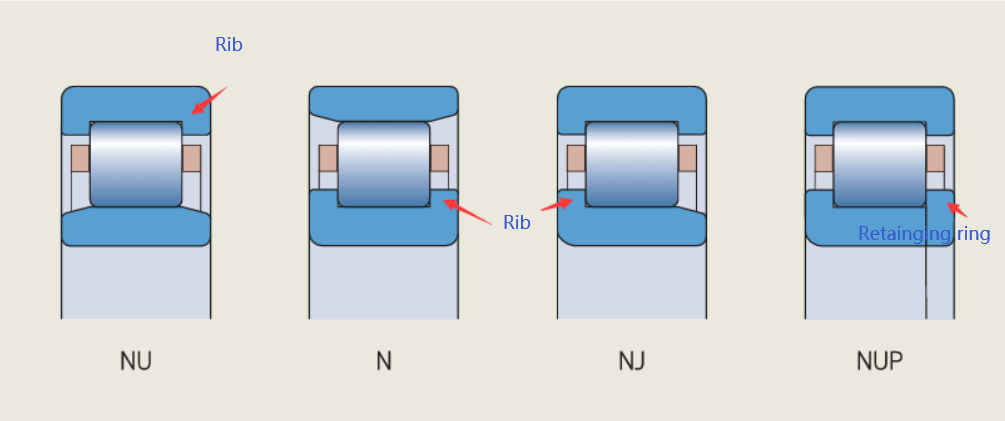
2. Retaining Ring/Circlip – Axial fixing accessory after bearing installation, divided into bearing-specific, bore and shaft types
A retaining ring is an independent annular elastic accessory, which needs to be purchased and assembled in the shaft shoulder, bore shoulder or clamping groove of the bearing ring. It is divided into bore elastic retaining ring, shaft elastic retaining ring and bearing-specific retaining ring (such as the outer ring retaining ring adapted to N-type bearings). It is detachable and a commonly used low-cost structure for external axial fixation of bearings.
Core Functions
- Integral axial limiting of bearings: Provide axial locking for the inner or outer ring of the bearing to prevent integral axial movement of the bearing on the shaft or in the bearing housing bore, suitable for working conditions mainly with radial load and small axial load.
- Simplify installation structure: Replace the complex machining of shaft shoulder/bore shoulder steps, realize rapid axial fixation of the bearing through the combination of clamping groove and retaining ring, and reduce the machining cost of shafts and bearing housings.
- Auxiliary adjustment of bearing clearance: The axial clearance of the bearing can be fine-tuned with gaskets to ensure bearing assembly accuracy.
Applicable Scenarios
Light load, low/medium speed working conditions without severe impact, such as the auxiliary end bearings of motors and reducers, and axial fixation of cylindrical roller bearing in small transmission equipment. It is forbidden to use in heavy load, high speed and large axial force working conditions (the retaining ring is prone to deformation and failure). 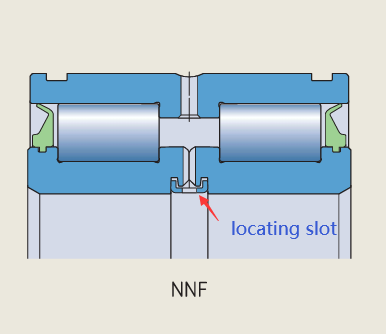
3. Fixing Ring/Locating Slot – Axial fixing accessory for bearings under heavy load/high speed, divided into locking and positioning types
A locating slot is a high-precision rigid annular accessory, mostly made of metal, which needs to be used with the shaft shoulder/bore shoulder of the bearing. Some are equipped with locking screws or conical surface structures and are detachable. It is a special axial fixing part for medium-heavy load and high-speed working conditions, with much higher precision and load-bearing capacity than retaining rings.
Core Functions
- High-precision axial fixation: Achieve gap-free axial positioning for the inner ring (on the shaft) or outer ring (in the bore) of the bearing, ensure the rotation accuracy of the bearing after assembly, and adapt to high-speed and high-precision transmission scenarios (such as precision machine tools and high-speed motors).
- Bear medium axial force: The rigid structure can bear larger axial force than the retaining ring, and is not easy to loosen under vibration and impact working conditions, ensuring fixation reliability.
- Anti-loosening of bearing components: Some locating slots with locking screws can prevent relative sliding between the bearing inner ring and the shaft (matching interference/transition fit) at the same time, avoiding shaft neck wear caused by sliding friction.
- Adapt to non-standard installation: When the step machining of the shaft/bearing housing cannot meet the bearing limiting requirements, axial positioning is supplemented by the locating slot to improve installation flexibility.
Applicable Scenarios
Medium-heavy load, high speed, high precision working conditions with slight vibration, such as the fixation of cylindrical roller bearings in precision reducers, CNC lathe spindles and high-power fans. 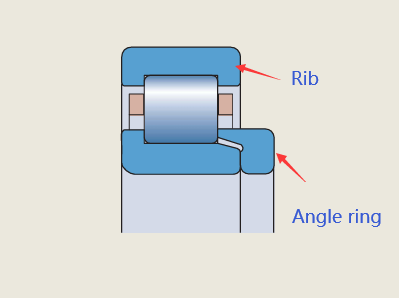
4. Angle Ring/Backing Ring – Axial limiting bushing adapted to self-aligning/ angular contact matching and special-shaped installation
An angle ring is an annular bushing with bevel/step, mostly a customized structure and detachable. It is mainly adapted to the special working conditions of combined installation of cylindrical roller bearings and self-aligning bearings, conical/special-shaped steps on shafts/bores, and parallel installation of multiple bearings. It is an auxiliary positioning accessory, without general standards and mostly non-standard customized.
Core Functions
- Axial adaptation of special-shaped installation surfaces: When the shaft or bearing housing has conical surfaces and inclined steps (such as conical shafts adapted to self-aligning roller bearings), the cylindrical roller bearing cannot be directly attached to the shaft shoulder/bore shoulder. The angle ring realizes axial limiting of the bearing through bevel transition to ensure uniform stress on the attachment surface.
- Axial separation and positioning of multiple parallel bearings: When multiple sets of cylindrical roller bearings are installed in parallel on the same shaft, the angle ring acts as a separation bushing to provide independent axial positioning for each set of bearings, avoid mutual interference between bearings, and ensure the independent axial clearance of each bearing.
- Uniform transmission of axial force: The axial force is uniformly transmitted to the bearing ring through the bevel/step structure of the angle ring, avoiding ring deformation and wear caused by local stress on the bearing.
- Compensate machining errors: When the step machining of the shaft/bearing housing has coaxiality and perpendicularity errors, the angle ring can slightly compensate the errors to ensure the installation concentricity of the bearing.
Applicable Scenarios
Non-standard equipment, multi-bearing combined transmission, and working conditions with special-shaped shaft/bore structures, such as large transmission systems of metallurgical equipment and mining machinery (combined installation of cylindrical roller bearings and self-aligning roller bearings).
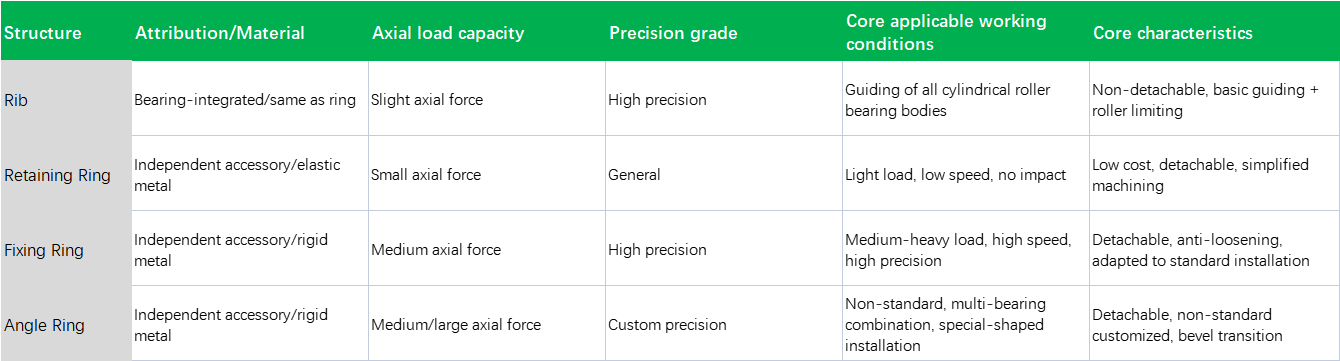
Summary Table of Core Differences of the Four Structures
Key Engineering Application Principles
- The ontological axial constraint of cylindrical roller bearings relies on ribs first, and the external axial fixation selects retaining rings (for light load) or fixing rings (for medium-heavy load) according to load/rotational speed.
- Retaining rings are only suitable for scenarios with no large axial force and low speed; they are strictly prohibited in high-speed/heavy load working conditions to avoid deformation and failure of the retaining ring.
- Angle rings are non-standard accessories and only used when conventional positioning structures cannot be adapted. The fitting accuracy with shafts/bearing housings must be ensured to avoid stress concentration.
- The installation surfaces of all external positioning accessories (retaining rings/locating slots/angle rings) must be clean, burr-free and up to perpendicularity standards, otherwise it will lead to bearing eccentric load and increased wear.