Newsroom
Heat Management in UAV Motors: Why Bearing Temperature Stability Matters
As UAV technology advances toward higher speeds, longer endurance, and increased payload capacity, thermal management has become a critical engineering consideration. While much attention is placed on battery efficiency and motor design, bearing temperature stability is equally important in ensuring long-term reliability and flight safety.
In high-speed UAV motors, even moderate temperature increases can significantly influence lubrication performance, internal clearance, and overall bearing life.
Where Does the Heat Come From?
In most electric UAV systems, operating temperatures rise due to several factors:
- High rotational speeds (often 20,000–40,000 rpm)
- Friction between rolling elements and raceways
- Compact motor housing with limited heat dissipation
- High-frequency motor controllers generating additional thermal load
In industrial UAV applications—such as inspection drones operating near furnaces, power plants, or oil and gas facilities—external environmental temperatures can further increase thermal stress.
Under these combined conditions, bearing performance must remain stable to prevent premature failure.

Impact of Temperature on Bearing Performance
Elevated temperatures affect bearings in several critical ways:
- Lubricant viscosity reduction
- Accelerated grease degradation
- Changes in internal clearance due to thermal expansion
- Increased risk of wear or surface damage
If not properly managed, these effects can lead to vibration growth, noise increase, or sudden operational instability—factors that directly impact UAV flight control and mission success.
Deep Groove Ball Bearings in High-Speed UAV Motors
Deep Groove Ball Bearings are widely used in UAV brushless motors due to their compact structure and low friction characteristics. However, at high speeds, temperature stability becomes a key selection factor.
For UAV motor applications, optimized deep groove ball bearings typically feature:
- High-precision raceway geometry
- Controlled internal clearance suitable for thermal expansion
- High-speed grease with strong shear stability
- Low-friction cage design
Proper clearance selection is particularly important. Bearings operating at high speeds may require slightly increased clearance to compensate for thermal growth during operation.
Angular Contact Ball Bearings for Enhanced Stability
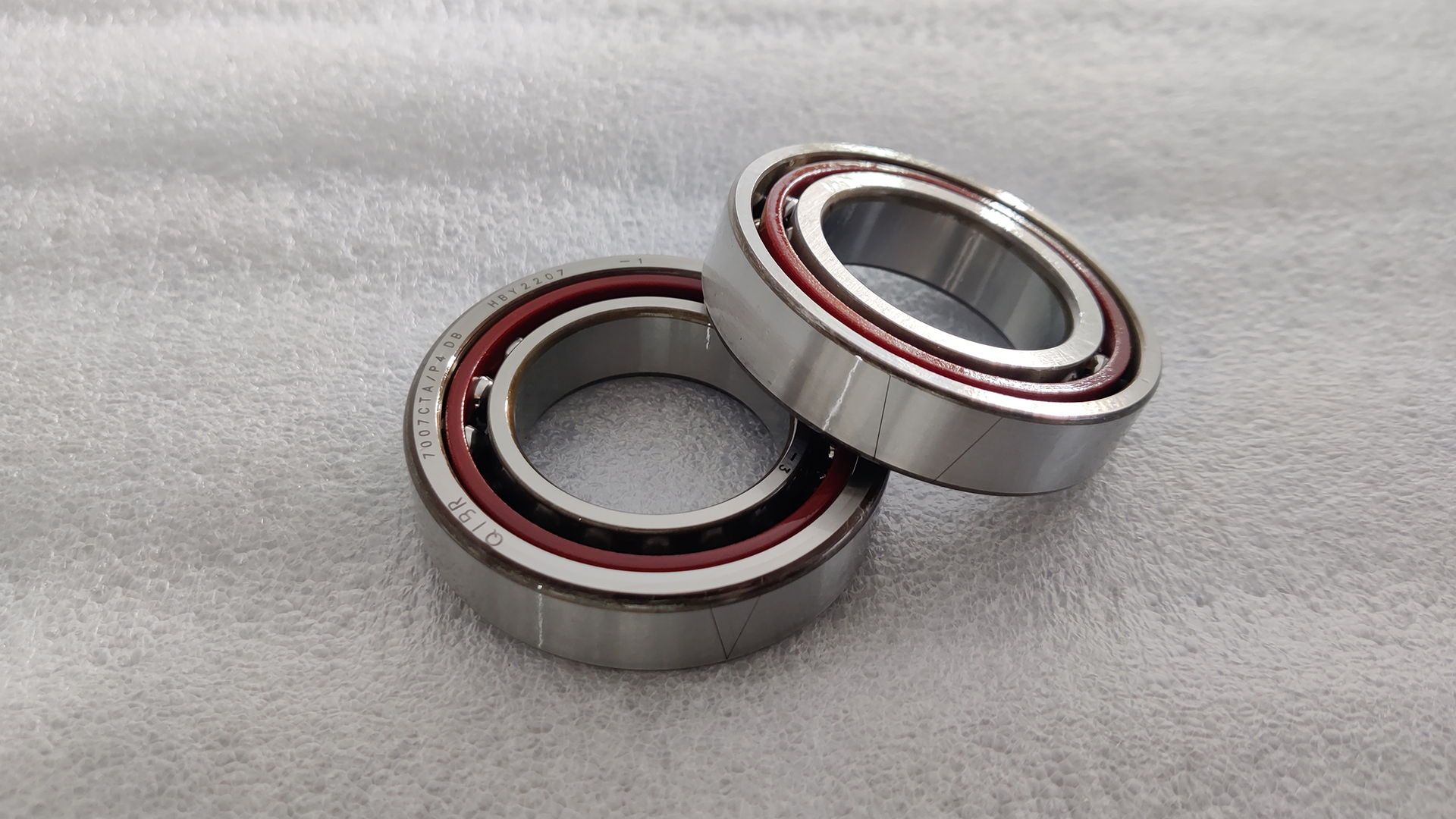
In UAV systems requiring greater axial stiffness or improved shaft positioning, Angular Contact Ball Bearings may be used. These bearings can handle combined radial and axial loads, making them suitable for high-performance motor assemblies or integrated drive modules.
Under elevated temperatures, preload control becomes critical. Excessive preload combined with thermal expansion can increase friction torque and accelerate heat buildup. Therefore, careful preload calculation and material selection are essential in high-speed UAV designs.
Hybrid Ceramic Bearings and Thermal Advantages
For applications where both high speed and elevated temperature stability are required, Hybrid Ceramic Bearings offer additional advantages.
With ceramic rolling elements and steel rings, hybrid designs provide:
- Lower centrifugal force at high speed
- Reduced friction under proper lubrication
- Improved resistance to electrical discharge
- Enhanced performance under thermal stress
The lower density of ceramic balls helps reduce heat generation, while their hardness improves surface durability under demanding conditions.
Lubrication Strategy: A Critical Factor
Bearing temperature stability in UAV motors is closely linked to lubrication quality. High-speed UAV applications typically require:
- Low-torque, high-speed grease formulations
- Controlled grease fill ratios
- Thermal-resistant lubrication systems
- Proper sealing design to prevent contamination
Incorrect grease selection can result in rapid temperature rise, increased drag, and shortened bearing life.
Reliability in Extreme UAV Applications
While consumer drones may operate in moderate conditions, industrial UAVs often face harsher environments, including elevated ambient temperatures and extended continuous operation.
In these cases, bearing material selection, heat treatment quality, and lubrication compatibility become decisive factors. Temperature-stable bearing solutions help ensure:
- Reduced vibration growth
- Consistent rotational accuracy
- Extended service intervals
- Improved operational safety
Supporting Thermal Stability in Modern UAV Systems
As UAV systems continue to evolve, managing internal and environmental heat will remain a major engineering challenge. Bearing design plays a fundamental role in this process.
Whether using Deep Groove Ball Bearings, Angular Contact Ball Bearings, or Hybrid Ceramic Bearings, proper selection and optimization are essential to maintaining performance under elevated temperature conditions.
In high-speed UAV motors, temperature stability is not just a secondary parameter—it is a key determinant of reliability and efficiency.