Newsroom
Integrated Bearing Design Gains Momentum: Needle Roller / Angular Contact Ball Bearings in Modern Machinery
As mechanical systems continue to evolve toward higher load capacity, compact layouts, and improved reliability, traditional single-function bearings are no longer sufficient for many applications. In response to this shift, Needle Roller / Angular Contact Ball Bearings have emerged as an efficient integrated solution, combining radial load strength with precise axial positioning in one compact bearing unit.
This hybrid bearing design is increasingly favored in modern transmission systems where space, stiffness, and load management must be carefully balanced.
Why Integrated Bearing Structures Matter
Many industrial applications require bearings to support high radial loads while simultaneously handling axial forces. Traditionally, this has been achieved by combining multiple bearings, which increases axial space requirements and introduces complexity during installation and alignment.
Needle roller / angular contact ball bearings address these challenges by integrating two bearing functions into one unit:
- The needle roller section provides excellent radial load capacity
- The angular contact ball section supports axial loads and ensures accurate axial location
This integration simplifies system design while enhancing operational stability. 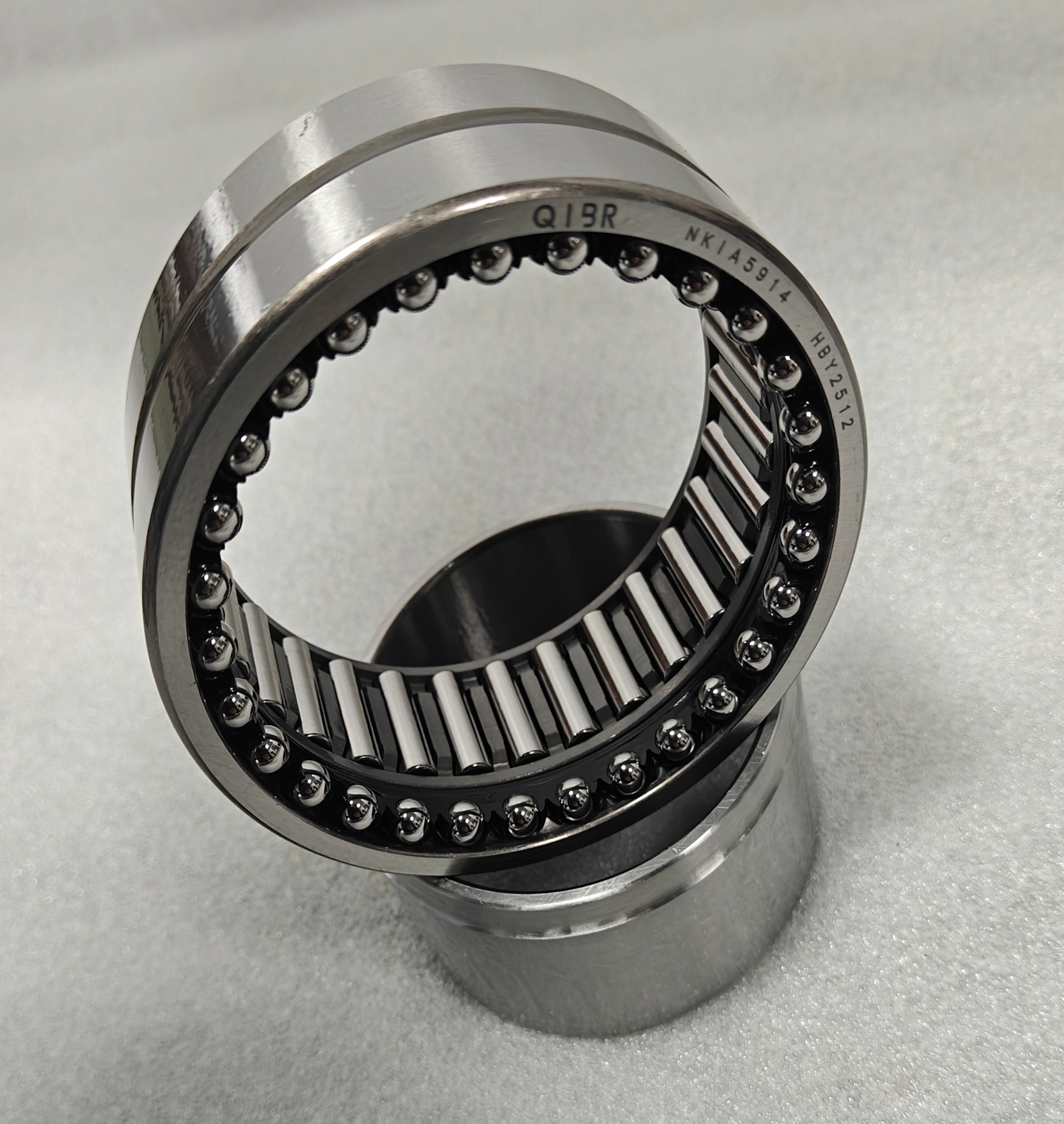
Key Performance Advantages
Compared with conventional bearing arrangements, this hybrid structure offers several clear benefits:
- High radial load capacity within a limited installation space
- Reliable axial load support without additional thrust bearings
- Compact and space-saving design
- Improved stiffness and positioning accuracy
- Reduced assembly time and lower risk of installation errors
These characteristics make the design particularly attractive for high-performance and space-constrained machinery.
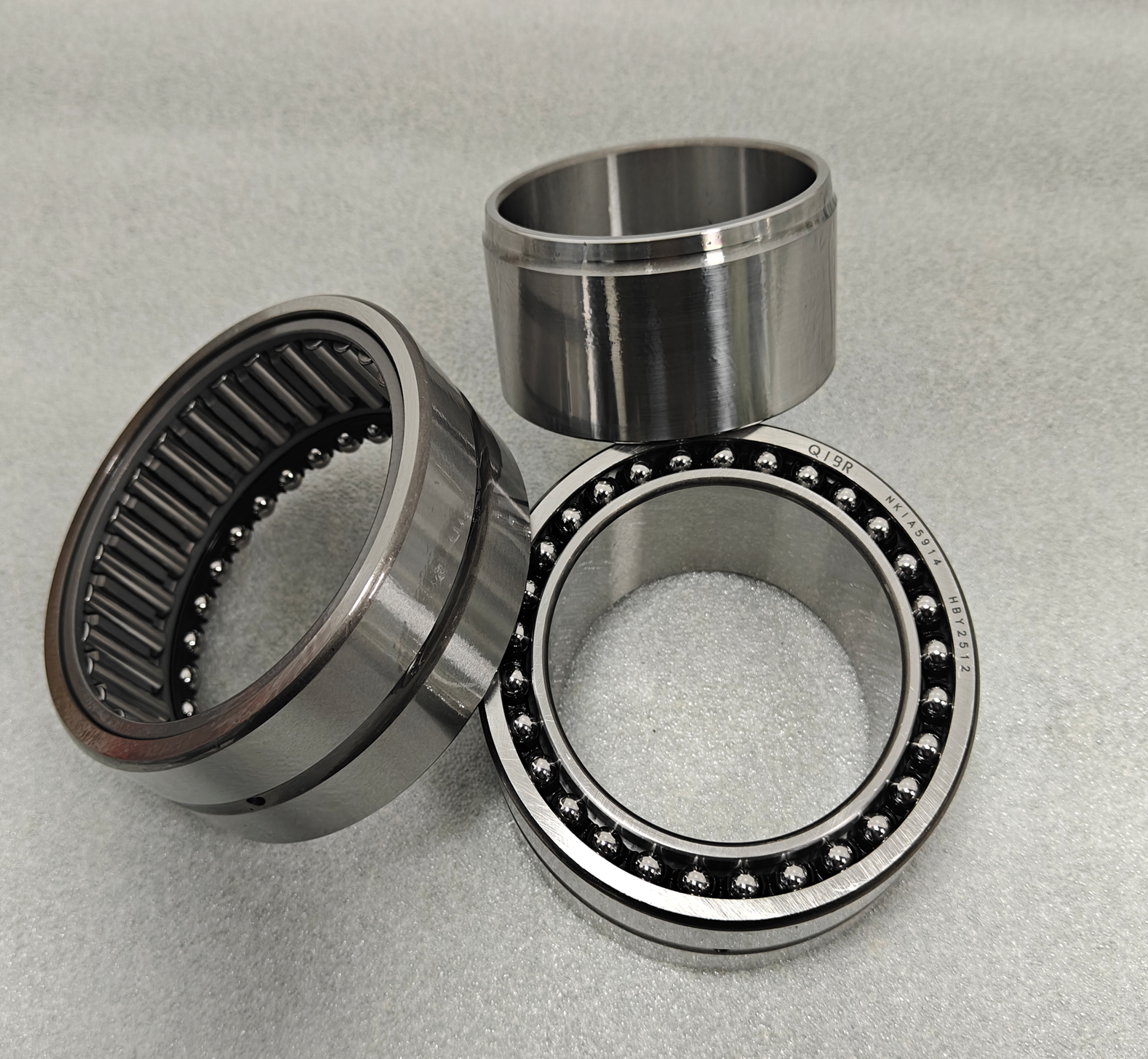
Representative Models: NKIA 5901 and NKIA 5914
The NKIA series is a well-established example of needle roller / angular contact ball bearings used across a wide range of industrial applications.
The NKIA 5901 model is commonly applied in medium-duty transmission systems where both radial and axial loads are present, making it suitable for automation equipment and compact mechanical assemblies.
For heavier load conditions, NKIA 5914 offers increased size and load-carrying capacity, making it a practical choice for industrial gearboxes, construction machinery transmissions, and other demanding applications.
Both models demonstrate the core advantage of the design: effective axial location without the need for separate thrust bearings.
Typical Application Areas
Needle roller / angular contact ball bearings are widely used in:
- Industrial gearboxes and speed reducers
- Automation and robotic drive systems
- Construction and agricultural machinery
- Machine tools and precision equipment
- Compact transmission assemblies with combined load requirements
In these systems, bearing selection plays a critical role in overall performance, reliability, and service life.
Market Perspective: From Component Selection to System Solutions
One clear market trend is the growing preference for integrated bearing solutions over traditional multi-bearing arrangements. Engineers and buyers are increasingly focused on reducing system complexity while improving load capacity and operational reliability.
Needle roller / angular contact ball bearings reflect this shift, offering a balanced solution that meets both mechanical and design efficiency requirements.
Conclusion
Needle Roller / Angular Contact Ball Bearings are not simply a combination of two bearing types—they represent a structural optimization aligned with modern machinery demands. By efficiently managing radial and axial loads within a single compact unit, these bearings support the ongoing evolution toward lighter, more efficient, and more reliable mechanical systems.
As integrated design becomes the norm, hybrid bearing solutions like the NKIA series will continue to play a vital role in advanced industrial applications.