Newsroom
NUKRE 47 Bearing: A Comprehensive Guide to Its Design, Performance and Applications
In the realm of industrial machinery, cam follower bearings play a pivotal role in ensuring precise motion transmission and load-bearing capacity. Among the diverse range of cam follower bearings available in the market, the NUKRE 47 stands out as a specialized and high-performance component, widely utilized in various industrial sectors. This article aims to provide a detailed overview of the NUKRE 47 bearing, covering its design characteristics, key technical parameters, performance advantages, typical applications, and essential installation and maintenance considerations.
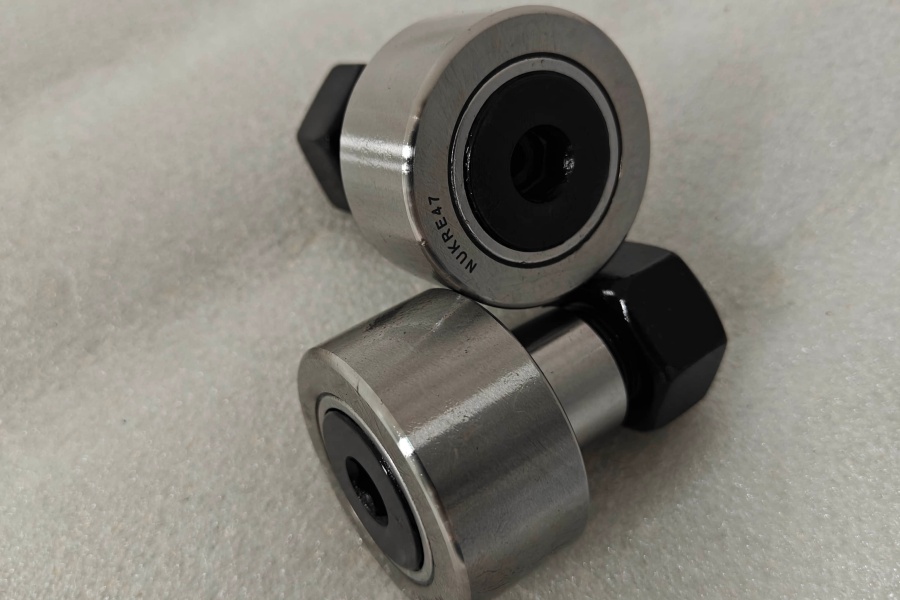
First and foremost, it is crucial to understand the classification and structural positioning of the NUKRE 47 bearing. The NUKRE 47 belongs to the stud-type track roller bearing category, specifically the eccentric sleeve-equipped full-complement cylindrical roller cam follower series . Its model designation carries specific technical connotations: "NUKR" denotes a stud-type full-complement cylindrical roller cam follower with axial guidance and labyrinth seals on both sides, while the additional "E" indicates the integration of an eccentric collar . This eccentric sleeve design is a defining feature that distinguishes the NUKRE series from the standard NUKR series, providing unique advantages in installation and alignment adjustment .
The structural design of the NUKRE 47 bearing is meticulously engineered to meet the demands of heavy-load and high-reliability industrial applications. It adopts a full-complement double-row cylindrical roller configuration, which eliminates the need for a cage and allows for a greater number of rolling elements . This design significantly enhances the bearing's radial load-bearing capacity compared to caged cam followers, making it capable of withstanding substantial static and dynamic radial loads . Additionally, the bearing is equipped with double-sided labyrinth seals . This sealing structure effectively prevents the ingress of dust, debris, and other contaminants into the bearing interior while retaining the lubricating grease, thereby extending the bearing's service life and ensuring stable operation in harsh working environments.
Another notable structural feature of the NUKRE 47 is its eccentric sleeve, which has an eccentricity of 1 mm . During installation, this eccentric sleeve enables fine adjustment of the bearing's position to compensate for minor installation errors or misalignments between the shaft and the track . The bearing is also designed with a hexagonal hole on both the stud head and the shaft, facilitating easy and secure mounting using appropriate tools . The stud features an M20x1.5 thread specification, ensuring reliable fastening to the mating component with a specified tightening torque of 120 Nm .
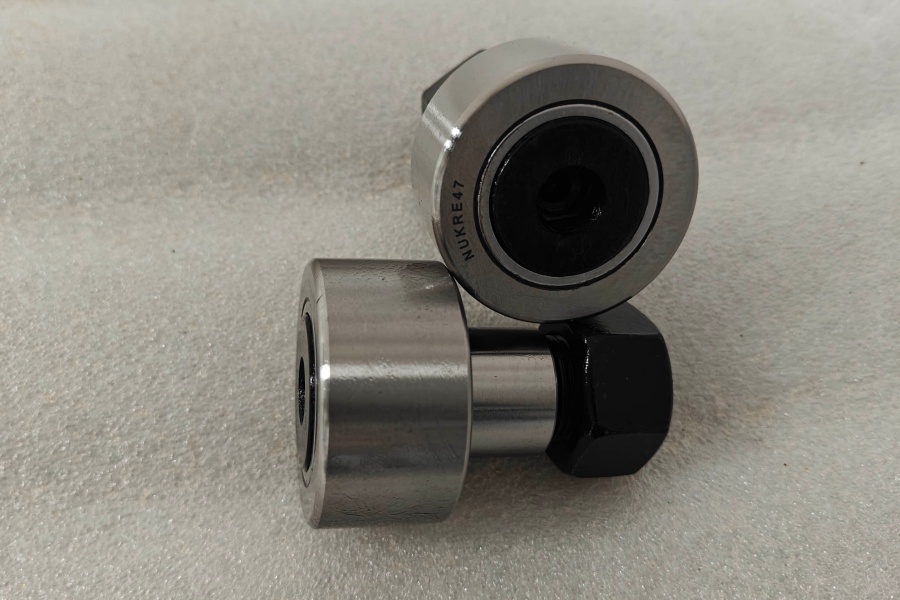
To fully understand the performance capabilities of the NUKRE 47 bearing, it is essential to examine its key technical parameters. As per official specifications , the bearing has a nominal outer diameter (D) of 47 mm, an inner diameter (d) of 20 mm, and a width (B) of 25.6 mm. The effective length of the bolt is 40.5 mm, and the minimum edge radius (r) is 1 mm, which helps to avoid stress concentration during operation. In terms of load-bearing capacity, the NUKRE 47 boasts a basic dynamic load rating (Cr) of 28,500 N and a basic static load rating (Cor) of 37,500 N. The allowable radial dynamic load (Fr) is 16,200 N, and the allowable radial static load (For) is 32,500 N, with a fatigue limit load (Cur) of 4,850 N. These parameters indicate the bearing's ability to withstand heavy loads over extended periods. In terms of rotational performance, the maximum allowable speed (Ng) under grease lubrication is 4,200 rpm , making it suitable for applications requiring moderate to high rotational speeds.
The NUKRE 47 bearing is constructed from high-quality carbon steel , which undergoes rigorous heat treatment to enhance its hardness, wear resistance, and overall mechanical strength. The outer ring features an optimized crowned profile (X/R), which helps to distribute loads evenly across the contact surface, reduce edge stress, and accommodate minor misalignments between the bearing and the track . This design feature is particularly beneficial in applications where the track may not be perfectly flat or aligned.
Due to its robust design, high load-bearing capacity, and versatile performance, the NUKRE 47 bearing finds extensive applications across a wide range of industrial sectors. According to industry data , it is commonly used in machine tools, where it provides precise and reliable guidance for cam mechanisms and linear motion systems. In the mining and mineral processing industry, the NUKRE 47 is employed in conveyor systems, where it withstands heavy loads and harsh operating conditions, including dust, vibration, and temperature fluctuations. The bearing is also suitable for agricultural machinery, such as harvesters and tillers, where its durability and resistance to contamination ensure long service life. Additionally, it is used in construction equipment, automated production lines, and energy generators, highlighting its adaptability to diverse industrial environments .
Proper installation and maintenance are critical to maximizing the performance and service life of the NUKRE 47 bearing. During installation, it is essential to ensure that the mounting surface is clean, flat, and free from burrs or defects. The bearing should be installed using the hexagonal holes provided, and the specified tightening torque of 120 Nm must be strictly adhered to . Over-tightening or under-tightening can lead to premature failure, increased friction, or reduced load-bearing capacity. The eccentric sleeve should be adjusted carefully to achieve the desired alignment, and any excess grease should be removed after installation to prevent overheating.
In terms of maintenance, the NUKRE 47 bearing is equipped with two lubrication nipples (NIPA 2 x 7.5), which allow for regular re-lubrication . The frequency of lubrication depends on the operating conditions, such as load, speed, and environment. In general, it is recommended to re-lubricate the bearing at regular intervals to ensure that the rolling elements and raceways remain properly lubricated, reducing friction and wear. The labyrinth seals should be inspected periodically to ensure they are intact and functioning correctly, as damaged seals can allow contaminants to enter the bearing and compromise its performance. If any signs of wear, damage, or abnormal noise are detected during operation, the bearing should be replaced immediately to prevent further damage to the machinery.
When comparing the NUKRE 47 with similar bearing models, such as the NUKR 47, the key difference lies in the presence of the eccentric sleeve . The NUKR 47 does not have an eccentric sleeve, making it suitable for applications where precise alignment is not a major concern. In contrast, the NUKRE 47's eccentric sleeve provides greater flexibility during installation, making it the preferred choice for applications where minor misalignments may occur. Additionally, the NUKRE 47's full-complement roller design offers higher load-bearing capacity than caged cam followers, such as the KR series, but may have a slightly lower maximum speed due to the absence of a cage .
In conclusion, the NUKRE 47 bearing is a high-performance stud-type track roller bearing that combines robust design, high load-bearing capacity, and versatile performance. Its unique features, including the eccentric sleeve, full-complement double-row rollers, and labyrinth seals, make it suitable for a wide range of industrial applications, from machine tools to mining machinery. By following proper installation and maintenance procedures, users can ensure that the NUKRE 47 bearing delivers reliable and efficient performance over an extended service life. As industrial machinery continues to evolve towards higher precision, greater load capacity, and harsher operating conditions, the NUKRE 47 bearing remains a valuable component in ensuring the smooth and efficient operation of industrial systems.