Newsroom
The 23060 Spherical Roller Bearing: Design, Performance and Industrial Applications
In the realm of industrial machinery, bearings serve as the silent backbone that ensures smooth rotation, reduces friction, and supports heavy loads, enabling the seamless operation of equipment across various sectors. Among the diverse range of bearing types, the 23060 spherical roller bearing stands out as a high-performance component designed to meet the rigorous demands of heavy-duty applications. This article provides a comprehensive overview of the 23060 bearing, exploring its design characteristics, key technical specifications, operational advantages, typical applications, and essential maintenance practices, shedding light on why it has become a preferred choice for engineers and manufacturers worldwide.
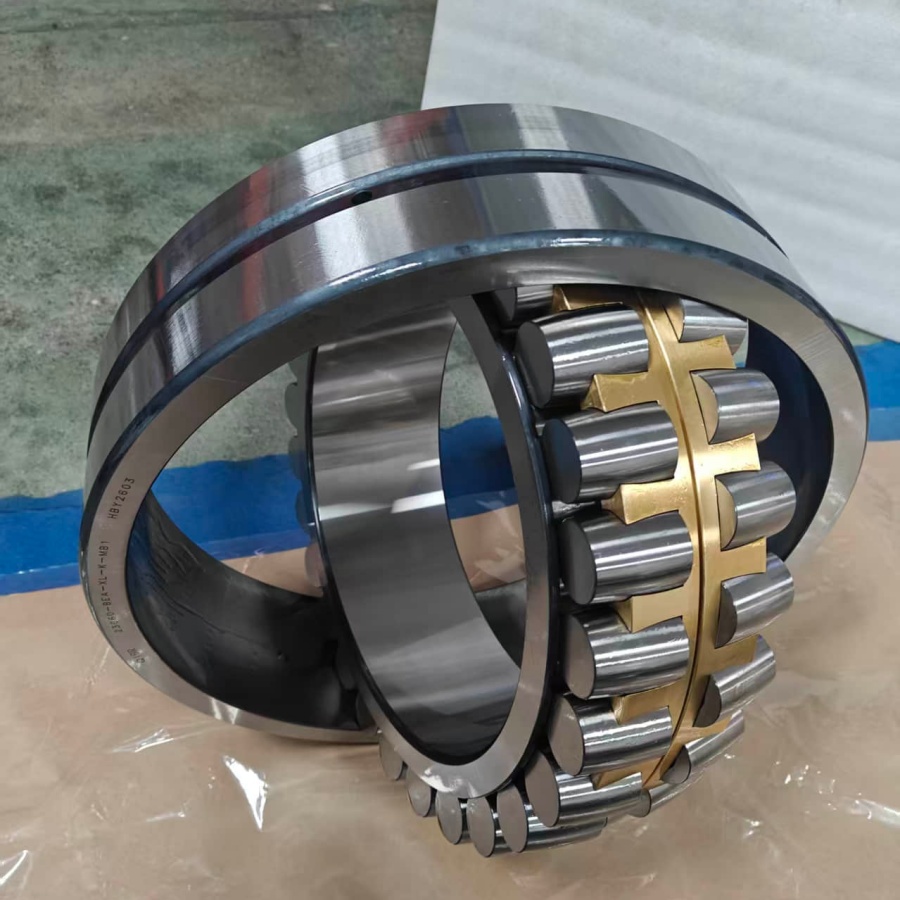
First and foremost, it is crucial to understand the classification and model significance of the 23060 bearing. As a member of the spherical roller bearing family, it is specifically categorized under the spherical roller bearing type, which is renowned for its ability to accommodate misalignment between the shaft and housing, a common challenge in industrial operations. The model designation “23060” carries specific meanings that define its structure and performance: the first digit “2” indicates the bearing series, the following “30” denotes the dimension series, “60” specifies the bore diameter (which is 300mm, calculated by multiplying the digit by 5), and the suffix “MB” refers to its solid brass cage with outer ring guidance and a cylindrical bore without inner ring ribs. This cage design is a key distinguishing feature of the 23060, setting it apart from other spherical roller bearing variants and contributing significantly to its performance in harsh conditions.
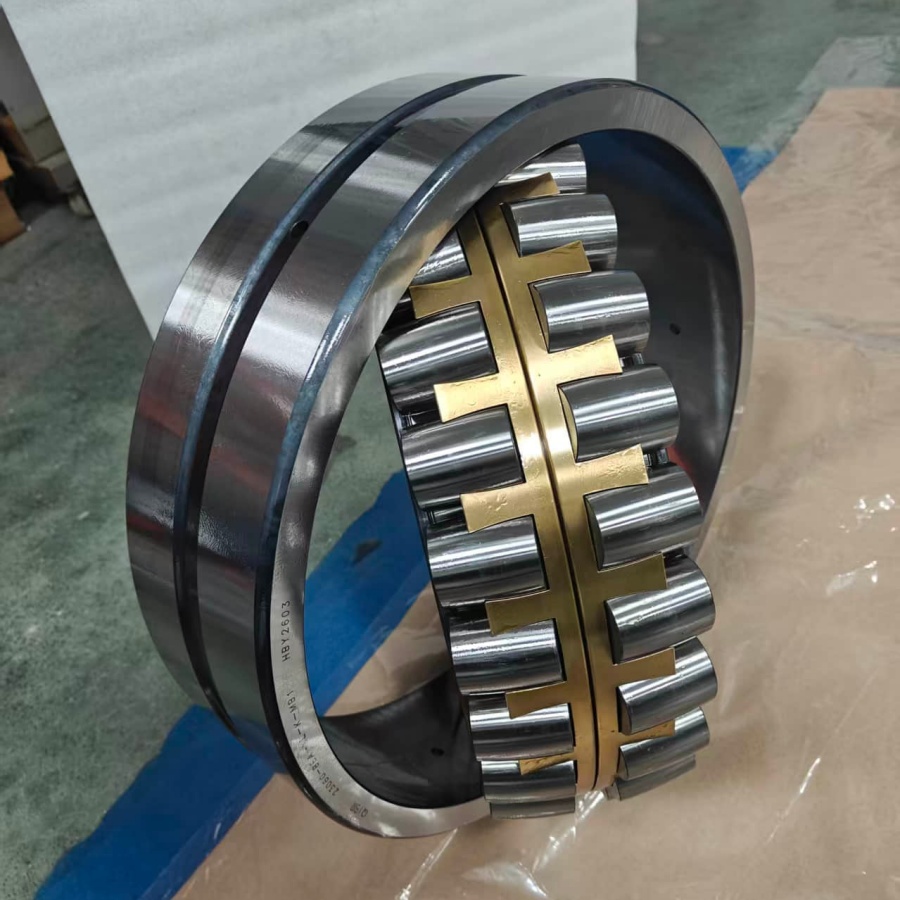
The structural design of the 23060 bearing is meticulously engineered to balance durability, load-carrying capacity, and adaptability. Unlike some other spherical roller bearings with stamped steel cages, the 23060 adopts a solid brass cage, which offers superior rigidity, impact resistance, and thermal stability. The outer ring guidance of the cage ensures that the rollers maintain optimal alignment during operation, reducing friction and wear between the rolling elements and the raceways. Additionally, the bearing features two rows of symmetrical spherical rollers that run on a concave spherical raceway in the outer ring, a design that allows for self-alignment and compensates for shaft deflection and misalignment angles, which are often caused by heavy loads or installation inaccuracies. The absence of inner ring ribs provides the rollers with greater movement space, enhancing the bearing’s self-aligning capability compared to variants like the CA-type spherical roller bearings.
To fully appreciate the performance of the 23060 bearing, it is essential to examine its key technical specifications, which determine its suitability for various industrial applications. According to industry standards such as DIN 635-2, the 23060 has a bore diameter (d) of 300mm, an outer diameter (D) of 460mm, and a width (B) of 118mm. Its mass is approximately 73.8 to 74.5 kg, reflecting its robust construction designed to handle heavy loads. The bearing’s load-carrying capacity is one of its most impressive features: it has a basic radial basic dynamic load, Cr of 1,960,000 N and a basic radial basic static load, Cor of 3,650,000 N, enabling it to withstand extremely high radial loads, which is the primary load type it is designed to handle. While it can accommodate slight axial loads in both directions, its main strength lies in radial load bearing. The bearing also has a fatigue limit load (Cur) of 223,000 N, ensuring long-term durability under cyclic loading conditions.
In terms of rotational performance, the 23060 bearing boasts a limit speed (nG) of 1100 revolutions per minute (r/min) and a reference speed (nB) of 960 r/min, making it suitable for applications with moderate to high rotational speeds. It operates within a temperature range of up to 120°C without heat stabilization, which is sufficient for most industrial environments. The bearing typically features a C3 internal clearance, which is larger than the normal clearance (CN), providing additional flexibility to accommodate thermal expansion during operation and reducing the risk of seizure. Other key dimensional parameters include a D1 (inner diameter of the outer ring) of 412.6mm, a maximum outer diameter (Da max) of 445.4mm, a minimum inner diameter (da min) of 314.6mm, and a minimum fillet radius (r min) of 4mm, all of which are critical for proper installation and compatibility with mating components.
The unique combination of structural design and technical specifications makes the 23060 bearing well-suited for a wide range of heavy-duty industrial applications, particularly those involving high radial loads, shaft misalignment, and harsh operating conditions. One of its primary application areas is the mining and construction industry, where it is used in equipment such as crushers, vibrating screens, and conveyor systems. These machines operate under extreme conditions, with constant vibration, heavy loads, and frequent misalignment, and the 23060’s self-aligning capability and robust brass cage ensure reliable performance and long service life. Additionally, the bearing is widely used in metallurgical equipment, such as rolling mills and forging machines, where it supports the work rolls and withstands the high loads and temperatures associated with metal processing.
Other common applications of the 23060 bearing include heavy-duty electric motors, generators, pumps, and fans, where it provides stable rotation and load support. It is also utilized in marine propulsion systems, offshore drilling equipment, and paper processing machinery, further demonstrating its versatility across different industrial sectors. In each of these applications, the bearing’s ability to compensate for misalignment, handle heavy radial loads, and resist wear and impact makes it an indispensable component, reducing downtime and maintenance costs for manufacturers.
Proper maintenance is essential to maximize the service life and performance of the 23060 bearing, as neglecting maintenance can lead to premature failure, costly repairs, and unplanned downtime. Regular inspection is a key maintenance practice, involving monitoring the bearing’s operating temperature, vibration, and noise levels to detect potential issues early. Excessive noise, vibration, or temperature rise may indicate problems such as insufficient lubrication, contamination, or misalignment, which should be addressed promptly. Lubrication is another critical aspect of maintenance: the 23060 requires regular lubrication with the appropriate type of lubricant, as specified by the manufacturer, to reduce friction between the rolling elements and raceways and prevent corrosion. The bearing’s design often includes lubrication grooves and holes (when specified with the W33 suffix) to facilitate effective lubricant distribution, ensuring optimal performance.
Cleanliness is also vital for the 23060 bearing’s longevity, as contamination by dirt, dust, or metal particles can cause wear, scratches, or corrosion on the raceways and rolling elements. During installation and maintenance, it is important to ensure that the bearing and its mating components are clean, and proper sealing should be used to prevent external contaminants from entering the bearing. Storage of the bearing is another consideration: when not in use, it should be stored in a clean, dry, and cool environment, away from direct sunlight and moisture, and should be wrapped in anti-rust paper to prevent corrosion. Regular disassembly and inspection of the bearing during scheduled maintenance can help identify signs of wear or damage, allowing for timely replacement and avoiding catastrophic failure.
In conclusion, the 23060 spherical roller bearing is a high-performance, robust component that plays a critical role in heavy-duty industrial applications. Its solid brass cage, outer ring guidance, and self-aligning design make it capable of handling high radial loads, compensating for shaft misalignment, and withstanding harsh operating conditions. With its impressive technical specifications, including high load-carrying capacity, moderate to high rotational speeds, and thermal stability, it has become a preferred choice for engineers across mining, metallurgy, manufacturing, and other industrial sectors. By following proper maintenance practices, including regular inspection, lubrication, and cleanliness, users can ensure that the 23060 bearing delivers reliable performance and a long service life, contributing to the efficiency and productivity of industrial operations. As industrial machinery continues to evolve and demand higher performance, the 23060 bearing remains a vital component, embodying the perfect balance of design, durability, and functionality.