Newsroom
The 51204 Single-Direction Thrust Ball Bearing: Design, Performance and Applications
In the realm of mechanical transmission systems, bearings serve as indispensable components that reduce friction and enable smooth rotational motion. Among the diverse range of bearing types, the 51204 single-direction thrust ball bearing stands out for its specialized axial load-bearing capacity, compact structure, and wide industrial applicability. This article delves into the design features, technical specifications, material characteristics, application scenarios, and maintenance considerations of the 51204 bearing, shedding light on its role in modern mechanical systems.
Design Features and Structural Composition
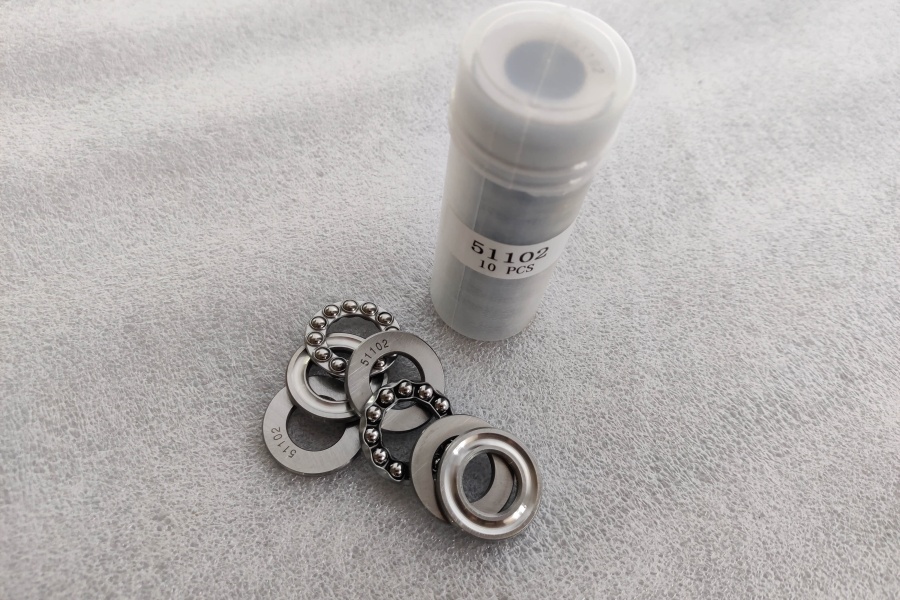
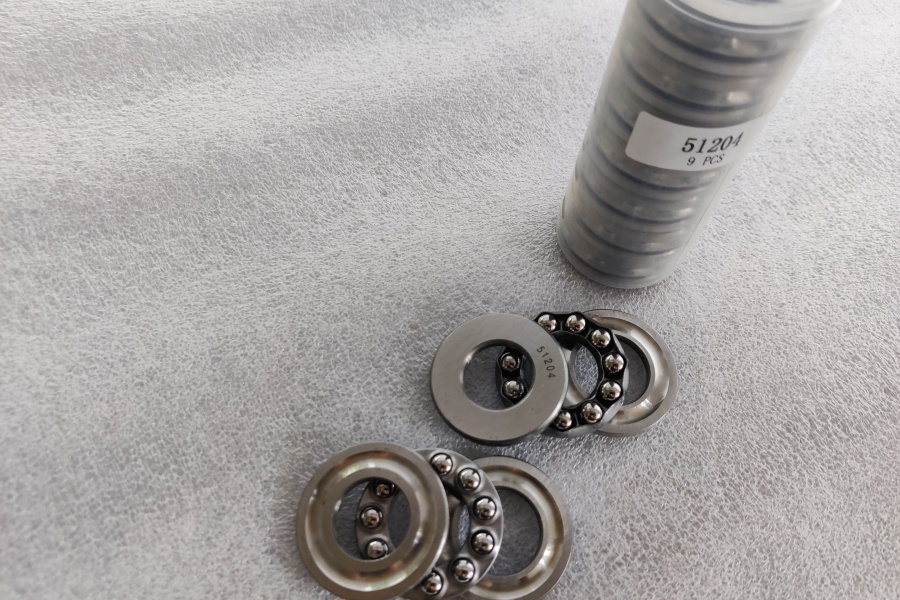
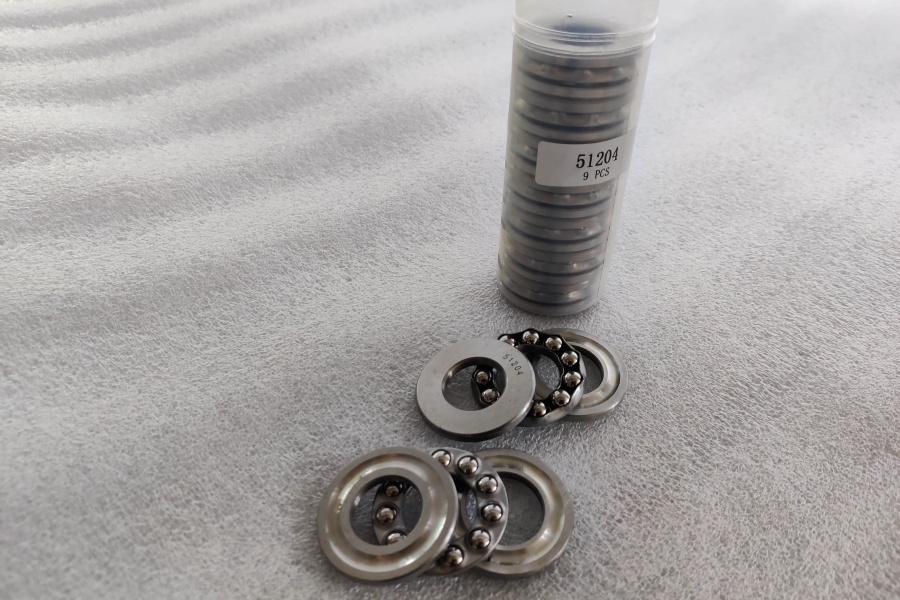
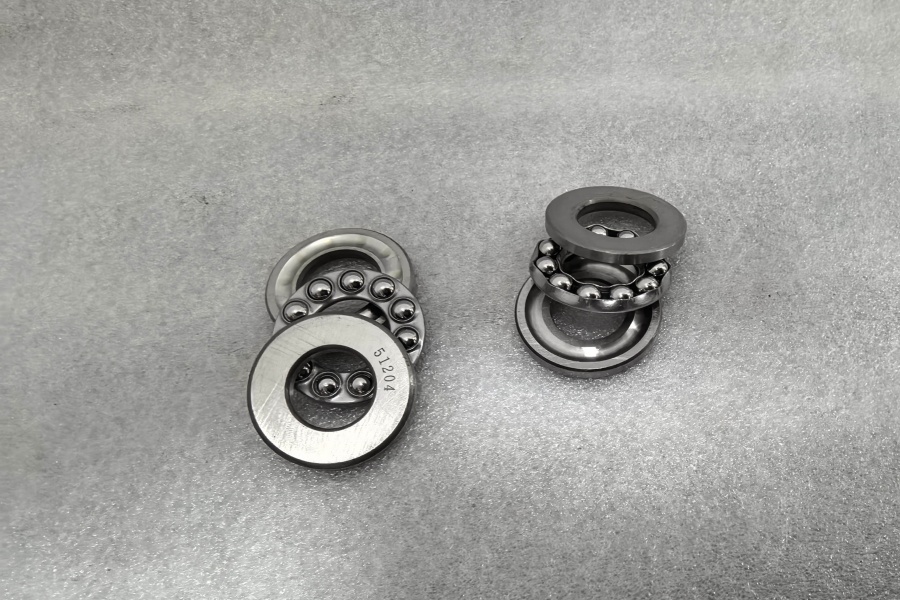
The 51204 is a classic single-direction thrust ball bearing, engineered to withstand axial loads in one direction while failing to accommodate any radial loads. Its most distinctive design advantage lies in its separable structure, which consists of three core components: a shaft washer, a housing washer, and a ball and cage assembly. This separable design facilitates convenient installation, disassembly, and maintenance inspections, as each component can be mounted and removed individually. Additionally, most parts of the 51204bearing are interchangeable, enhancing repair efficiency and reducing inventory costs for industrial operations.
The shaft washer of the 51204 bearing features a ground inner bore, ensuring a tight interference fit with the shaft to maintain stability during operation. The bearing adopts a flat raceway design on both washers, paired with a stamped steel cage. The stamped steel cage offers excellent rigidity and wear resistance, effectively guiding the steel balls and distributing loads evenly across the raceways. With a contact angle of 90 degrees, the bearing is optimized to transmit axial forces directly, maximizing load-bearing efficiency.
Key Technical Specifications
The 51204 bearing follows international standards (ISO 104-1979, DIN 711, and DIN 715), with consistent dimensional parameters across major manufacturers such as SKF, NSK, and STEYR. Its core dimensions are 20 mm in inner diameter (bore), 40 mm in outer diameter, and 14 mm in height, making it a compact solution for space-constrained applications. The shaft washer has an outer diameter of approximately 40 mm, while the housing washer has an inner diameter of around 22 mm, with a minimum chamfer dimension of 0.6 mm on both washers to prevent stress concentration.
In terms of performance, the 51204 bearing delivers reliable load-bearing capacity and rotational performance. Its basic dynamic load rating (C) is 21.2 kN, and the basic static load rating (C₀) reaches 37.5 kN, indicating strong resistance to fatigue and deformation under heavy axial loads. The fatigue load limit (Pᵤ) is 1.4 kN, ensuring long service life under cyclic load conditions. The bearing's rotational speed is influenced by lubrication methods: under grease lubrication, the reference speed is 4,300 r/min, while oil-bath lubrication increases the reference speed to 6,300 r/min, with an ultimate limit speed of 8,000 r/min.
Other critical specifications include a standard tolerance class (ABEC 1/ISO P0), a minimum shaft shoulder diameter of 32 mm, and a maximum housing shoulder diameter of 28 mm. The bearing has a net weight of approximately 0.077 kg and an indicative carbon footprint of 0.28 kg CO₂e for new products, aligning with modern environmental sustainability requirements.
Material Selection and Manufacturing Process
The 51204 bearing is primarily constructed from high-quality bearing steel to ensure mechanical strength and wear resistance. The washers and steel balls are made of 100Cr6 (SAE 52100) chromium-bearing steel, which undergoes quenching and tempering treatments to achieve a hardness of approximately 60 HRC. This material exhibits excellent fatigue resistance, corrosion resistance, and dimensional stability, even under operating temperatures ranging from -40°F (-40°C) to 210°F (100°C).
The stamped steel cage is fabricated from ST12 steel, offering optimal rigidity and thermal stability. The manufacturing process involves precision grinding of the raceways and bores to meet strict tolerance requirements: the inner diameter tolerance is +0/-0.010 mm, and the outer diameter tolerance is +0/-0.011 mm. The bearing features a standard radial internal clearance (C0) of 0.005-0.02 mm, ensuring smooth operation without excessive friction.
Industrial Applications
Owing to its compact size, high axial load capacity, and easy maintenance, the 51204 bearing finds widespread application across multiple industrial sectors. In the machinery industry, it is commonly used in plastic extruders, machine tool spindles, crane hooks, and vibration screens, where it withstands large axial forces generated during operation. In the automotive and transportation sector, the bearing is employed in transmissions, electrical components, and rear-wheel assemblies, contributing to stable power transmission.
The renewable energy field also benefits from the 51204 bearing, which is integrated into wind turbine components and new energy equipment. It is further utilized in chemical machinery, steel production equipment, printing machinery, and construction machinery, adapting to harsh operating environments such as high temperatures and heavy loads. Additionally, the bearing is suitable for household appliances, electric motors, and laboratory mixing equipment, demonstrating its versatility in both industrial and commercial settings.
Installation, Maintenance and Precautions
Proper installation and maintenance are crucial to maximizing the service life of the 51204 bearing. During installation, the separable components allow for individual mounting: the shaft washer is pressed onto the shaft with an interference fit, while the housing washer is installed in the bearing seat with a clearance fit. It is essential to ensure that the shaft and housing shoulders are properly sized (complying with the minimum/maximum shoulder diameter requirements) to support the washers and prevent misalignment.
Lubrication plays a vital role in the bearing's performance. Grease lubrication is recommended for most general applications, while oil-bath lubrication is preferred for high-speed operations to reduce friction and heat generation. Regular lubrication replenishment is necessary to prevent dry friction and premature wear. It is also critical to avoid subjecting the bearing to radial loads, as this can cause raceway damage and affect operational stability.
Conclusion
The 51204 single-direction thrust ball bearing embodies the perfect combination of compact design, reliable performance, and broad applicability. Its separable structure, high load-bearing capacity, and compliance with international standards make it an indispensable component in modern mechanical systems. Whether in heavy industry, automotive manufacturing, or renewable energy, the 51204 bearing delivers consistent performance while facilitating easy maintenance and cost reduction. As industrial technology advances, the 51204 bearing will continue to play a pivotal role in enhancing the efficiency and reliability of mechanical equipment worldwide.