Newsroom
Why Combined Precision Bearings Matter in High-Accuracy Motion Systems
In high-accuracy motion systems, bearing selection is no longer just a matter of size or load rating—it directly influences positioning precision, system rigidity, and long-term reliability. As equipment continues to evolve toward compact, performance-driven designs, Combined Precision Bearings have become a critical solution by integrating radial and axial load capacity into a single, precisely engineered unit. This integrated approach allows designers to simplify system layouts while maintaining the accuracy and stability required in demanding motion control applications.
The Challenge of Accuracy in Compact Designs
Modern motion systems often operate under combined loads while requiring micron-level positioning accuracy. Using separate radial and thrust bearings can increase axial space, complicate assembly, and introduce alignment errors that negatively affect system performance.
Combined precision bearings address these challenges by consolidating multiple bearing functions into one unit. The result is a cleaner mechanical layout, improved stiffness, and more predictable performance over the bearing’s service life.
Structural Advantages of Combined Precision Bearings
The defining feature of combined precision bearings lies in their optimized internal structure. By managing radial and axial loads within a single bearing assembly, load distribution becomes more uniform and deformation is minimized.
Key performance benefits include:
- Simultaneous support of radial and axial loads
- High axial stiffness for precise positioning
- Reduced axial space requirements
- Improved installation accuracy
- Stable preload and smooth operation
These characteristics make combined precision bearings especially suitable for precision-driven applications. 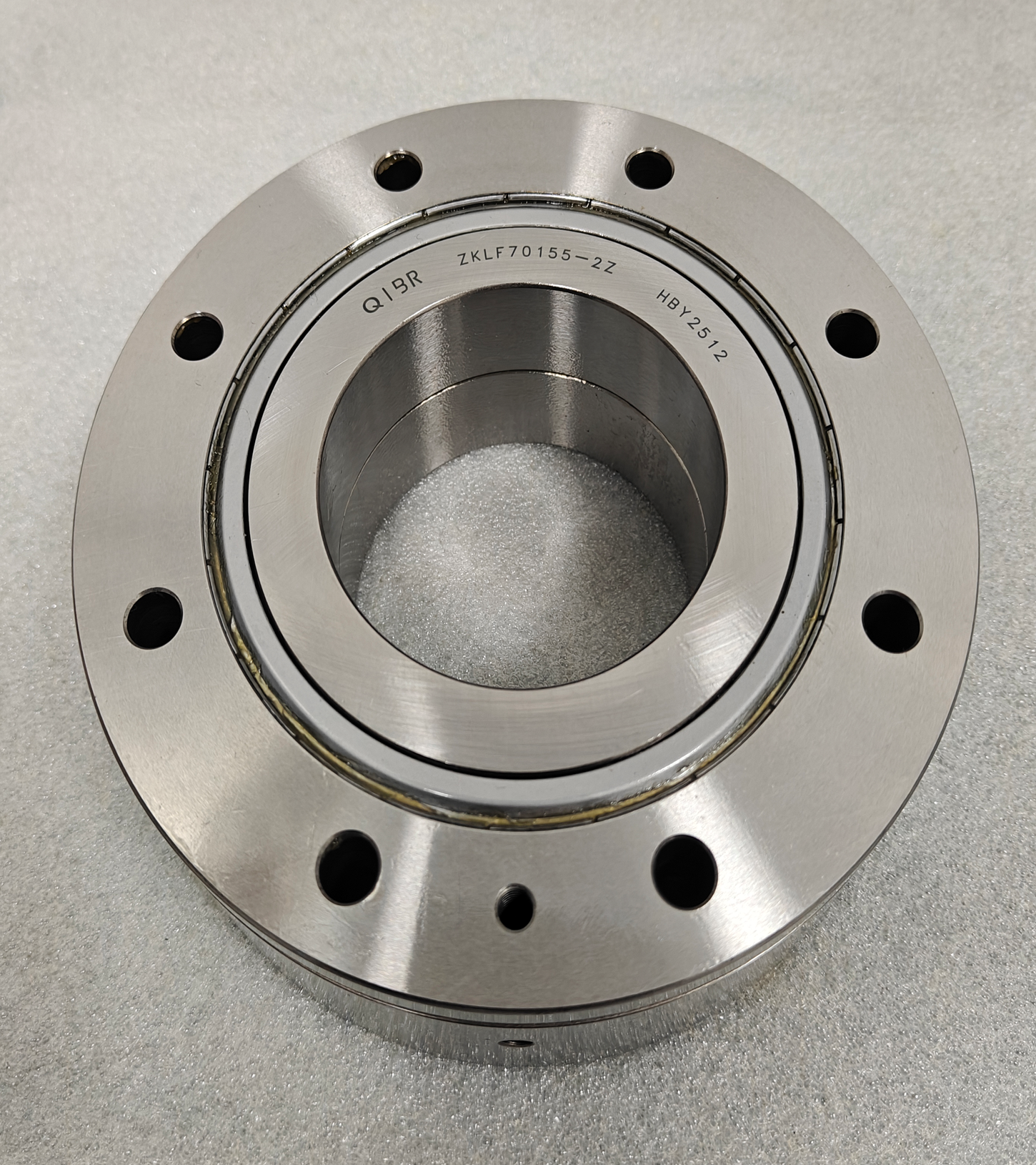
Representative Model: ZKLF 70155 2Z
The ZKLF 70155 2Z is a typical combined precision bearing designed for applications where high axial stiffness and reliable load control are essential. Its integrated design allows the bearing to support combined loads while maintaining accurate axial positioning.
The 2Z shielding configuration provides effective protection against contamination, helping to ensure consistent performance and extended service life in industrial environments. Bearings in the ZKLF series are commonly used in:
- Ball screw support systems
- Machine tool assemblies
- Automation and positioning equipment
- Precision transmission mechanisms
In such systems, the bearing plays a critical role in maintaining accuracy and operational stability.
Application-Driven Bearing Selection Is Becoming the Standard
A noticeable trend in the bearing market is the shift from standard catalog selection toward application-specific solutions. Engineers are increasingly prioritizing stiffness, accuracy, and system integration over purely dimensional considerations.
Combined precision bearings reflect this shift by offering a ready-to-install solution that reduces design complexity while enhancing system performance and reliability.
Conclusion
Combined precision bearings are not simply a combination of bearing functions—they represent a design philosophy focused on efficiency, accuracy, and long-term stability. By simplifying mechanical layouts and improving load management, solutions such as the ZKLF 70155 2Z help meet the growing demands of modern high-accuracy motion systems.
As precision requirements continue to rise, combined precision bearings will remain a key enabler of advanced motion control and positioning technologies.